
A Tarnished Recollection: The Day Elden Ring Reached 12 Million Souls
Elden Ring, FromSoftware's open-world action RPG, blends Miyazaki's brutal design with Martin's mythos into a masterpiece of tragic lore and freedom.
I still vividly recall the early spring of 2022, scrolling through my phone when the notification lit up: Elden Ring had soared past 12 million copies sold worldwide. A million of those were in Japan alone. It felt surreal. I had already poured over a hundred hours into the Lands Between, and suddenly, I was not alone—millions were treading the same treacherous paths, cursing at the same boss arenas, and weeping over the same tragic NPCs. That moment cemented what we all secretly knew: FromSoftware had captured lightning in a flask of crimson tears.
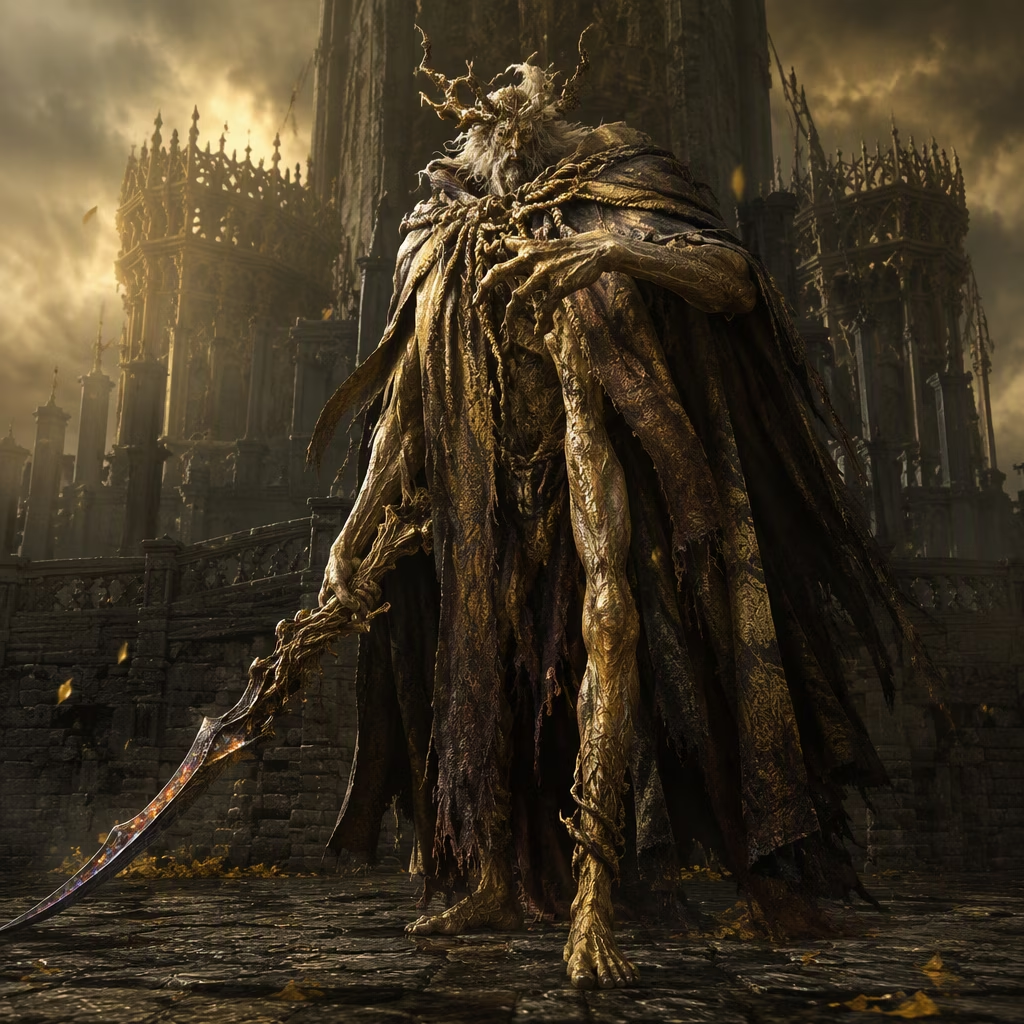
I had been one of the hollows waiting for years. The name Elden Ring, whispered alongside those of Hidetaka Miyazaki and George R.R. Martin, felt like a myth before it ever materialized. When the game finally released, it shattered expectations like a giant's slam. It wasn't just a bigger Dark Souls; it was a paradigm shift. The open world wasn't a marketing gimmick—it was a living, breathing expanse born from Martin's foundational myths, stitched together with Miyazaki's exquisite cruelty. I remember cresting that first elevator out of the Stranded Graveyard, and Limgrave sprawled before me, the Erdtree looming like a golden specter. I could go anywhere, and that freedom was intoxicating.
And oh, the dangers. Tree Sentinel patrolling the very first steps, a clear statement: We haven't gone soft. The subterranean Siofra River, discovered entirely by accident, was a masterpiece of layered design. Each cave, catacomb, and legacy dungeon was a tight knot of intricate design, rewarding patience and punishing greed. The bosses—Margit, Radahn, Malenia—became household names, their patterns and lore dissected endlessly. Malenia's waterfowl dance still haunts my dreams, but the victory, when it finally came, was a dopamine rush rivaled by nothing else. Let's be honest, though: the camera did occasionally turn into the true final boss, especially against those towering behemoths in cramped corners.
✨ The Heart of a Masterpiece
-
Fascinating dungeons that twist back on themselves
-
Amazing bosses with deep, tragic lore
-
Intricate design rewarding exploration and creativity
-
Mysterious quests that unfold without a journal
-
Tragic NPCs like Boc, Alexander, and Ranni, weaving sorrow into every interaction
What truly set Elden Ring apart for me was its quiet storytelling. Almost every character I met was doomed in some way, yet they struggled with such dignity. I still think of Iron Fist Alexander, his quest for strength ending in a fiery, honorable duel. Or Millicent, choosing agency over the rot consuming her. These stories weren't spelled out—they had to be earned through attention, through failure, through the community piecing together scraps of dialogue. The world felt ancient and immense, and I was just a fleeting Tarnished in its grand narrative.
Then came the official words of gratitude, translated and shared on that March day. Reading Hidetaka Miyazaki's message was like receiving a personal letter from a distant god. He said, "I'm very surprised so many people are playing our game. On behalf of the development team, I'd like to express our utmost gratitude to all the players. I'm so happy to know so many are enjoying our world based on George R.R. Martin's myths, with its high degree of freedom and numerous dangers. I hope you'll keep supporting Elden Ring." His humility struck me. The man who forged my most agonizing defeats was simply happy we were enjoying his grand experiment.
Bandai Namco's President of Digital Business, Yasuo Miyakawa, echoed that pride, calling Elden Ring a project that had taken many years to reach the hearts of fans, exceeding expectations. He also hinted at a future beyond games: "In the future, we plan to keep developing Elden Ring so that it reaches various fields, not only games." Back then, we speculated—anime? Novels? Now, in 2026, we look back and see the seeds of that promise: the Shadow of the Erdtree expansion that redefined DLC, the upcoming tabletop adaptation, and whispers of a cinematic universe.
Now, four years later, Elden Ring feels less like a game and more like a shared memory etched into gamer culture. It proved that difficulty isn't a barrier when the world is built with care. It welcomed newcomers with a gentler onboarding curve (thank you, Spirit Ashes) while still offering veterans pure, unadulterated pain. The community, born from message appraisals and cooperative jolliness, remains vibrant. I still occasionally load my original character, standing atop the Forge of the Giants, and simply watch the landscape. The journey was brutal, but the view is always worth it.
Miyazaki-san wanted us to keep supporting Elden Ring, and we have, in ways he probably never imagined. The game wasn't good because it was hard; it was good because—like a beautifully constructed puzzle—it was built the right way. And as we race further into 2026, I know the Lands Between will keep calling. After all, we remain Tarnished, and the call of long-lost grace still whispers through the fog.
Data referenced from OpenCritic helps contextualize why Elden Ring turned a notoriously punishing formula into a mainstream shared experience: broad critical consensus and cross-outlet review signals often align with the game’s most celebrated strengths—open-ended exploration, legacy-dungeon craftsmanship, and boss encounters that reward learning rather than grinding—mirroring the blog’s focus on freedom, discovery, and the lasting cultural “memory” forged by hard-won victories.