
Bloodborne's Timeless Level Design Legacy: A Masterclass in Environmental Storytelling and Atmosphere
Bloodborne's masterful level design remains the gold standard in environmental storytelling, creating an unforgettable and oppressive Gothic labyrinth. Its dense, vertical spaces brilliantly weave atmosphere and lore into every corner, delivering an intimate terror unmatched by even Elden Ring's vast grandeur.
As I sit here, thinking back over a decade of gaming evolution, one thing hits me like a sack of bricks: Bloodborne’s level design is still the gold standard. No cap. It’s been nine years since I first stepped into the plague-ridden streets of Yharnam, yet the intricate, oppressive, and downright beautiful world FromSoftware crafted remains unmatched in its ability to weave atmosphere, storytelling, and gameplay into a seamless, unforgettable tapestry. While its successor, Elden Ring, took the gaming world by storm with its vast, open-world grandeur, there’s a certain je ne sais quoi about Bloodborne’s tightly wound, vertical labyrinths that even FromSoftware hasn’t fully recaptured.
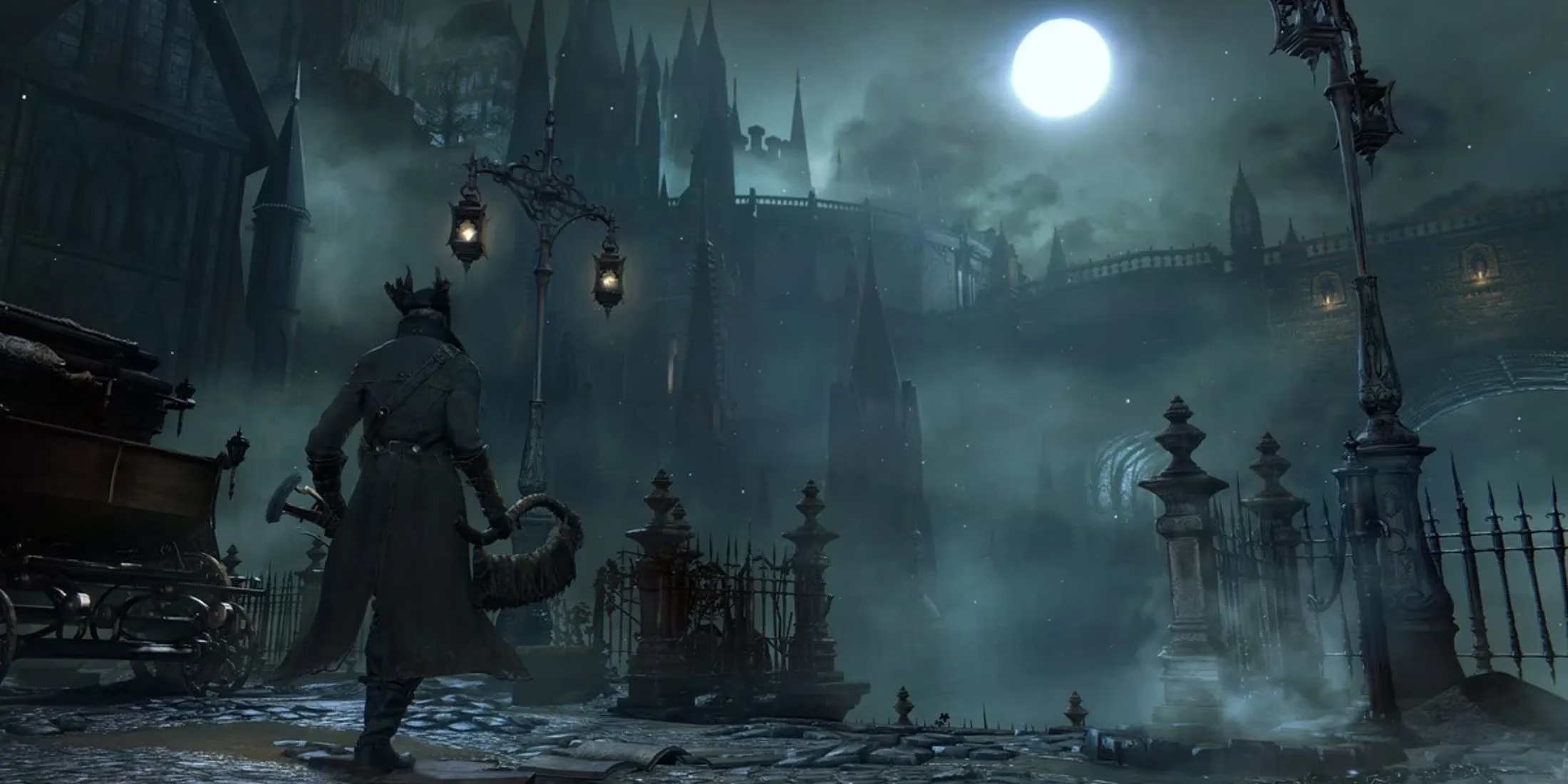
The Gothic Labyrinth: Where Every Corner Tells a Story
Let's get straight to the point. Bloodborne’s level design is a masterclass in environmental storytelling. Places like Old Yharnam, the Cathedral Ward, and Forsaken Castle Cainhurst aren’t just backdrops; they’re characters in their own right. The genius lies in how these areas, while often linear in progression, feel anything but. The insane amount of verticality means you’re constantly discovering new layers—literally and figuratively.
-
Old Yharnam: A burnt-out husk of a district, where the vertical descent from the church tower down into the beast-infested streets creates a palpable sense of history and decay. You can almost smell the ash and desperation.
-
Cathedral Ward: The sprawling, interconnected web of streets, elevators, and hidden passages that serves as the game's hub. Finding that secret path to Iosefka’s Clinic? Chef's kiss.
-
Forsaken Castle Cainhurst: An isolated, frozen palace that appears out of the mist. The journey there alone is a legendary piece of design, and the castle itself is a haunting, beautiful puzzle box of secrets.
These spaces are densely packed. Every crumbling statue, every pool of blood, every hastily barricaded door whispers a fragment of the world’s tragic lore. It’s storytelling without a single line of exposition, and it’s utterly brilliant.
The Intimacy of Terror: Why Tight Spaces Work
Bloodborne thrives on intimacy, and by intimacy, I mean the kind that makes your palms sweat. The level design often funnels you into narrow, winding streets, cramped buildings, and claustrophobic tombs. This isn’t a limitation; it’s a deliberate tool to amplify the horror and tension. You never know what’s lurking around the next corner—a snarling beast, a madman with a sack, or something… worse. This constant, looming disquiet is something few games, even other Soulslikes, have managed to replicate so effectively.
The combat, with its aggressive, parry-focused style, is perfectly married to these environments. Ducking into a narrow alley to avoid a swing, then darting out for a visceral attack feels incredible. The spaces are designed for the gameplay, creating a perfect, punishing dance.
Elden Ring: A Grand, But Different, Vision
Now, let’s talk about the elephant—or rather, the Erdtree—in the room: Elden Ring. Don’t get it twisted; Elden Ring is a phenomenal achievement. Its open world, the Lands Between, is a spectacle of sheer scale and freedom. Traversing the sweeping plains of Limgrave or gazing up at the Altus Plateau is a genuine "wow" moment. FromSoftware proved they could make a sprawling sandbox feel just as hand-crafted and mysterious as their more linear worlds.
However, the level design philosophy had to shift. To accommodate the open world, the classic Bloodborne/Souls dungeon design got "stretched, chopped, and skewed" across the landscape. The true spiritual successors to Bloodborne’s intricate design in Elden Ring are the Legacy Dungeons.
-
Stormveil Castle: A twisting, vertical fortress full of shortcuts, secrets, and nasty ambushes. This is pure Bloodborne DNA in an open-world context.
-
Raya Lucaria Academy: A beautiful, magical maze that plays with verticality and illusion.
-
Leyndell, Royal Capital: A majestic, ruined metropolis that feels like exploring a piece of living history.
These areas are magnificent, but they exist as concentrated pockets within a vast world. The sense of relentless, interconnected pressure that defines Yharnam is necessarily diffused.
The DLC Evolution: Shadow of the Erdtree Steps Up
Here’s the kicker, though. It wasn’t until the Shadow of the Erdtree DLC that Elden Ring truly flexed level design muscles that felt like a direct evolution of Bloodborne’s principles. The Realm of Shadow map, while still open-world, is a masterwork of teasing adjacent areas and blending spaces.
Dungeons like Belurat, Tower Settlement and Enir-Illim are the real deal. They optimally utilize the wider spaces Elden Ring is known for while recapturing that intimate, atmospheric, and intricately layered feeling that is Bloodborne’s signature. Exploring these places in 2026, it’s clear: this is what Bloodborne might have felt like if it were given more room to breathe, without losing its soul. The DLC proved FromSoftware could merge the grandeur of their new open-world vision with the intimate, detail-obsessed design of their past.
The Unbeatable Formula: Why Bloodborne Still Reigns
So, why does Bloodborne’s design still feel so special nearly a decade later? Let me break it down:
| Feature | Bloodborne's Approach | Impact |
|---|---|---|
| Verticality | Extreme, multi-layered exploration within confined spaces. | Creates a sense of vast depth and endless discovery in a "small" world. |
| Atmosphere | Gothic/Lovecraftian horror saturated in every texture and shadow. | Generates unmatched dread, wonder, and immersion. 😨✨ |
| Pacing & Pressure | Relentless, claustrophobic, and interconnected. | The tension never lets up; the world feels alive and actively hostile. |
| Environmental Storytelling | Every object and architectural detail hints at the lore. | Builds a rich, mysterious world that rewards obsessive curiosity. |
| Gameplay Symbiosis | Levels are built for the fast, aggressive combat and trick weapons. | Makes every encounter feel tactical and every victory earned. |
Bloodborne’s levels are a perfect, self-contained ecosystem. Every element—combat, lore, aesthetics, sound design—feeds into and reinforces the others within these meticulously crafted spaces. Elden Ring’s approach is different, arguably more ambitious in scale, and incredibly successful in its own right. But there’s a purity, a focused intensity to Bloodborne’s design that is simply iconic.
In the end, it’s not about which game is "better." It’s about recognizing a masterwork. Bloodborne’s level design is like a perfectly composed symphony—every note, every rest, is intentional and builds toward a devastating, beautiful crescendo. Elden Ring is a brilliant, sprawling rock opera. Both are fantastic, but the haunting melody of Yharnam is the one that still echoes in my mind, all these years later. It’s a testament to FromSoftware’s genius that they can create two such different, yet equally compelling, worlds. But for pure, undiluted atmospheric and design mastery? Bloodborne still takes the cake. 🎂