
Echoes in the Digital Abyss: Bleak Faith's Animation Controversy and the Soul of Indie Development
The indie souls-like RPG 'Bleak Faith: Forsaken' faces intense scrutiny over allegations of using stolen 'Elden Ring' and 'Dark Souls III' animations, casting a dark shadow on its release. Archangel Studios defends its sourcing from the Epic Marketplace, yet the controversy overshadows the game's innovative stealth and climbing mechanics.
In the shadowed corridors of the indie gaming world, a storm brews around Bleak Faith: Forsaken, a title whose very movements seem to whisper secrets stolen from another realm. Archangel Studios, a fledgling creator, finds itself adrift in turbulent waters, its maiden voyage marred by accusations that its dark, souls-inspired RPG bears animations not just reminiscent of, but eerily identical to, the hallowed motions of Elden Ring and Dark Souls III. The evidence, laid bare in comparative videos that circulate like digital ghosts, paints a picture too precise for mere coincidence; it is as if one symphony has been transcribed note-for-note from another, leaving only the faintest echo of original intent.
The heart of the controversy beats in a series of side-by-side comparisons, where the gait of a warrior or the arc of a blade in Bleak Faith mirrors its counterpart in FromSoftware's titles with an uncanny fidelity. To the observer, it appears less like inspiration and more like a reflection in a still, dark pool—a duplication so complete it suggests a fundamental borrowing. The community's gaze turned to tools like DS Anim Studio, a software whispered to export animations from the very games in question, intended as a canvas for fan-made mods, not as a quarry for commercial ventures. Here lies the crux: these digital gestures, meant for the free exchange of passion, may have been repackaged and sold, a transaction that casts a long shadow over Bleak Faith's release.
Archangel Studios' response unfurled in the quiet halls of Discord, a missive of defense wrapped in the language of good faith. The studio claimed to have sourced animations from the Epic Marketplace, a digital bazaar where assets are traded like rare coins, believing them to be legitimate wares. In a move both cautious and hopeful, they reached out to Epic's custodians, submitting a ticket that laid bare the community's fears, awaiting a verdict that might cleanse or condemn. This act was a gambit, a preemptive strike against doubt, yet it did little to quell the murmurs that Bleak Faith's soul was, in part, a borrowed one.
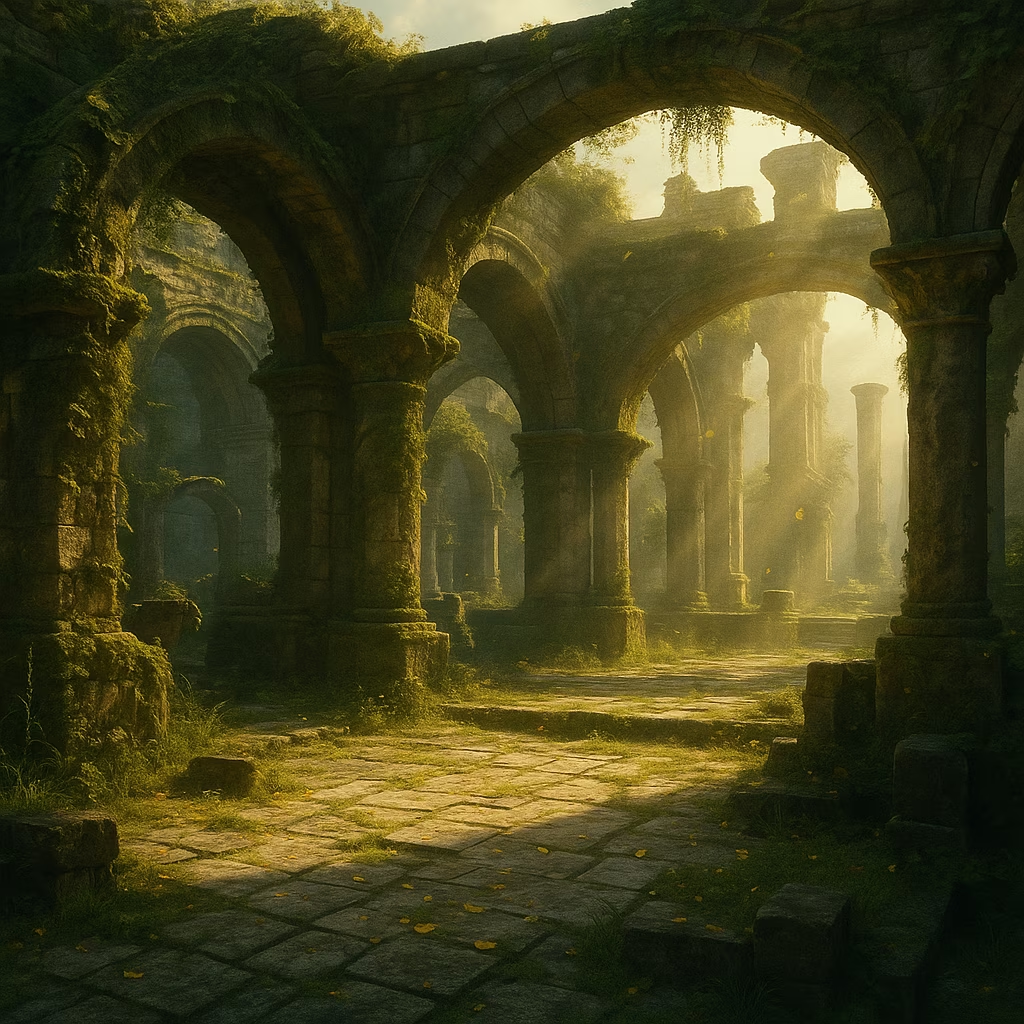
Released into the wild on March 10, 2026, Bleak Faith: Forsaken steps into a genre defined by its giants. It carries the hallmarks of the modern souls-like: a world of crushing difficulty, rich RPG customization, and labyrinthine realms woven together like threads in a gothic tapestry. Yet, it also promises innovations—stealth that slinks through shadows, and the ability to scale foes like a predator ascending a cliff face. These are its unique verses in a well-known song. But the reception has been a fractured chorus; Steam reviews murmur with a 'Mixed' score, voices rising to lament bugs that scuttle like mechanical insects and a polish that feels unfinished, as if the game were a sculpture still rough-hewn from the stone.
This saga unfolds against a backdrop where indie dreams often walk a tightrope between homage and theft. The animations in question are not mere code; they are the kinetic poetry of a game, the silent language that speaks of weight, intention, and life. To replicate them so precisely is to risk losing one's own voice in the echo. For players, the controversy is a prism that splits light: some see a betrayal of artistic integrity, while others spy a pragmatic shortcut in an industry where resources are as scarce as sunlight in a tomb.
As the investigation winds its way through Epic's channels, the future of Bleak Faith hangs in a delicate balance. Will it be remembered as a cautionary tale, a ghost ship sailing with another's sails? Or might it yet carve its own path, its borrowed motions becoming but a footnote in a larger story of survival and creation? In the end, this is more than a dispute over assets; it is a meditation on what it means to build a world in the shadow of titans, where every step can either follow a well-worn path or dare to leave a new imprint in the digital earth.