
Elden Ring IP Dominates Multiple Media Formats as Bandai Namco Delivers on 2022 Promise by 2026
Elden Ring's future developments teased by Bandai Namco have blossomed into a cross-media saga spanning anime, novels, and live performances.
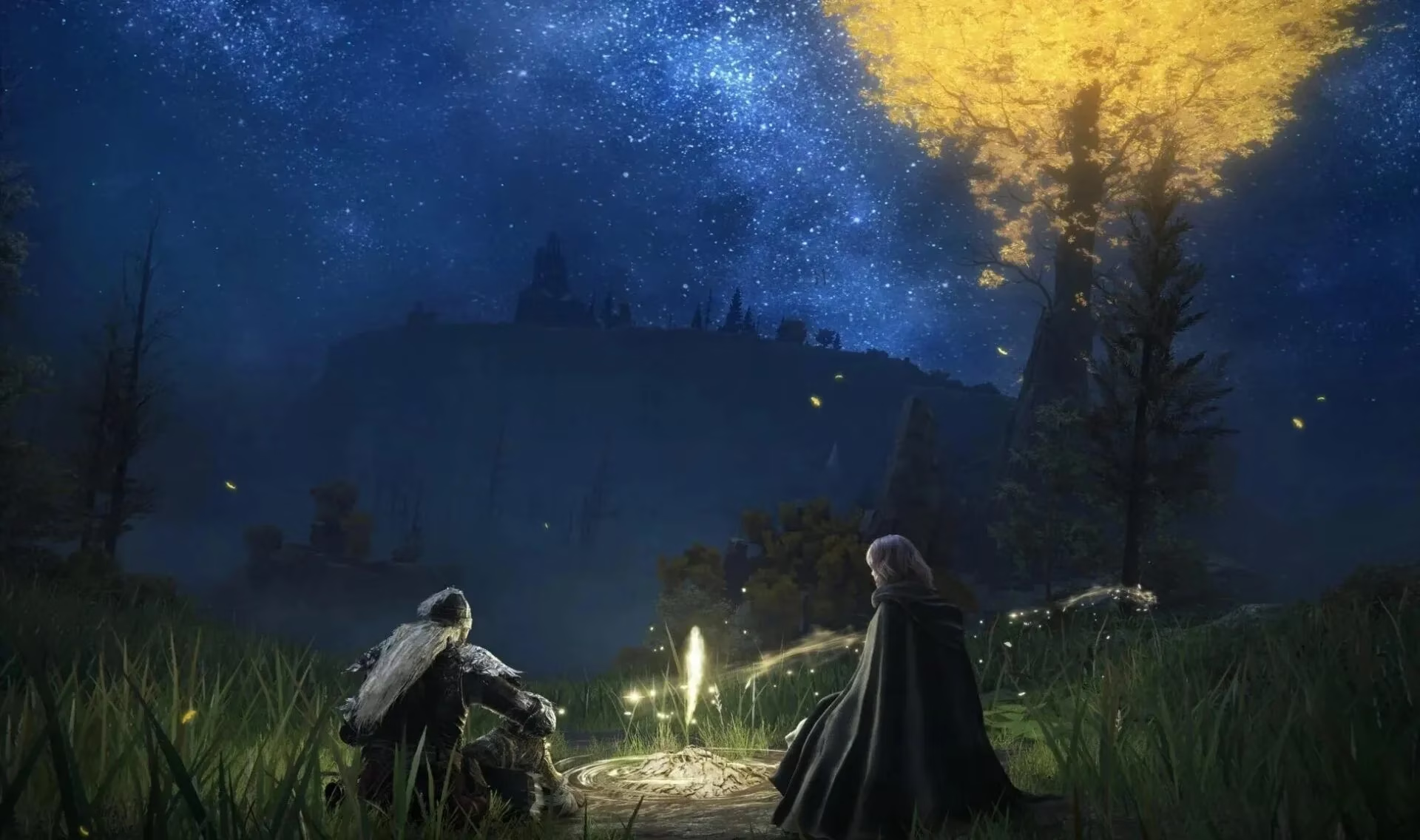
With the landmark launch of Elden Ring in February 2022, FromSoftware and publisher Bandai Namco did not simply deliver a genre-defining open‑world Soulslike; they ignited an intellectual property with a narrative depth that invited exploitation far beyond the confines of a single video game. In the immediate wake of the title passing 12 million copies shipped within its first month, Bandai Namco’s leadership openly pledged to cultivate the Lands Between across “various fields, not only games”. Fast‑forward to 2026, and that 2022 teaser has materialized into a sprawling cross‑media empire that encompasses animation, print, live performance, and concrete plans for further interactive expansions.
At the time of the original announcement, industry observers speculated heavily about what shape these “various developments” might take. Bandai Namco’s president at the time, Yasuo Miyakawa, stated that the company intended to “keep developing Elden Ring so that it reaches various fields, not only games”. The intervening four years have proven that the publisher’s ambitions were not limited to mere character merchandise. Instead, the IP has been carefully sculpted into a transmedia storytelling vehicle, with each new entry enriching the mythology penned jointly by Hidetaka Miyazaki and George R.R. Martin.
The anime invasion of the Lands Between
The most visible realization of the IP expansion arrived in 2024 with the premiere of Elden Ring: Fingers of Gold, a 13‑episode anime series produced by a renowned studio celebrated for atmospheric fantasy works. The adaptation did not attempt to retell the Tarnished’s journey but instead focused on the Night of the Black Knives and the fracturing of the Elden Ring through the eyes of several demigod figures. By delving into Godwyn the Golden’s death and the subsequent Shattering, the series offered long‑time players a deeper emotional connection to characters they had only encountered as broken husks in the original game. A second season, subtitled Omen’s Curse, is confirmed for late 2026 and will explore the parallel fates of Morgott and Mohg, utilizing new lore chapters co‑supervised by FromSoftware’s writing team.
Print and prose extensions
While the anime captivated audiences, Bandai Namco simultaneously invested in static media that allowed for more deliberate world‑building. A three‑volume novel series, The Shattering: Chronicles of the Lands Between, authored by an acclaimed dark‑fantasy novelist closely collaborating with the original lore architects, debuted in 2025. The paperback editions occupied bestseller lists for weeks, praised for their poetic treatment of Marika’s ascension and the geopolitical machinations of the Golden Order. Additionally, a manga anthology titled Tales from the Roundtable Hold presented short stories by various artists, each illuminating a different edge of the world — from the nomadic merchants to the Eternal Cities.
Stage and live experiences
Perhaps the most ambitious venture outside screens took the form of a stage play. Elden Ring: The Rite of the Flame of Ruin opened in Tokyo in late 2025 before embarking on a global tour that reached London and New York in spring 2026. Using a combination of gigantic puppetry, projection mapping, and a haunting live orchestra, the production recreated the journey to the Mountaintops of the Giants and the fateful communion with the Flame of Ruin. Critics lauded the play’s ability to translate the game’s melancholic grandeur into a tangible, communal experience, and tickets for the North American leg sold out within hours.
Interactive evolution — beyond the Erdtree
On the gaming front, 2025 saw the release of Elden Ring: Shadow of the Erdtree, an expansion that pushed the boundaries of downloadable content by introducing an entirely new region with layered history and fresh combat mechanics. It acted as a bridge between the original release and what is now openly discussed as a standalone follow‑up. During a February 2026 investor meeting, a Bandai Namco executive confirmed that a second mainline Elden Ring title — tentatively referred to internally as “Project Rune” — is in advanced development and will feature a legacy protagonist tied to one of the ambiguous endings of the first game. The new project is expected to leverage the same collaborative engine that made the original a phenomenon, with Miyazaki once again directing and Martin providing foundational mythos.
How the pieces connect — a cross‑media timeline
To appreciate the scope of the IP’s growth, it is useful to trace the major milestones since the original launch:
| Year | Media Format | Title / Description |
|---|---|---|
| 2022 | Video Game | Elden Ring base game exceeds 25 million units sold by year’s end |
| 2023 | Printed Art and Lore Book | Elden Ring: The Lands Between — A Complete Guide |
| 2024 | Anime Series | Elden Ring: Fingers of Gold (Season 1) |
| 2025 | Novel Series | The Shattering: Chronicles of the Lands Between (Vol. 1–3) |
| 2025 | Stage Play | Elden Ring: The Rite of the Flame of Ruin |
| 2025 | DLC Expansion | Shadow of the Erdtree |
| 2026 (planned) | Anime Series | Fingers of Gold — Omen’s Curse (Season 2) |
| 2027 (target) | Video Game | Untitled Elden Ring follow‑up (“Project Rune”) |
Why the multimedia approach works
Industry analysts point to Elden Ring’s inherently archaeological storytelling as the secret ingredient that makes its transmedia extension feel organic rather than exploitative. The game’s lore is presented as a fragmented history, encouraging players to piece together narratives from item descriptions and environmental clues. Each new novel, anime episode, or stage act does not contradict the core experience; it clarifies a corner of the mythos that was always there, waiting to be excavated. This approach has created a self‑reinforcing cycle: fans consume a manga chapter and return to the game to find the connected location, or an anime revelation prompts fresh discussions about character motivations on social platforms.
Community reception and future hope
The reception among the player base has been overwhelmingly positive, though not without cautionary voices. Long‑time FromSoftware enthusiasts initially worried that excessive commercialization might dilute the mystique that makes the studio’s work special. However, the careful curation of each project — with the studio’s internal lore team maintaining veto power over narrative expansions — has largely assuaged those fears. A fan poll conducted on a popular Elden Ring forum in January 2026 indicated that 78% of respondents believed the additional media had enhanced their appreciation of the original game, while only 8% felt it had cheapened the experience.
Looking ahead, Bandai Namco’s commitment to the IP shows no sign of waning. With a confirmed Season 2 of the anime, a global stage tour still unfolding, and a major new game on the horizon for 2027, the Lands Between are poised to become one of the defining fictional universes of this decade. What started as an ambitious collaboration between a legendary game director and a fantasy novelist has grown into a testament to how deeply players want to inhabit the worlds they love, across every screen and stage imaginable. As the Tarnished once rose to follow grace, so too does the Elden Ring IP continue to blaze trails into uncharted territory, proving that a single spark of creative ambition can indeed set the Erdtree ablaze with new life.