
Elden Ring Nightreign: FromSoftware's Three-Player Experiment Faces Steam Backlash
Elden Ring Nightreign co-op multiplayer frustration mounts as missing two-player mode, no voice chat, and harsh solo scaling fuel Mixed Steam reviews.
I have been playing FromSoftware games since the early days of Demon's Souls, and I have learned to expect a certain kind of beautiful friction from their design. Elden Ring Nightreign, however, arrived like a three-legged stool in a room full of people who usually sit alone or in pairs. It is not that the stool is poorly made; it is that the studio has decided everyone must balance on the same odd number of legs.
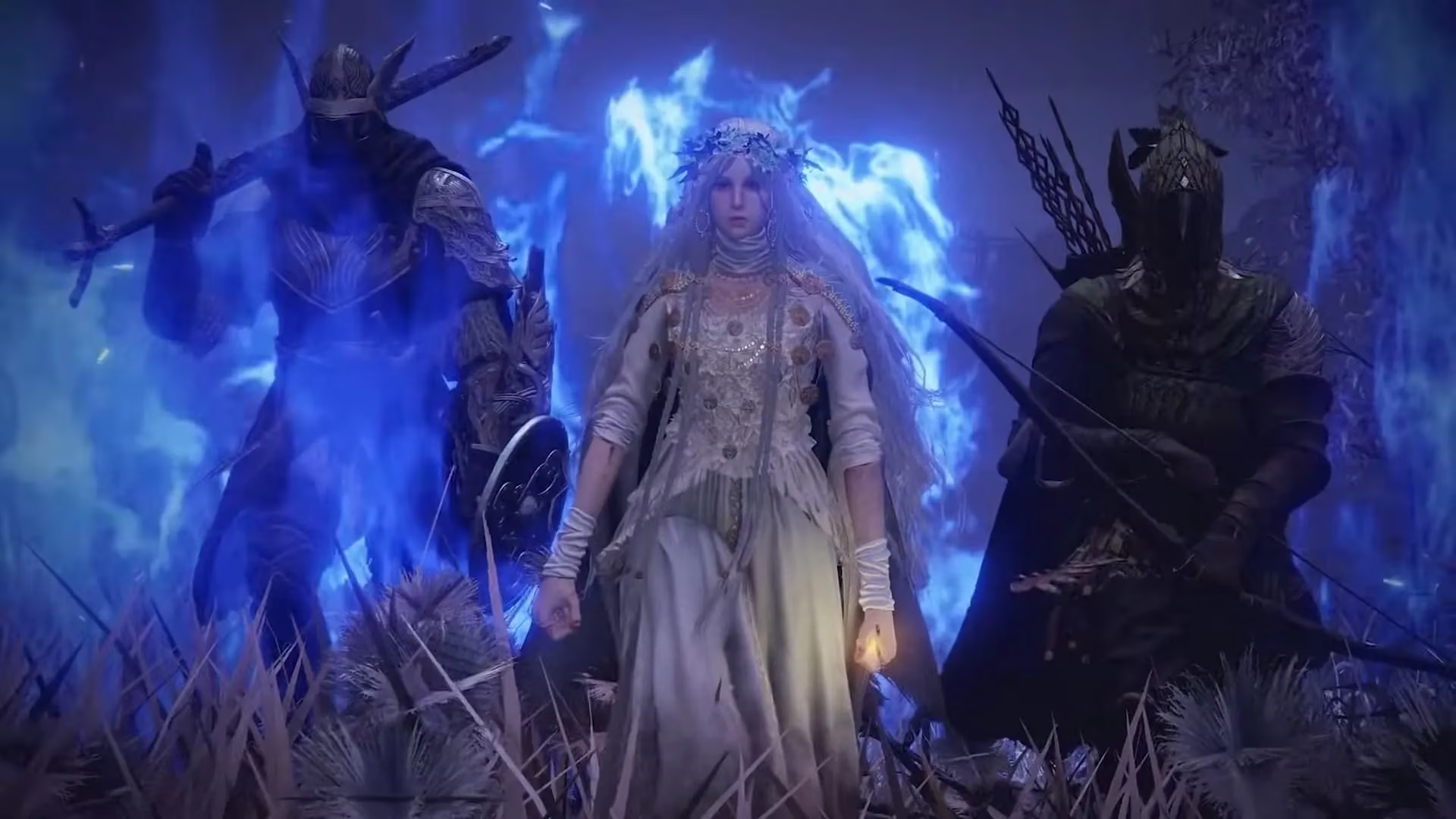
The launch on Steam feels like watching a familiar argument repeat itself, but with new vocabulary. Nightreign has settled into a "Mixed" reception, a status that matches the critical response and calls to mind the Dark Souls 3 DLC's rough arrival. That earlier expansion was criticized for its punishing difficulty; Nightreign is criticized for a different kind of difficulty, one born from social logistics rather than boss design.
Why Players Are Frustrated
The most common complaint I see is the absence of a two-player mode. The game is built around a three-player experience, with solo play available but clearly not the intended shape. For many people, assembling three players of similar skill is a scheduling puzzle that rivals the game's own bosses. The result is that a two-player party must either add a stranger or force one person to play alone against a trio-sized horde. This is not just an inconvenience; it is a structural refusal to meet players where they actually sit.
Then there is the silence. The lack of voice chat in a cooperative game feels like trying to perform surgery with mittens on. Random matchmaking throws three people into a storm-battered world with no way to say "wait," "pull back," or "the boss is about to sweep left." I have watched groups crumble not because the enemies were too strong, but because the left hand did not know what the right hand was doing. In a system that demands synchronized movement and shared resources, the absence of voice communication is a curious echo of FromSoftware's older asynchronous ghosts, except here the ghosts are alive and making mistakes in real time.
Solo play suffers in the opposite direction. A lone player is expected to face the same number of foes as a full trio. That is less of a challenge and more of a numerical punishment. The solo mode does not recalibrate enemy density or boss health in a way that feels generous; it simply hands one person a three-person job. I would describe the experience as being asked to conduct an orchestra without a score, and then being blamed when the brass section goes off rhythm.
Technical and Content Complaints
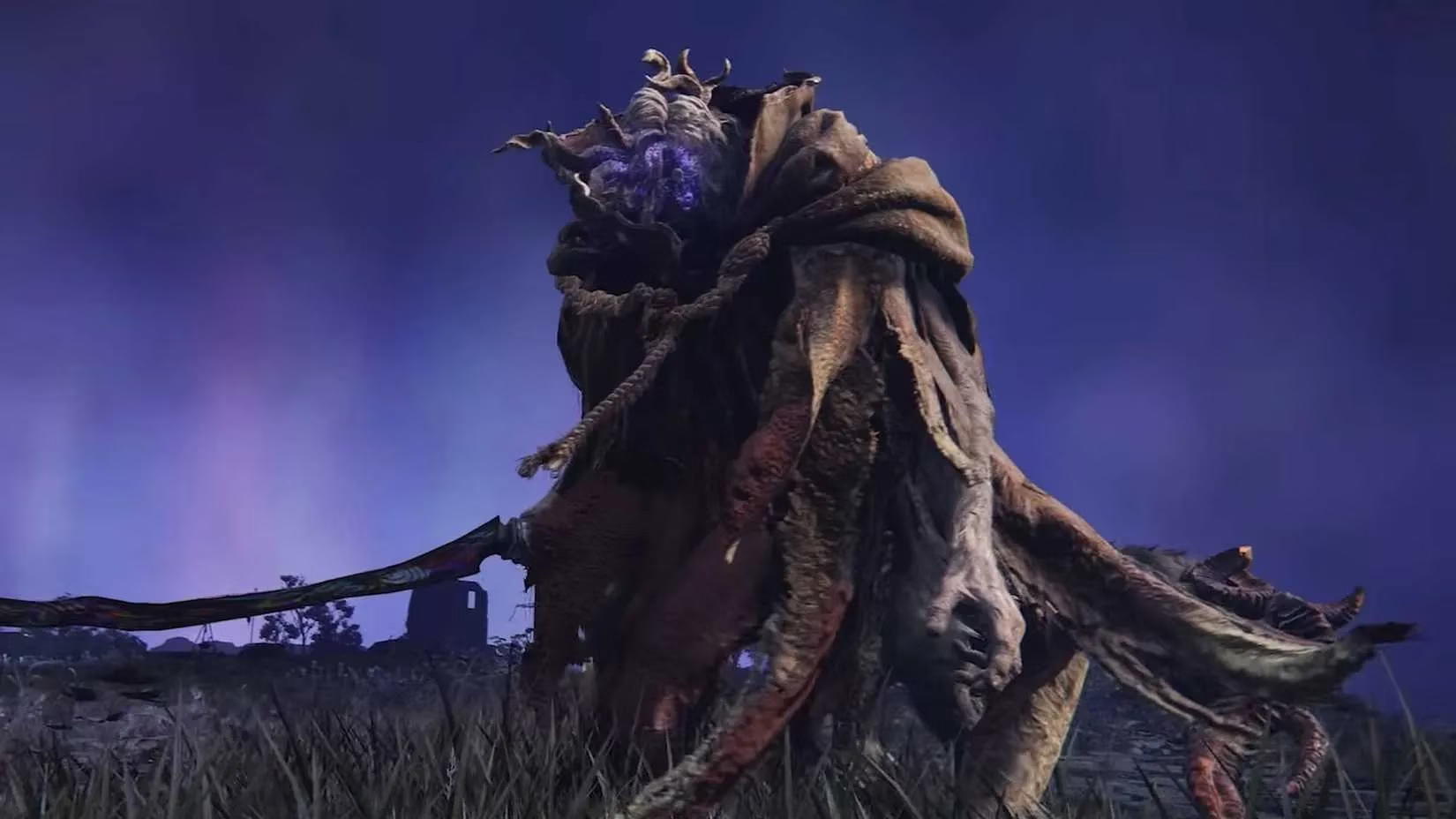
Beyond the multiplayer decisions, Nightreign has drawn criticism for technical issues on PC, which should not surprise anyone who has played a FromSoftware title at launch. Stuttering, frame pacing hiccups, and occasional crashes are the studio's unwelcome signature. A day-one patch landed in 2025, but as 2026 begins, the community does not seem convinced that the foundation has been fully repaired.
The repeated content is another sore point. So much of Nightreign is built from assets lifted from Elden Ring and the Dark Souls trilogy that playing it sometimes feels like walking through a museum where the exhibits have been rearranged but not repainted. There is comfort in recognition, but the line between homage and reuse blurs after the tenth familiar ruin or the fifteenth recycled enemy animation. It hums like a favorite song played on an instrument that has not been tuned in a while: you know the melody, but the resonance is slightly off.
| Complaint | Player Experience |
|---|---|
| No two-player mode | Pairs must add a stranger or split up |
| No voice chat | Random allies become silent and uncoordinated |
| Solo scaling | One player faces a trio-sized enemy horde |
| Technical issues | Stuttering and crashes on PC |
| Reused content | Familiar assets from Elden Ring and Dark Souls |
The Path Forward
FromSoftware has a history of listening after launch, but their fixes often arrive slowly, like patches stitched onto armor after the battle has already moved. The consensus among fans is not complicated: add a duos mode, rebalance the long boss fights, and give players a way to talk to each other. Those changes would not solve every technical problem, but they would address the most glaring social wounds. Until then, Nightreign remains an ambitious three-legged creature trying to run on a server full of people who came expecting to walk alone or in pairs.
Maybe I am too attached to the old rhythms. I have always appreciated FromSoftware's refusal to sand down every edge. But refusing to include a two-player option is not the same as preserving mystery; it is more like locking a door and calling the locked door a design philosophy. I hope that by the time I look back on Nightreign in 2026, the door will have been opened, or at least a key will have been placed under the mat.
Data referenced from Digital Foundry helps frame why Nightreign’s Steam backlash isn’t only about the three-player mandate, but also about PC performance friction that amplifies every coordination problem—stutter, uneven frame pacing, and instability can turn already-tight co-op windows into missed dodges, desynced rotations, and failed boss phases. When a game expects three players to act like one unit yet delivers inconsistent responsiveness, the social design issues (no duos, no voice chat, harsh solo scaling) become harder to “solve” with skill, because the moment-to-moment feel isn’t reliably under the player’s control.