
Elden Ring Nightreign Scholar Guide: Abilities, Relics, and 2026 Strategy
Elden Ring Nightreign’s Forsaken Hollow DLC introduces the Scholar, a support class redefining party strategy with unique utility skills.
The moment I loaded into Elden Ring Nightreign’s Forsaken Hollow DLC in 2026, I expected another flashy DPS Nightfarer. Instead, I found the Scholar, a support class that has completely changed how my regular squad survives the night. If you have been leaning on Recluse or Revenant for party utility, or even the brute Raider, you owe it to yourself to try Scholar. It is, in my experience, the best support option available right now—provided you understand its unusual toolkit.
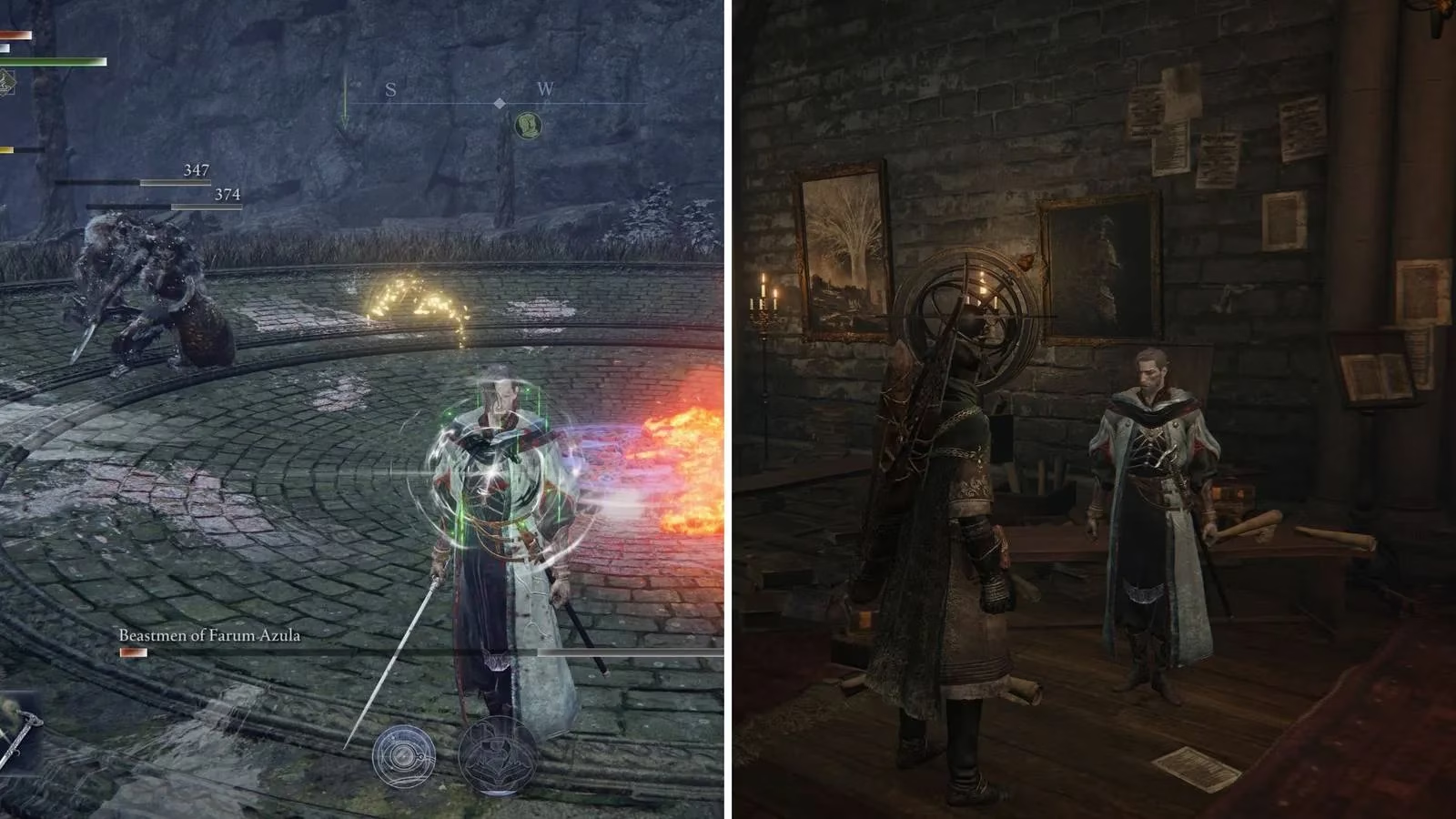
How Scholar Actually Works
Unlike a straightforward healer, the Scholar is built around item enhancement, battlefield analysis, and a damage-sharing Ultimate Art. After several runs, I have settled on a simple mental model: Bagcraft keeps your consumables relevant, Analyze turns every fight into a buff-and-debuff engine, and Communion punishes groups while reviving allies.
Bagcraft
Bagcraft is the Scholar’s unique ability, and it sounds boring until you use it. It enhances the items you use and increases stack sizes. For example, a Warming Stone becomes more effective than the base version, and jars you pick up can be stacked higher. This pairs incredibly well with Relics that grant items at the start of a match, because those starter items immediately benefit from Bagcraft and scale up as you continue using them.
Analyze Character Skill
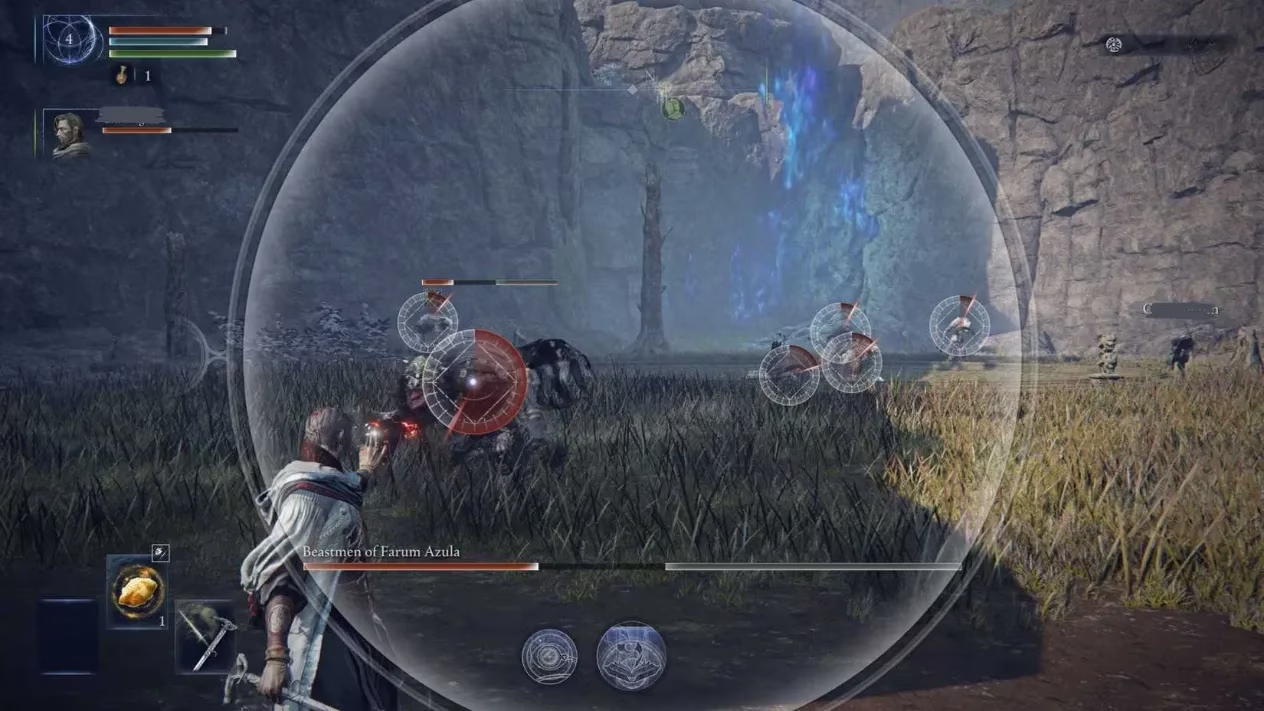
Analyze is the reason Scholar feels active rather than passive. When you trigger it, the Scholar pulls out a monocle and scans the battlefield. Enemies and allies in view receive a ring that fills red. The closer you are to a target, the faster that ring fills. Once the ring is full, you apply increasingly powerful debuffs to enemies and buffs to allies.
From my testing, the enemy debuffs include decreased attack and increased incoming damage. Ally buffs include enhanced stamina and a shield that reverberates when hit. That reverberating shield has saved my team more times than I can count during Nightlord fights.
Communion Ultimate Art
Communion is where Scholar can turn a losing fight around. The Scholar pulls out a tome, marks all nearby enemies, and those marked enemies take damage simultaneously while the Ultimate Art is active. Downed allies also receive that damage, which means you can revive a fallen teammate by attacking enemies while Communion is live. This is not just a support tool—it is a comeback mechanic.

How I Play Scholar in a Match
So what does a good Scholar rotation look like? I usually open with Analyze as soon as a fight starts, focusing on the largest enemy or the target my teammates are already hitting. The closer I am, the faster the ring fills, so I play fairly close to the frontline despite being a support. Once the ring is full, I keep an eye on teammate positioning and reapply Analyze when new enemies enter the fight.
I save Communion for two specific situations. First, when there are multiple enemies clustered together, because the simultaneous damage is wasted on a single target. Second, when an ally is down. Using Communion while a teammate is down lets us attack the marked enemy and revive the fallen player without stopping our offense. That alone makes Scholar one of the most clutch classes in Elden Ring Nightreign.
Bagcraft should be active constantly, but you do not need to overthink it. Use enhanced items liberally, and prefer Relics that give you starting items. I have had great results with Boiled Prawns at the start, because the damage reduction becomes even better when Bagcraft enhances it and a matching Relic passes the effect to allies.
Best Weapons for Scholar
For weapons, I stick with Dexterity-based armaments and anything that scales with Arcane. Scholar’s kit wants you to stay mobile and apply debuffs, so slower Strength weapons can feel awkward. Two weapons I keep returning to are Morgott’s Curved Greatsword and the Bloody Helix. Both pair well with Scholar’s playstyle and benefit from Arcane scaling. If you prefer faster pressure, a solid Dexterity curved sword or twinblade can also work, but the Bloody Helix is my go-to for the bleed pressure.
Best Relics for Scholar
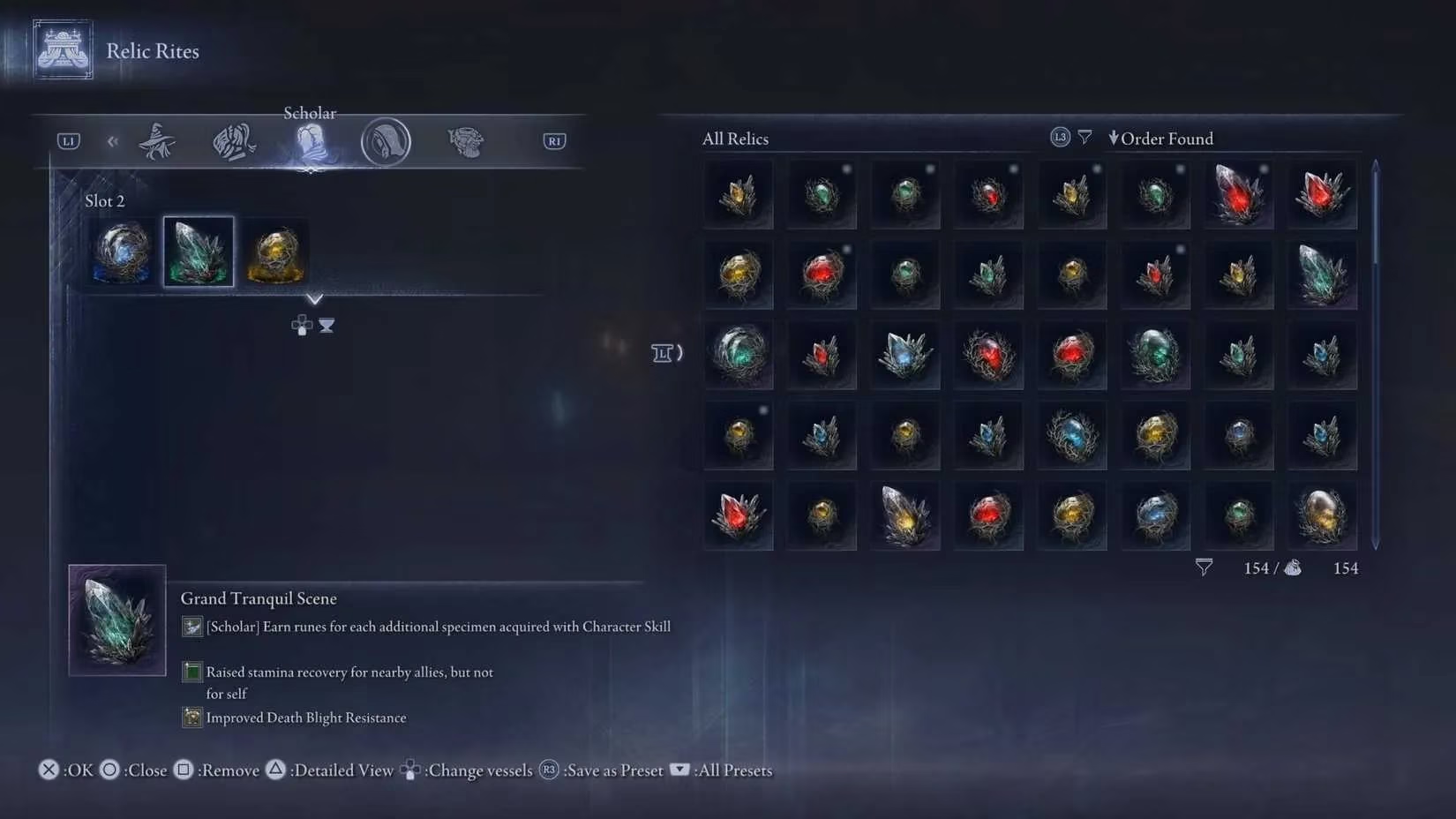
Relic choice is where Scholar gets truly broken. The best setup I have found combines three effects if you can roll them:
-
Allies targeted by Character Skill gain boosted attack.
-
Earn Runes for each additional specimen acquired with Character Skill.
-
Continuous damage inflicted on targets threaded by Ultimate Art.
The first effect is the most important. Boosting allies’ attack through Analyze dramatically increases your team’s overall damage output, which matters far more than saving a few seconds on item use. The second effect helps you snowball runes, and the third makes Communion even more lethal. If you cannot get all three, prioritize the attack boost.
Should You Play Scholar Solo?
This is the question I get asked most. Honestly, Scholar is viable solo, but it shines with a team. Analyze still works on enemies, Bagcraft still enhances your items, and Communion can still clear groups. However, the ally buffs and downed-ally revive utility are wasted if you are alone. If you insist on solo Scholar, lean harder into Arcane weapons and item damage Relics. But for the best Nightreign experience, bring Scholar into a three-player lobby and watch your squad’s survivability spike.
After dozens of hours with the Forsaken Hollow DLC, I can say Scholar has moved from “new support option” to “my default pick” whenever my group needs to push further into the night. It is not the easiest class to learn, but once you understand Analyze positioning, Bagcraft item timing, and Communion revive windows, you will wonder how you ever survived without it.