
Elden Ring's DLC Journey: From Summer Game Fest Silence to a Legendary Expansion
Elden Ring DLC silence after Summer Game Fest 2022 tested fans, but Shadow of the Erdtree finally broke the silence with a triumphant release.
Summer Game Fest 2022 felt like a dagger through the hopes of millions of Tarnished. The showcase ended without a single whisper about Elden Ring DLC, leaving fans staring at a blank screen much like a fog gate refusing to part. It was a brutal reminder that even after conquering the Lands Between, patience is the one stat impossible to level up. Now, in 2026, looking back at that silence feels almost nostalgic—because what followed proved that FromSoftware was never simply resting on its laurels.
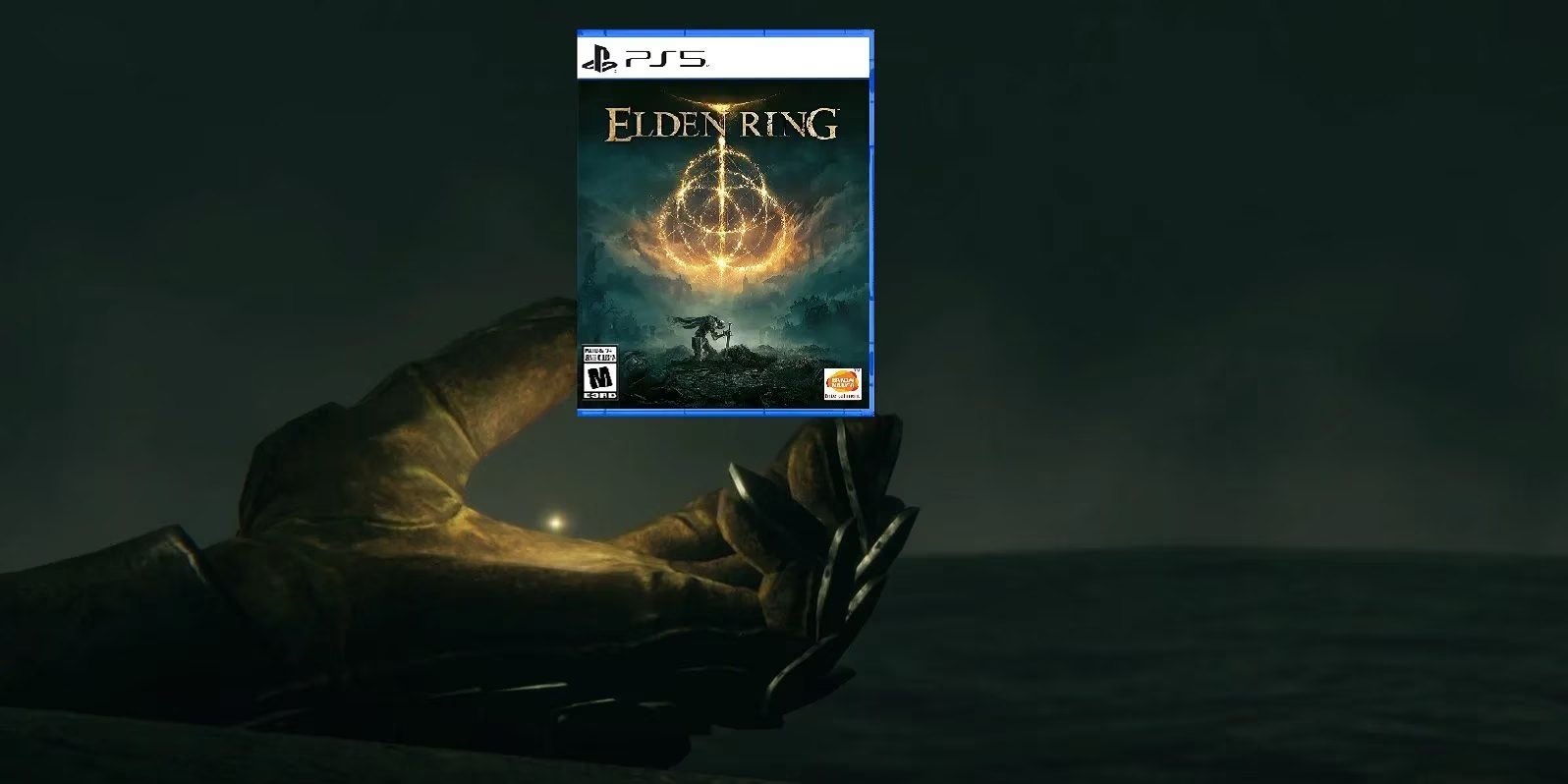
The initial disappointment made sense. By June 2022, Elden Ring had already sold over 13 million copies and dominated every corner of gaming discourse. Dataminers ripped apart files, uncovering strings like "Miquella" and unused map coordinates, fueling a wildfire of speculation. Yet FromSoftware stayed quiet. Miyazaki gave no cryptic interviews. The only official update was a minor patch adjusting Starscourge Radahn’s damage. To outsiders, it looked like the studio was ignoring a golden opportunity. But veterans of Dark Souls and Bloodborne knew better.
Why That Silence Was Always Part of the Design
Before Elden Ring, FromSoftware operated on a predictable rhythm. Bloodborne launched in March 2015 and received The Old Hunters eight months later. Dark Souls III followed a similar path—released in March 2016, its first DLC, Ashes of Ariandel, arrived that October. Fans who studied these patterns expected Elden Ring DLC by late 2022. When November passed without an announcement, forums erupted with theories of cancelled expansions or a direct leap to a sequel.
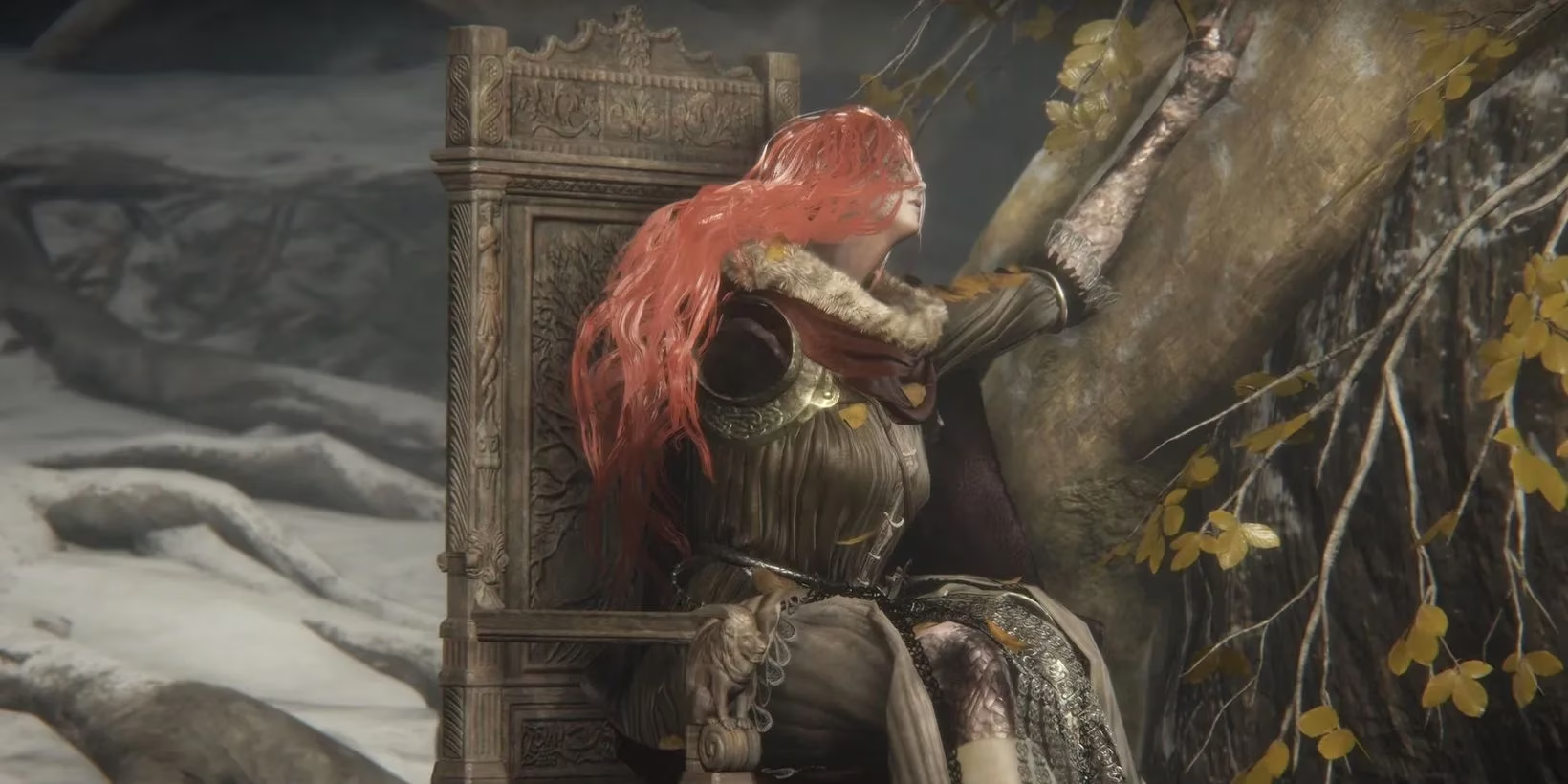
However, the scope of the Lands Between made all previous titles feel like linear corridors. The base game’s map already measured roughly 79 square kilometers—nearly six times the size of Dark Souls III’s entire world. Crafting a DLC that felt essential rather than tacked on required building a new region that could match the verticality of Liurnia, the vertical dread of Caelid, and the layered legacy dungeons that defined the experience.
Malenia’s own lore offered a poetic parallel. The Blade of Miquella waited aeons for her brother’s return, rotting in a distant haligtree while the world moved on. Tarnished across the globe found themselves in a similar stasis, returning to Crumbling Farum Azula or the Mountaintops of the Giants, seeking secrets that weren’t there yet. But unlike Malenia’s tragic vigil, the wait for Elden Ring DLC would not end in silence.
The Arrival That Changed Everything
In late 2023, a teaser trailer dropped during The Game Awards—a ghostly Erdtree, a shattered sky, and a voice whispering "Come, Tarnished." Shadow of the Erdtree was real. When it finally launched in mid-2024, the expansion didn’t just extend Elden Ring; it rewired the community’s understanding of the lore. George R.R. Martin’s fingerprints remained evident in new demigod lineages and a tragic cycle that predated Marika’s reign.
The expansion introduced the Land of Shadow, a sprawling zone larger than Limgrave and Liurnia combined, with its own legacy dungeons, roaming bosses, and a subtle day-night cycle that altered enemy patterns. More importantly, it answered questions players had been asking since launch:
-
What lies beyond the fog that consumed the Erdtree’s roots?
-
Who truly was Queen Marika’s firstborn?
-
Why does Miquella’s needle exist, and what does it mean for Outer God influence?
Players encountered new weapon classes—the Light Greatsword and the Twinblade Staff—which opened build diversity without powercreeping the existing meta. The boss roster delivered some of FromSoftware’s most punishing encounters yet, including a three-phase duel against a fully realized form of Godwyn that sent shockwaves through speedrunning communities.
The 2026 Perspective: A Living World
Today, Elden Ring has become something few single-player games achieve: a permanent cultural fixture. Shadow of the Erdtree didn’t just sell millions of copies; it reignited the cooperative and PvP scenes that had dwindled after the initial launch frenzy. The Colosseum updates that accompanied the DLC transformed combat trials into a legitimate esport niche, with tournaments streamed weekly.
Data from SteamCharts shows an interesting trend. Instead of a sharp spike and rapid decline, Elden Ring’s player count has maintained a plateau since 2024, hovering around 45,000 concurrent players even during off-peak hours. That figure surpasses many live-service games. Modders have also flourished—total conversion projects like “Age of the Stars: Reforged” have been downloaded over 2 million times, turning the Lands Between into a canvas for player creativity.
FromSoftware’s approach to Elden Ring DLC now serves as a case study in the industry. At a time when publishers push battle passes and seasonal content within weeks, the studio demonstrated that a deliberate, almost monastic development cycle can produce expansions that feel like entirely new games. The 18-month gap between base game and DLC wasn’t a failure of planning; it was the breathing room required for an open world to evolve without cracking its own foundation.
Lessons for the Future
Rumors now swirl about a second expansion, though Miyazaki has remained noncommittal. Multiple endings from Shadow of the Erdtree hint at unresolved threads—the fate of the Twin Prodigies, the true nature of the Elden Beast’s origin, and the Outer God of Rot’s next move. Whether FromSoftware returns to the Lands Between or pivots to a new IP, the lesson stands: rushing announcements would have broken the spell.
The Summer Game Fest 2022 silence that once stung now reads as the first chapter in a longer saga. FromSoftware didn’t ignore its community; it simply refused to promise what wasn’t ready. And in 2026, with thousands of hours of fresh content behind them, Tarnished everywhere can agree—the wait wasn’t a burden. It was a crucible. Just like Malenia’s blade, it honed something sharper than anticipation: a world worth returning to, again and again.