
Elden Ring's Elden Beast: The Final Boss That Holds The Greater Will's Secret
Elden Beast lore and Elden Ring secrets reveal this cosmic entity as the true heart of the game’s mythos, reshaping its entire story.
I'll never forget my first dance with the Elden Beast. After hours of carving through Radagon, my hands still trembling, the arena melted into an endless sea of glowing water. Then it rose: a cosmic draconian creature wreathed in golden light, a sword the size of a building, and a soundtrack that felt more like a hymn than a boss theme. That moment in 2022, and the hundreds of retries that followed, cemented the Elden Beast as one of gaming’s most unforgettable final encounters. But beyond its jaw-dropping spectacle, this entity holds a web of secrets that reshapes everything we thought we knew about Elden Ring’s world. By 2026, after years of community digging, new lore revelations, and even a shadow-drenched DLC that touched on the Outer Gods, the creature once dismissed as a mere final hurdle now feels like a keystone to the entire mythos.
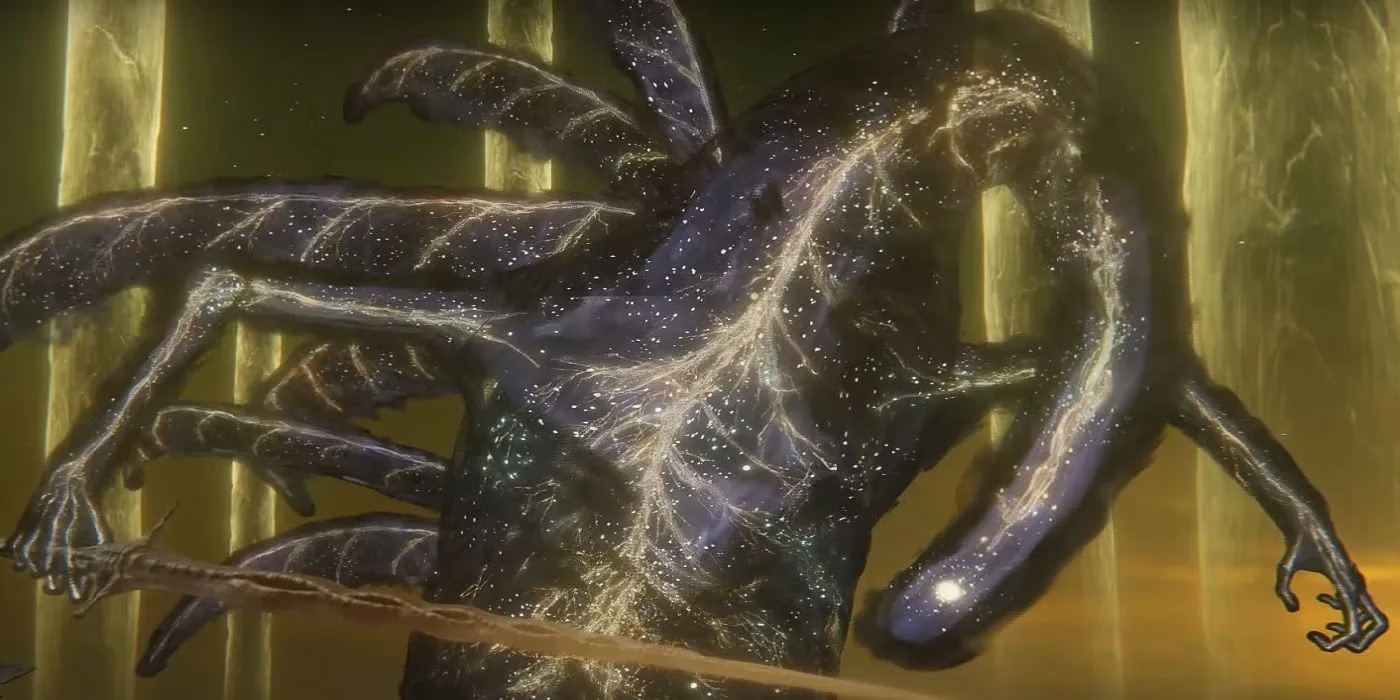
But what exactly is the Elden Beast? At first glance, it seems like a divine avatar thrown in by the Greater Will as a last resort. Dig deeper, and you’ll find it’s far more ancient and foundational than Marika herself. The item descriptions scattered through the Lands Between reveal the Elden Beast came to this world inside a golden star—a meteorite sent by the Greater Will. This wasn’t a simple comet impact; it was a carefully orchestrated delivery of living order. The Beast became the Elden Ring. That’s a crucial detail many Tarnished overlook. It didn’t just guard the Ring or manifest from it; the creature is the Ring in its purest, most aggresive form.
Before Marika, before the Erdtree, the Elden Beast was the physical embodiment of the Greater Will’s concept of order itself. When Queen Marika ascended to godhood, she didn’t simply claim a ring—she fused with this cosmic entity, becoming its vessel. Her body literally housed the Beast, which explains the horrific, fractured state we see inside the Erdtree when Radagon falls. The creature that emerges from the dissolved Marika/Radagon is the same being that once arrived on that star, finally breaking free after millennia of being shaped into a system of Grace and Golden Order dogma.
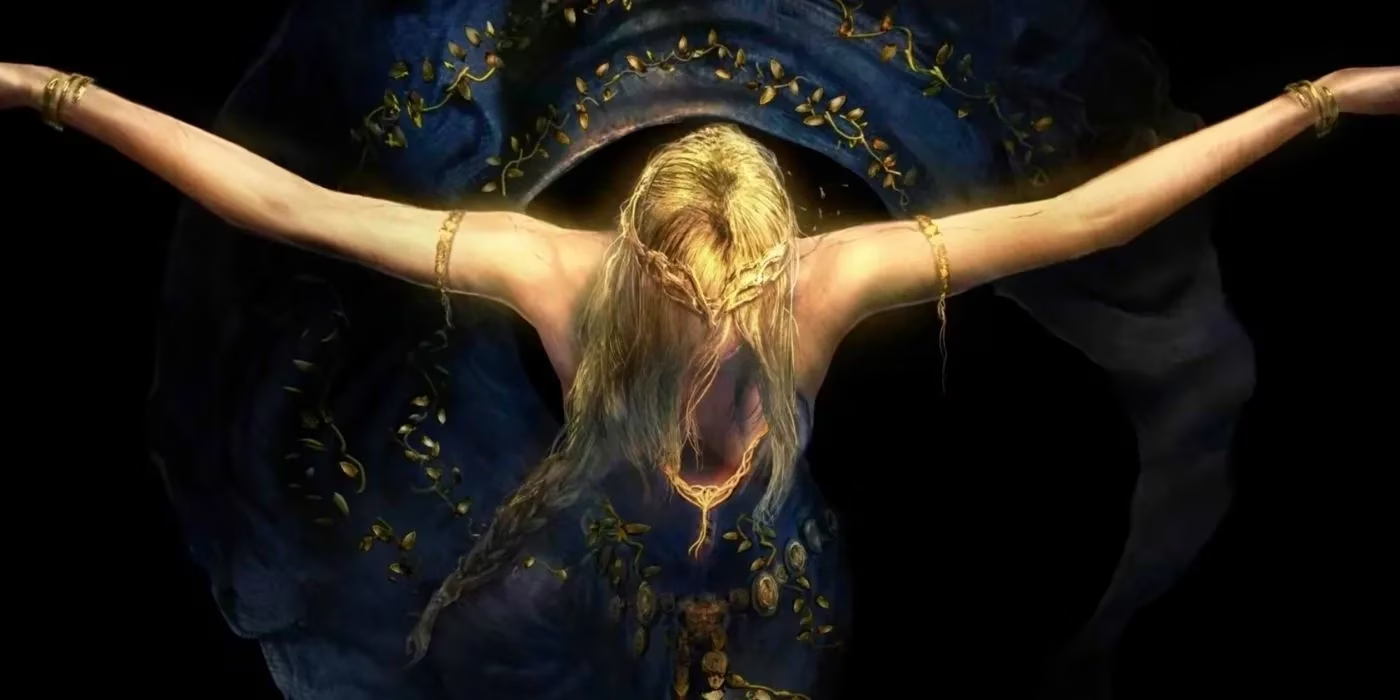
That fusion has profound implications. As a vassal for the Greater Will, the Elden Beast acts as a divine proxy—a landlord ruling a territory on behalf of an absent owner. And because it became the Elden Ring, every law of reality enforced by Marika’s Golden Order was ultimately a projection of this alien creature’s nature. The runes we collect, the blessings of Grace, even the tree itself might all be extensions of the Beast’s body. Think about the golden mist attacks it uses in battle: that’s not just a spell, it’s the raw substance of the Elden Ring blasting you with primordial law. No wonder it’s the hardest-hitting sorcery school in the game!
For many players, including myself, the fight initially felt disconnected from the grounded, panicked duel against Radagon. Radagon is a shattered god hammering you into the floor with personal fury; the Elden Beast swims away, breathes cosmic fog, and rings you with an inescapable sword rain. Emotionally, it’s jarring. Loretically, it’s perfect. You’re no longer fighting a person—you’re battling a system. A system that has controlled the Lands Between for eons. Every move it makes is a procedural, almost indifferent assertion of order. When you finally land that last hit, you’re not just killing a monster; you’re ripping the original sovereign code out of the world.
So why does all this still matter in 2026? Because the community’s understanding has only deepened. Modders who extracted the boss arena’s silent background assets discovered star patterns reminiscent of the same outer constellations linked to the Primeval Current sorcerers. Dataminers found cut voice lines suggesting the Beast once attempted communication—its incomprehensible roar may have been a cry for understanding, not just mindless rage. And let’s not forget the \u003ccode\u003eShadow of the Erdtree\u003c/code\u003e expansion: while it focused more on Miquella, the new Outer God allusions to a “greater will without stars” retroactively hinted that the Elden Beast’s starfall event wasn’t unique.
Here’s a compact breakdown of what makes this boss tick, from a lore-obsessed Tarnished’s perspective:
-
🌟 Celestial Origin: The Elden Beast was carried inside a golden star sent by the Greater Will. It predates the Erdtree entirely.
-
🧬 Living Elden Ring: After crashing into the Lands Between, the Beast became the Elden Ring. It is not a guardian; it is the object we’ve been trying to mend.
-
🤝 Vessel Fusion: Marika’s godhood required her to become the Beast’s vessel. Her body and the Beast were one, which is why its emergence from her shattered form is so visceral.
-
🦾 Order Made Flesh: Every attack is a manifestation of metaphysical law. The Sacred Relic Sword the remembrance gives us? That’s literally a shard of its spine, still vibrating with the logic of an Outer God.
-
🕯️ The Two Fingers’ Big Brother: While the fingers whisper to the chosen Tarnished, the Elden Beast enforces. It’s the muscles behind the doctrine, dormant until order is truly threatened.
Of course, the debate still rages on: is the Elden Beast itself truly evil, or just a tool of the Greater Will performing its function? After six playthroughs and countless lore videos, I lean toward the latter. The Beast never sought power; it was built to be a system. That doesn’t make it any less terrifying, though. When I revisit the fight, I now see the golden rings that cage you during its grab attack as the ultimate metaphor—the cyclical, inescapable prison of order from which the Lands Between can never fully free itself, no matter what ending you choose. And that’s why the Elden Beast remains, four years later, the most philosophically haunting final boss FromSoftware has ever crafted. Grace sustained, Tarnished, and never forget the beast that swam among the stars before it swam beneath the Erdtree.