
Elden Ring's Jellyfish Might Be Deceased Children: The Lore Theory That Haunts Me
Elden Ring's Spirit Jellyfish Ashes hide tragic Aurelia lore: these glowing companions may be dead children searching for home.
I’ve played a lot of Elden Ring since it launched, and I’ll admit something embarrassing: for the longest time, I thought those floating jellyfish were just set dressing. You know, moody little translucent critters that gave Limgrave and Liurnia an extra touch of melancholy. They never felt like true enemies—they drift around peacefully, and unless I swung at them first, they usually left me alone. Well, turns out the lore around these glowing blobs is way heavier than I expected, and honestly, this theory hit me like a truck.
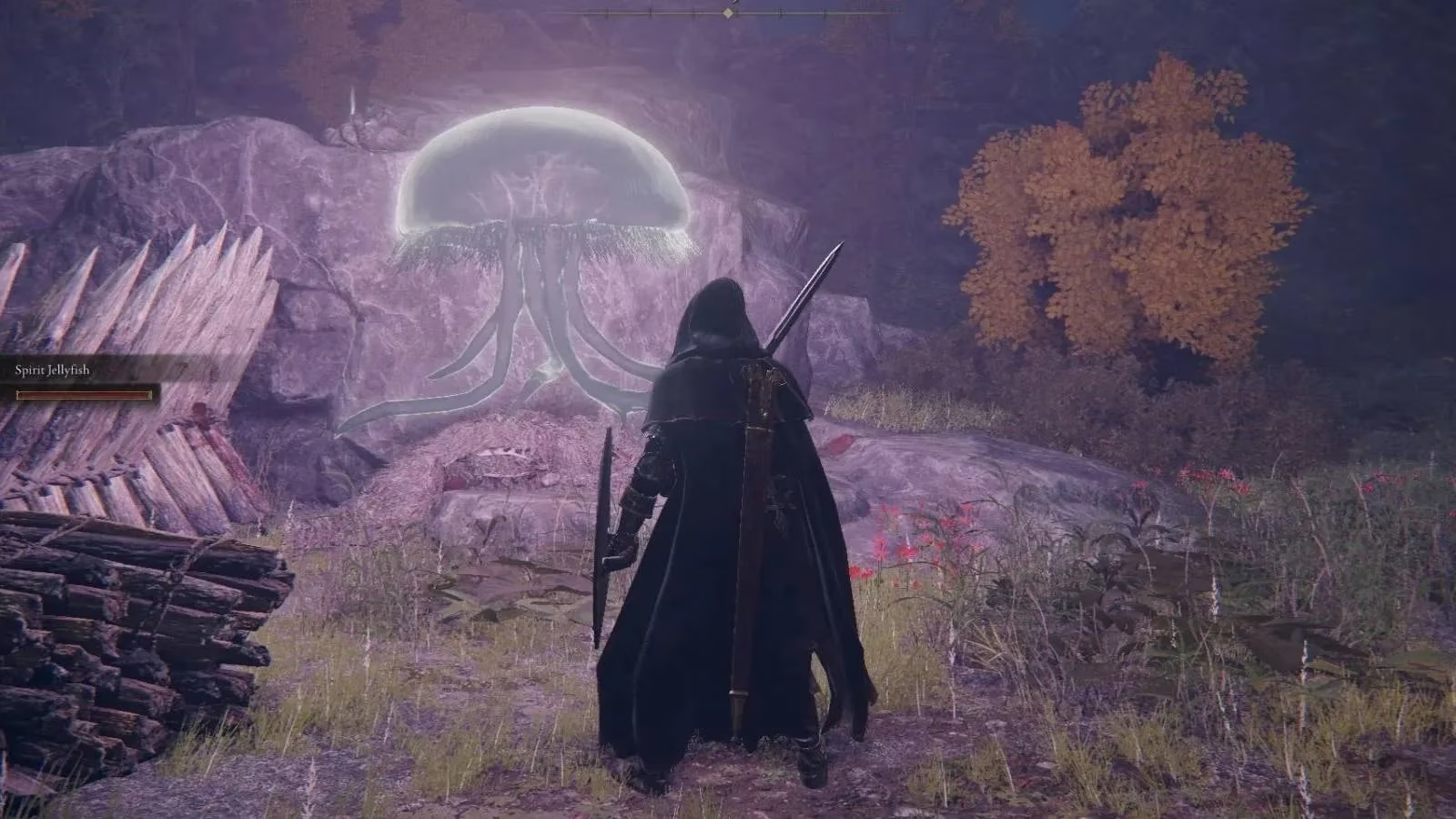
Most of us probably grabbed the Jellyfish Spirit Ashes early on without thinking much of it. You summon a friendly jellyfish in battle, it floats there, it spits poison or whatever, and it helps you out. Simple enough. But if you actually read the item description—like I did after a hundred hours—you’ll see something that stops you cold. The summoned jellyfish isn’t just “a jellyfish.” She’s a girl named Aurelia. The description calls her “prone to tears” and says she’s searching “for her distant home.” Excuse me? That’s not what I signed up for when I wanted a cute spectral pet.
This is where things get haunting. A Redditor named FreeWatercressSalad (via GamesRadar) put together a more complete theory, and I haven’t stopped thinking about it since. Their evidence points to the Mountaintop Cemetery in the Mountaintops of the Giants. If you explore that area, you can find two smaller headstones dedicated to Aurelia and her sister, Aurielette. The inscriptions say they “never saw the stars.” Let that sink in. Those are not random decorative gravestones; they’re tied directly to the sisters.
Now combine that with an actual quest in Elden Ring. You can reunite Aurelia with her sister—who is, wait for it, another jellyfish. And the sister sounds distinctly youthful. So we have two young girls, referenced on gravestones, both existing as spirit jellyfish after death. The implication is pretty dark: the jellyfish we’ve been casually slapping around the Lands Between might be dead children. All of them. Or at least enough of them that the whole jellyfish population takes on a new, tragic meaning.
I know FromSoftware games love their buried storytelling, but this one feels especially cruel because the game hides it in plain sight. You don’t get a dramatic cutscene explaining that Aurelia was a real child who never got to see the stars. You just read an item description, stumble across a couple of gravestones, and connect the dots. That quiet discovery is classic Elden Ring, and it’s also why so many players—including me—believe the theory holds water.
The involvement of George R.R. Martin makes this even more believable. Martin helped write the foundational lore for Elden Ring, and he’s not exactly known for shying away from heartbreaking or unsettling stories. His fingerprints are all over the game’s melancholic tone, from ruined families to doomed lineages. Even beyond Martin’s direct contributions, FromSoftware clearly embraced that darkness. So the idea that gentle jellyfish are the lingering spirits of children fits perfectly with the world’s emotional logic. It’s sad, it’s messed up, and it’s entirely on brand.
Of course, accepting this theory comes with a side order of guilt. How many times have I killed a non-aggressive jellyfish just for runes? Too many. Now every time I see one floating near a cliff or bobbing over some ruins, I hesitate. Because maybe that’s someone’s kid. Maybe she’s still looking for home. And I’m standing there with a sword. Ouch.
To make sense of the clues, here’s a quick breakdown:
| Clue | What It Suggests |
|---|---|
| Jellyfish Spirit Ashes describe a girl named Aurelia | The summoned creature was once human, likely a child |
| She is “prone to tears” and seeks a “distant home” | She exists in a state of sadness and unresolved longing |
| Mountaintop Cemetery has graves for Aurelia and Aurielette | The sisters are remembered as deceased individuals |
| The headstones say they “never saw the stars” | Their lives ended before they could fully experience the world |
| The reunion quest features two youthful-sounding jellyfish | The girls persist as spirit animals after death |
| Other jellyfish share similar behavior and appearance | The ghostly form may apply to many deceased children |
That table basically ruined me. I’m not crying, you’re crying. Okay, maybe I’m crying a little. But I do think this theory makes the game richer. It turns a simple combat encounter into a moral dilemma. It reminds you that FromSoftware doesn’t just scatter enemies around for gameplay; even the softest creature can carry an entire hidden tragedy.
Since 2022, this theory has kept floating around the community, and in 2026 it still comes up whenever people talk about Elden Ring’s saddest secrets. New players keep discovering it and having the same reaction: first confusion, then heartbreak. Some fans have started leaving messages near jellyfish gatherings like “try friend” or “behold, sadness!” It’s the kind of shared grief that only FromSoftware fans understand.
So next time you’re wandering Limgrave and a jellyfish drifts by, maybe don’t swing first. Maybe just watch it for a moment. Because somewhere in that glowing blue shape, a girl named Aurelia might still be dreaming of a home she never reached. And that’s enough existential sorrow for one play session.