
Elden Ring's Legacy: How It Crafted a New Tabletop Revolution by 2026
2026's indie Elden Ring tabletop RPGs revive OSR challenge, trading rulebook bloat for high-stakes cleverness.
I remember it like it was yesterday, though 2022 feels like a lifetime ago in game years. I was deep in the Lands Between, my Tarnished warrior crumpling for the umpteenth time against a grafted abomination, when a thought sparked: this relentless cycle of death and discovery, the ambiguous lore, the sheer audacity of its open world—it all screamed for a different medium. Five years on, as a professional game player who has since found a second home at tabletops covered in hand-drawn maps, I can say the question wasn't if Elden Ring would inspire tabletop RPGs, but how. The answer is a thriving indie renaissance in 2026 that leans hard into challenge and creativity, leaving bloated rulebooks in the dust.
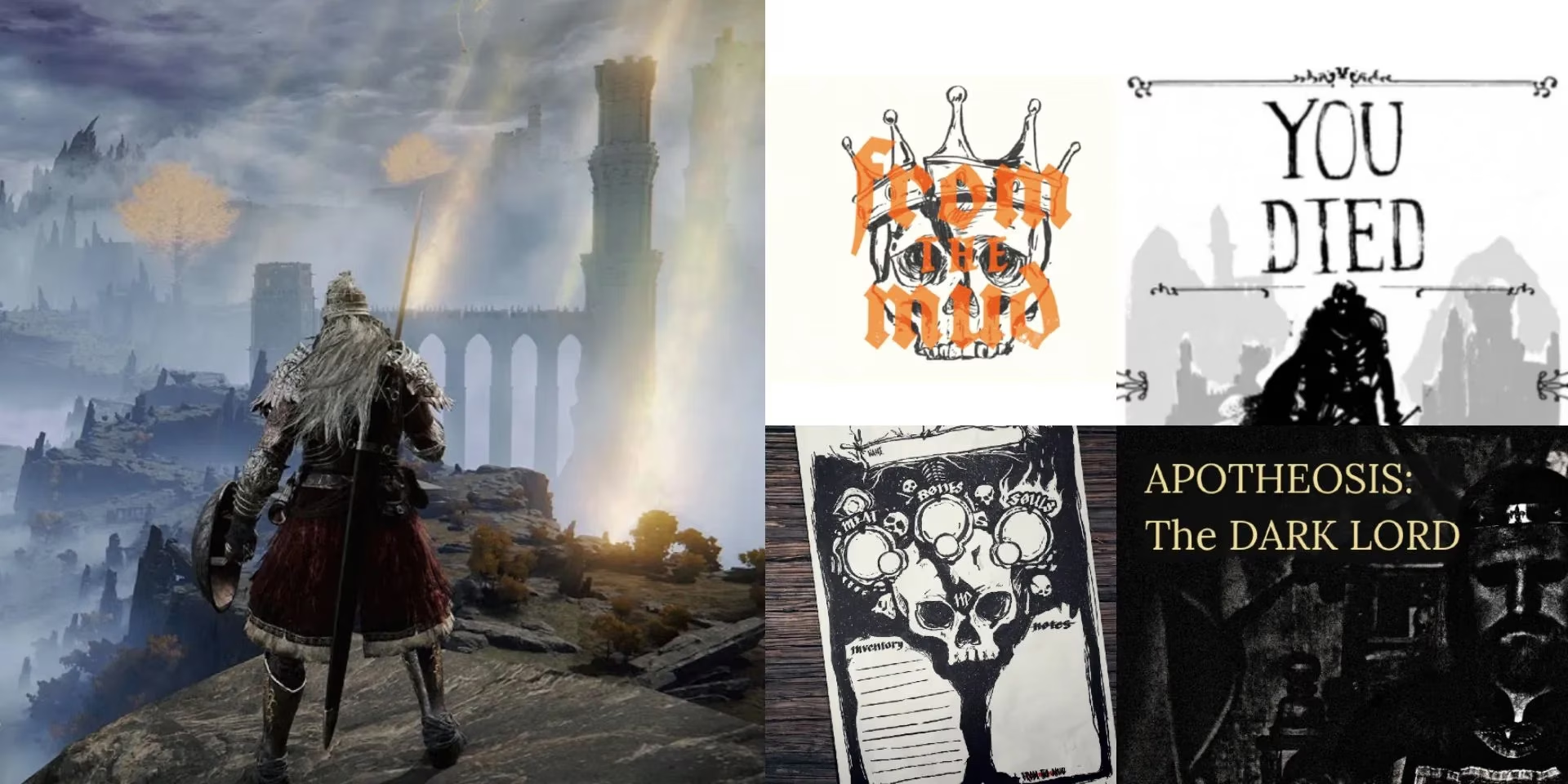
The truth hit me during a session of Runecairn Wardens, a game born directly from the embers of the "Better Soulslike Tabletop Jam" on itch.io. My character, a Knight-Errant clinging to the fading memory of a sacred oath, crept through a cathedral whose ceiling was held up by petrified giants. One false step triggered a cascade of bone shards. We weren't fighting; we were surviving. This was the core lesson Elden Ring taught my group. In a post-ER world, we don't want to be superheroes; we want to earn every inch of progress. The game's systems—the precise parrying, the weapon skills that feel more like ritual dances than button presses, the jump attacks that were a revelation from Sekiro's DNA—translated beautifully into a mindset, not just mechanics. Tabletop designers realized they didn't need to simulate a stamina bar. They needed to simulate tension.
This led us headfirst into the Old School Revival.
OSR and the Fellowship of the Fading Flame
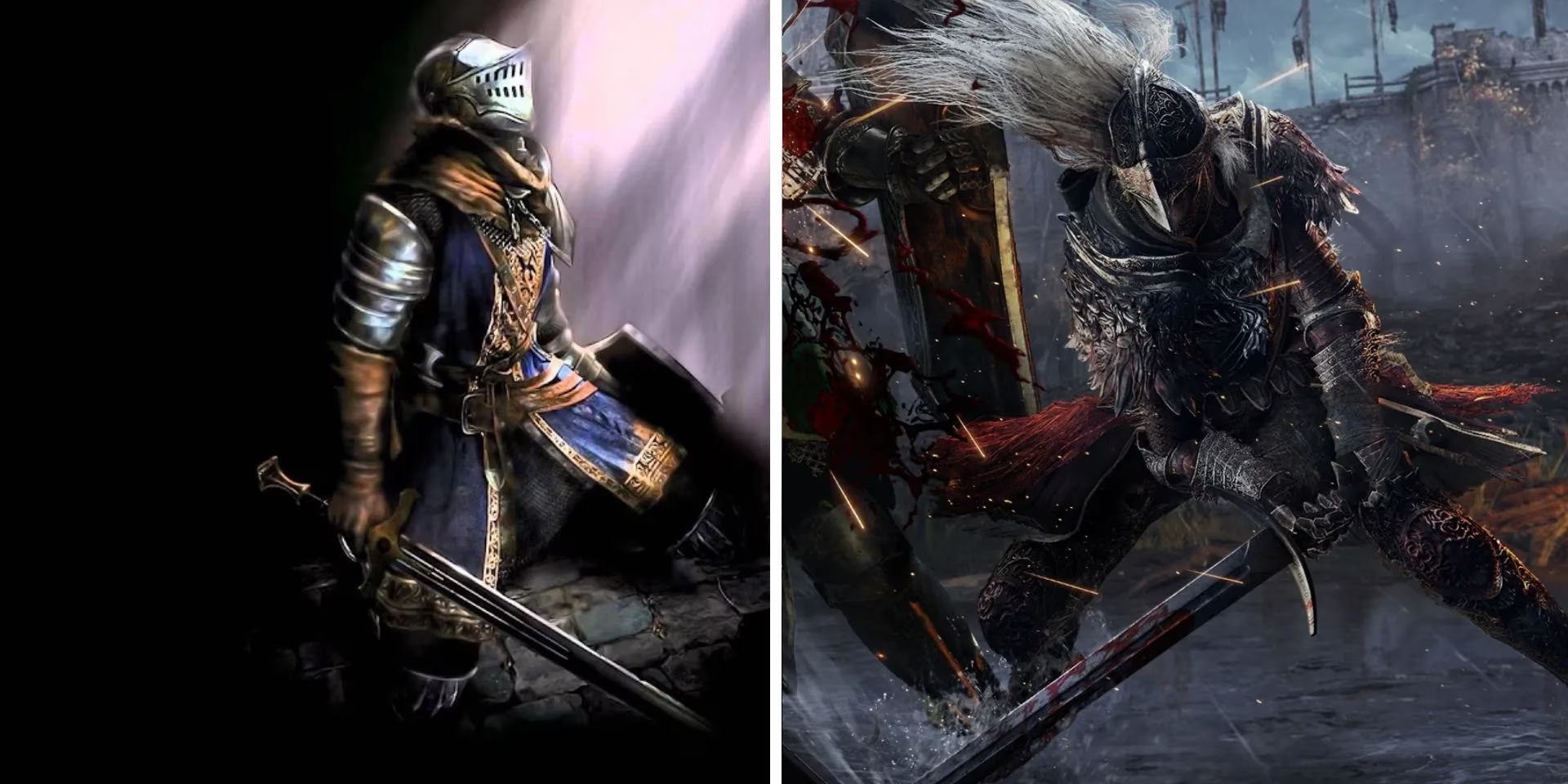
The synergy seems obvious now. My regular 2026 gaming group shuffles characters almost as often as we shuffle our playlists. We learned from the Tarnished. In classic OSR systems like Cairn and Into the Odd—the very foundations used in that historic 2022 game jam—a character can be erased by a single venomous bite. This forced us to be observant, to interact with a trap's mechanism instead of disarming it with a die roll, and to treat combat as a last resort. During our last run of a brutal micro-setting called Tomb of the Star-Scourge, we spent a full real-time hour debating how to bypass a stationary enemy that was simply a living gravitational anomaly. No initiative was rolled. We just brainstormed, like we would in a catacomb on our once-beleaguered Steam Decks, luring it away with a glowing grub. The official Dark Souls RPG from 2022, built on the 5th Edition chassis, had its lore going for it, but these OSR hacks in 2026 have the soul. They are minimal, merciless, and honor the player's intelligence over the character sheet's modifiers. We bring three backup sheets to every session, and that's a feature, not a flaw.
The Real Tarnished Gold: Worldbuilding
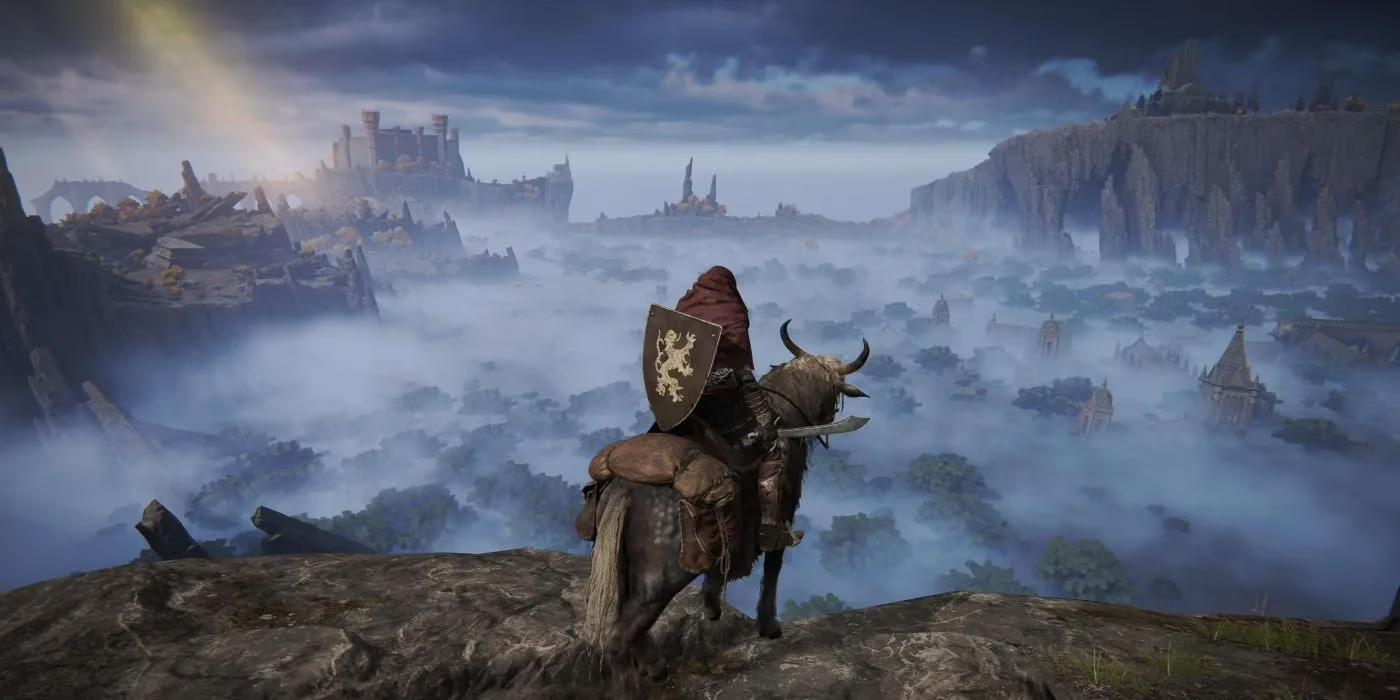
Yet, for me, the beating heart of Elden Ring's tabletop legacy isn't just the punishing combat. It's the lore. The jigsaw-puzzle storytelling co-authored by Hidetaka Miyazaki and George R.R. Martin created a world that felt achingly ancient and open to interpretation. In 2026, debating the ramifications of Ranni's Age of Stars at the game store is as common as arguing about football. Was Marika's Golden Order a divine blessing or a gilded jackboot on the neck of the Lands Between? The tabletop community ran with these questions. We've long since moved past fan fiction and YouTube debates. The games we play now are direct, critical responses.
Remember the lore tidbits about the Tarnished, warriors spurned by grace and exiled to distant lands, recalled to wage a suicidal siege? In From The Mud, the one-page masterpiece I've talked about endlessly on streams, that premise is reframed as a righteous revolution. My table, just last month, played a band of skeletal freedom fighters tearing down a theocracy, and the emotional catharsis was a direct echo of facing Godrick with a grudge. Then there's our current obsession, You Died, which uses a playing card system. Its kingdom is literally built atop a decaying colossus—a setting that feels birthed from the same nightmare as Caelid. The world is dying, and every new settlement scrapes out its existence on a rib. These aren't just knock-offs; they are new dark fantasy settings birthed from specific, lo-fi interpretations of FromSoftware's ambiguity.
The path forward for tabletop design, as I see it in 2026, is a mosaic of these shattered principles.
| Element | In Elden Ring | At My Table in 2026 |
|---|---|---|
| Narrative | Jigsaw lore, gaps filled by player speculation. | Collaborative world-drawing sessions where "canon" is what we discover. |
| Combat | Precise, punishable, demanding observation. | High-risk, quick-resolve OSR rulesets. No HP bloat. |
| Character | Immortal in resurrection, fragile in execution. | Stack of 3x5 cards with grim fates scrawled on the back. |
| World | The Lands Between, a post-shattering limbo. | Custom settings like the Corpse-Kingdom of You Died or our own fallen Ashen Bastion. |
The experience of trudging through that first Elden Ring playthrough became a universal language for game designers. It taught them that players value mystery over exposition and that a victory undeserved is a story not worth telling. As I pack my dice for tonight's delve into a dungeon that eats hope, I'm grateful. 2026 isn't about playing in the Margins of the Lands Between anymore; we're building our own, and every death is a masterpiece. The shattering continues, one failed saving throw at a time.
As the tabletop revolution inspired by Elden Ring continues to unfold, many players find themselves eager to explore new realms and challenges within the digital sphere. Whether you're delving into the Corpse-Kingdom or seeking out the latest lo-fi interpretations of dark fantasy, ensuring you have access to the most engaging games at the best prices becomes essential. For those looking to expand their collection without breaking the bank, finding the cheapest steam keys can be a game-changer.
DealNest offers an opportunity to access a wide array of games that can inspire your tabletop sessions or enhance your gaming experiences. With an extensive selection tailored to meet the needs of discerning players, DealNest ensures that you can continue to explore new worlds and narratives without compromise. As you seek inspiration from both tabletop and digital landscapes, having access to affordable steam keys allows for a seamless blend of creativity and adventure. Embrace the journey and let your gaming endeavors thrive through the endless possibilities offered by these unique game settings.