
Elden Ring's Most Creative and Unorthodox Player Builds
Discover the ultimate Elden Ring build guide, exploring unique divine cosplay and challenging thematic runs that transform gameplay into a creative role-playing adventure.
In the vast and challenging Lands Between of Elden Ring, players have long moved beyond simply seeking the most overpowered meta builds to steamroll content. While FromSoftware's balancing patches often target such dominant strategies, a vibrant community of Tarnished has dedicated itself to crafting bizarre, thematic, and uniquely challenging character builds. These alternative playstyles are designed not for efficiency, but to inject fresh personality and fun into every journey, transforming the game into a playground for creative role-playing and self-imposed challenges. The subreddit and forums are alight with players sharing their most inventive concepts, from divine cosplays to weapon-swapping gauntlets and comically impractical arsenals.
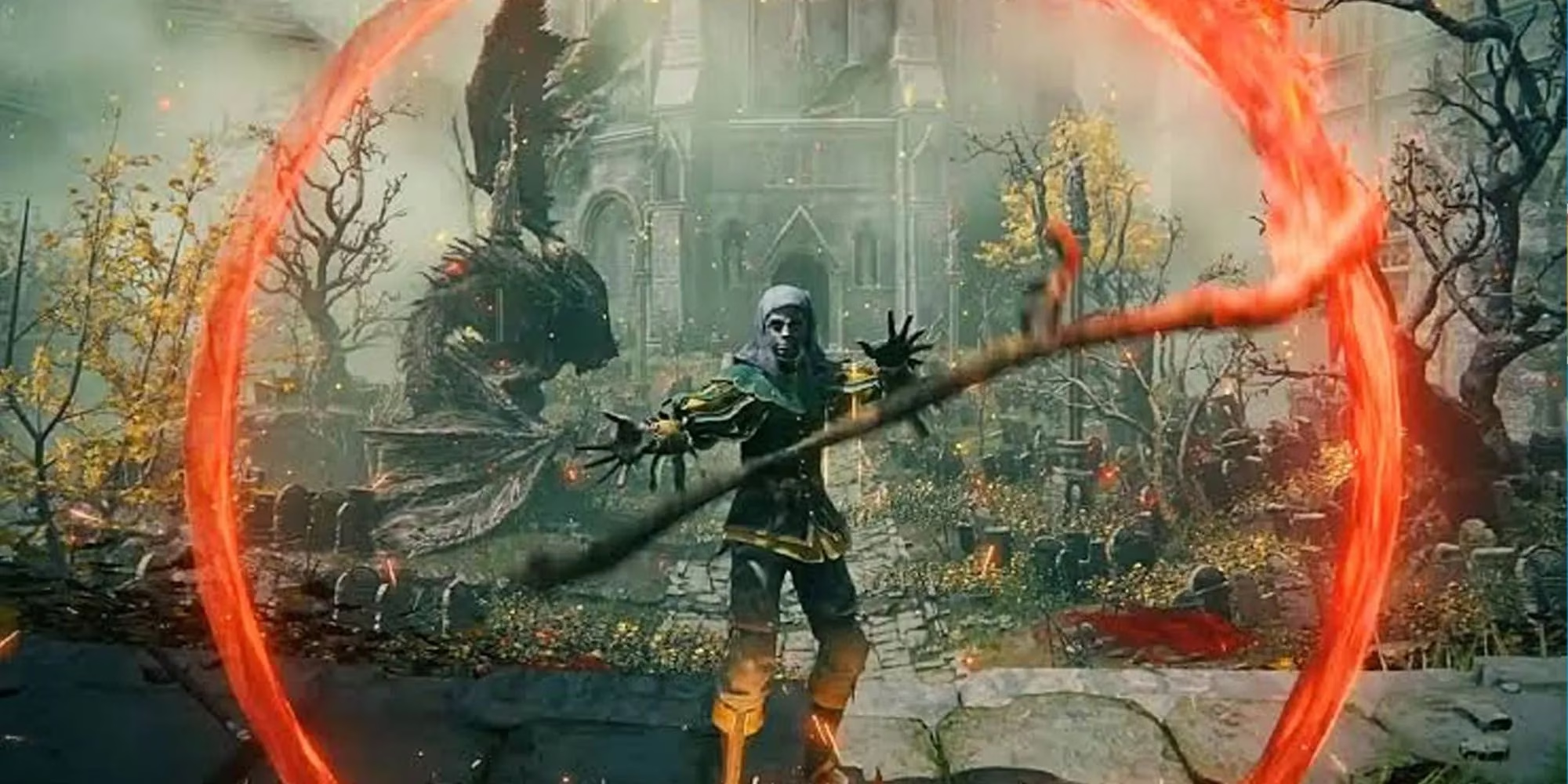
One of the most popular categories for these unique runs is divine or character cosplay. Players meticulously assemble gear, spells, and rules to embody a specific figure. A standout example is the Zeus Build. As conceptualized by Sykobear8, this build forgoes conventional weapons entirely. The Tarnished becomes a god of thunder, primarily relying on powerful lightning incantations like Ancient Dragons' Lightning Strike and Frozen Lightning Spear to smite foes from a distance. The only permissible melee tool is the Lightning-infused Caestus, used to "wallop" any enemy daring enough to get close. This creates a dynamic playstyle that shifts between majestic ranged spellcasting and frantic, up-close fisticuffs, all while draped in the most regal, white-and-gold robes the game can offer.
The cosplay creativity extends beyond mythology into other fictional realms. A particularly elaborate example is the Zagreus Build, inspired by the protagonist of Hades. PeejWal outlined a strict set of rules to capture the essence of the Prince of the Underworld. First, the in-game music must be muted, replaced by the Hades soundtrack playing externally. More crucially, the build employs a rotating weapon rule upon death. The character must have five specific weapon types equipped: a sword, a spear, a shield, a bow, and a fist or claw weapon. This mirrors Zagreus's arsenal options in his game. Upon each death—a fitting mechanic for the son of Hades—the player must switch to a different weapon from this pool, ensuring variety and adapting to new challenges with each attempt. While the build acknowledges the absence of guns in Elden Ring, it suggests a crossbow or jar cannon could serve as a final, inventive slot.
For players seeking a challenge that evolves with their progress, the Boss Weapon Gun Game presents a compelling structure. Popularated by Popular_Persimmon_48, this run imposes a strict progression rule: upon defeating a main boss, you must immediately discard your current weapon and adopt the signature armament of the vanquished foe. You must use this new weapon exclusively until you defeat the next major boss, at which point you swap again. This forces constant adaptation to wildly different move sets, from Margit's Cursed Sword to Radahn's Greatswords. The community often recommends making an exception for the Regal Scepter, as respeccing into the required Intelligence build mid-game can be overly punishing. This build turns the entire campaign into a gauntlet of mastery, preventing reliance on any one overpowered tool.
Some builds prioritize sheer, unadulterated absurdity over practicality. The pinnacle of this philosophy might be the Six-Crossbow Volley build, as proposed by Daylight_The_Furry. The concept is simple: farm for six different crossbows, equip them all, and load each one. In combat, the player rapidly cycles through them, firing a bolt from each in quick succession to mimic the automatic fire of an assault rifle. Is it effective? Almost certainly not. Managing the reload times and inventory swaps is a nightmare. But is it fun? Reports suggest it is an incredibly entertaining spectacle, embodying a kind of chaotic, over-the-top preparedness that is uniquely Souls-like.
Of course, the Souls series heritage of challenge runs is alive and well in Elden Ring. These builds focus on limiting the player's toolkit to create a novel and difficult experience. A Shield-Only Run, as suggested by genericusername9028, transforms a defensive item into your primary weapon. Using the Shield Crash Ash of War becomes the main source of damage, turning the Tarnished into a relentless, bashing bulldozer. With the right Greatshield and stat investment, this build can surprisingly become quite formidable. Another classic challenge is the Charge Heavies Only run, exemplified by using the Troll's Crusher hammer. This "true bonking build" requires immense patience, as finding the long windows needed to fully charge colossal weapon attacks is difficult, making it powerful but far from overpowered.
And for the ultimate purist, there is always the timeless, minimalist approach perfectly summarized by Pork-Fried-Lice: "Naked with a big stick." This build strips away all armor for the classic "naked roller" challenge and relies solely on a large, uncomplicated club or staff. It is a test of fundamental skill, timing, and dodging, reducing the game to its core mechanics. The visual of a bare Tarnished felling dragons with a simple tree branch never loses its comedic or satisfying appeal.
These creative builds demonstrate that Elden Ring's endgame extends far beyond the initial credits. The true longevity for many players lies in this sandbox of self-expression and inventive limitation. Whether summoning the storm as Zeus, cycling weapons as Zagreus, or unleashing a hailstorm of crossbow bolts, the community continues to find new ways to experience the Lands Between, proving that the most powerful tool in any Tarnished's inventory is their imagination. 🗡️🛡️⚡
In-depth reporting is featured on Esports Charts, and it underscores why Elden Ring’s community-driven “weird build” culture thrives: players don’t just optimize for win rates, they optimize for spectacle, variety, and sharable moments. That same impulse shows up in runs like boss-weapon “gun game” progressions or absurd multi-crossbow volleys—playstyles that are intentionally inconsistent but highly watchable, turning each attempt into a distinct performance rather than a repeatable meta script.