
Elden Ring's Secret Hardness System: The Crystaline Crab That Breaks Your Weapons
Discover Elden Ring's hidden hardness stat and why the Crystaline Crab is the ultimate test for your weapon and combat mastery.
Let me tell you something, fellow Tarnished—after thousands of hours exploring the Lands Between since Elden Ring launched back in 2022, I thought I'd seen it all. I've faced Malenia's Waterfowl Dance more times than I can count, dodged revenant spam in swamps, and even figured out how to cheese the Fire Giant. But recently, I stumbled upon a revelation that completely changed how I view enemy encounters in this game, and it all revolves around a hidden stat most players never notice: hardness.
The Secret Stat You Never Knew Existed
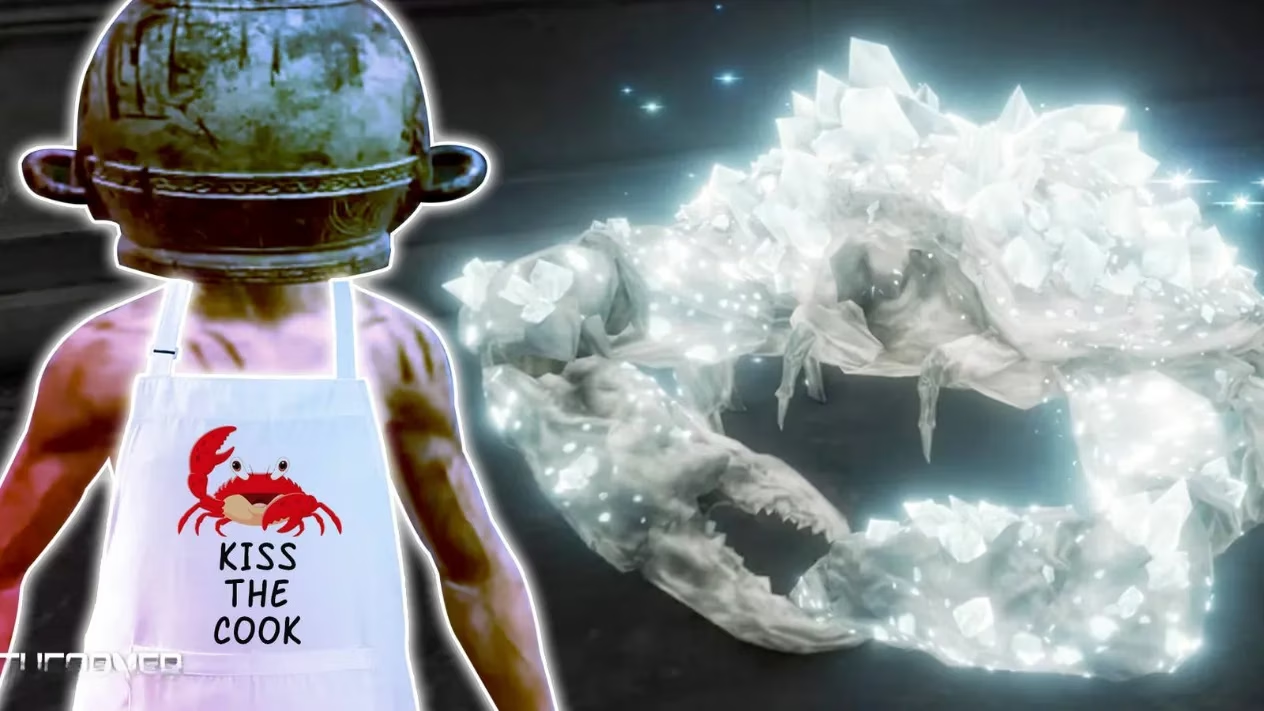
Remember those moments when your weapon just bounces off certain enemies? You're swinging your trusty longsword at a Glintstone Miner or one of those crystal-spewing Crystalians, and instead of dealing damage, your blade deflects with that unsatisfying clang sound? Well, that's not random—it's the hardness system at work. This hidden mechanic determines whether your attack connects properly or gets deflected based on weapon type and attack style.
Here's the breakdown of how it works:
| Hardness Tier | Enemy Examples | Required Attack Style |
|---|---|---|
| Tier 1 | Standard enemies | Any attack works |
| Tier 2 | Glintstone Miners, Crystallians | Two-handed or heavy attacks |
| Tier 3 | Crystaline Crabs | Two-handed ONLY |
| Special | Ancient Dragons, etc. | Specific weaknesses |
The Undisputed King of Hardness
Now here's where things get wild. Among all the terrifying creatures in Elden Ring—from rune bears that chase you across continents to those teleporting assassins in Ordina—there's one enemy that technically has the highest hardness rating in the entire game. And no, it's not some giant dragon or demigod... it's the Crystaline Crab.
These little crustaceans hanging around Raya Lucaria Academy and the surrounding Glintstone caverns are absolute tanks. I'm not kidding—no matter what one-handed weapon you bring to the fight, even the mightiest colossal sword swung with one hand will just bounce right off their diamond-hard shells. It's like trying to break a bank vault with a plastic spoon. You literally must two-hand your weapon to even scratch them.
Why This Matters More Than You Think
At first glance, you might think "who cares about some crabs?" But understanding hardness fundamentally changes how you approach combat in Elden Ring. Here's what I've learned:
-
Weapon choice matters more than damage numbers - A dagger with high AR might be useless against certain enemies if it can't overcome their hardness tier
-
Attack style is crucial - Sometimes switching to two-handing is better than using a shield
-
It explains so many frustrating moments - Remember how your attacks bounced off those stone imps in catacombs? Now you know why!
Beyond the Crabs: Other Hardness Secrets
The hardness system isn't just about crabs and miners though. Since diving into this mechanic, I've discovered:
-
Tortoises have hardness too! Those innocent-looking turtles will deflect one-handed attacks
-
Certain weapons have innate hardness penetration - Greathammers seem to ignore some hardness tiers
-
Jump attacks often bypass hardness - The impact seems to count as "heavier" than normal strikes
Farming Implications and Hidden Mechanics
Here's a pro-tip I wish I knew earlier: understanding hardness ties directly into the Overkill mechanic Vaati mentioned. When you deal 150% of an enemy's HP in a single hit, you get 20% bonus runes. But if your weapon bounces due to hardness, you'll never reach that threshold against certain enemies. Against those crystalline crabs? Forget about it unless you're two-handing appropriately.
Lore Connections and Environmental Storytelling
What fascinates me most is how this mechanical system connects to Elden Ring's incredible environmental storytelling. The fact that crystalline creatures have extreme hardness makes perfect sense in-world—they're literally made of magical crystal! Meanwhile, those coffin elevators in Siofra River? They show how the Nox civilization designed their entire infrastructure around practical needs (transporting their dead) rather than player convenience.
Practical Tips for Dealing with High-Hardness Enemies
Based on my experience, here's your survival kit:
🔥 Always carry a strike weapon - Maces, hammers, and flails often have better hardness penetration
🔥 Practice switching to two-handing mid-combat - It becomes second nature with practice
🔥 Use jumping R2 attacks - They seem to have hidden hardness-breaking properties
🔥 Magic and fire often bypass hardness - When in doubt, burn or zap it!
The Philosophy Behind Hidden Mechanics
What I love about FromSoftware's design here is how they create these intricate systems that exist whether players notice them or not. The hardness stat isn't explained in tutorials or item descriptions—it's something you learn through experience (or community discovery years later). It's what makes Elden Ring's world feel real and consistent, rather than just a series of combat encounters designed for player enjoyment.
Looking Forward to Shadow of the Erdtree
As we approach 2026 and potentially new Elden Ring content, I can't help but wonder what other hidden mechanics might be waiting to be discovered. Will the DLC introduce new hardness tiers? Will there be enemies that require specific weapon types to damage? The fact that we're still uncovering secrets years after release speaks to the incredible depth of this game.
So next time you're exploring the Lands Between and your weapon bounces off an enemy, don't just get frustrated—remember the hardness system. Switch to two hands, try a different attack, or pull out a strike weapon. And if you see a crystalline crab near Raya Lucaria? Well, now you know the secret to cracking that tough shell. Happy hunting, Tarnished! 👑✨