
Elden Ring's Unspoken Horrors: From Living Jars to Mohg's Palace of Blood
Elden Ring lore and reproductive horror captivate with grotesque, unsettling tales and chilling biological nightmares in the Lands Between.
Even years after its release, the world of Elden Ring remains a vast and terrifying tapestry of nightmares. By 2026, players continue to unearth layers of disturbing lore, finding that the initial fears of grafted demigods and golden knights were merely the overture to a symphony of cosmic and biological horror. The community has meticulously cataloged these terrors, revealing a world where the grotesque is woven into the very fabric of existence, making the Lands Between a place where every shadow hides a new reason to be afraid.
The Reproductive Horror of the Land Octopus
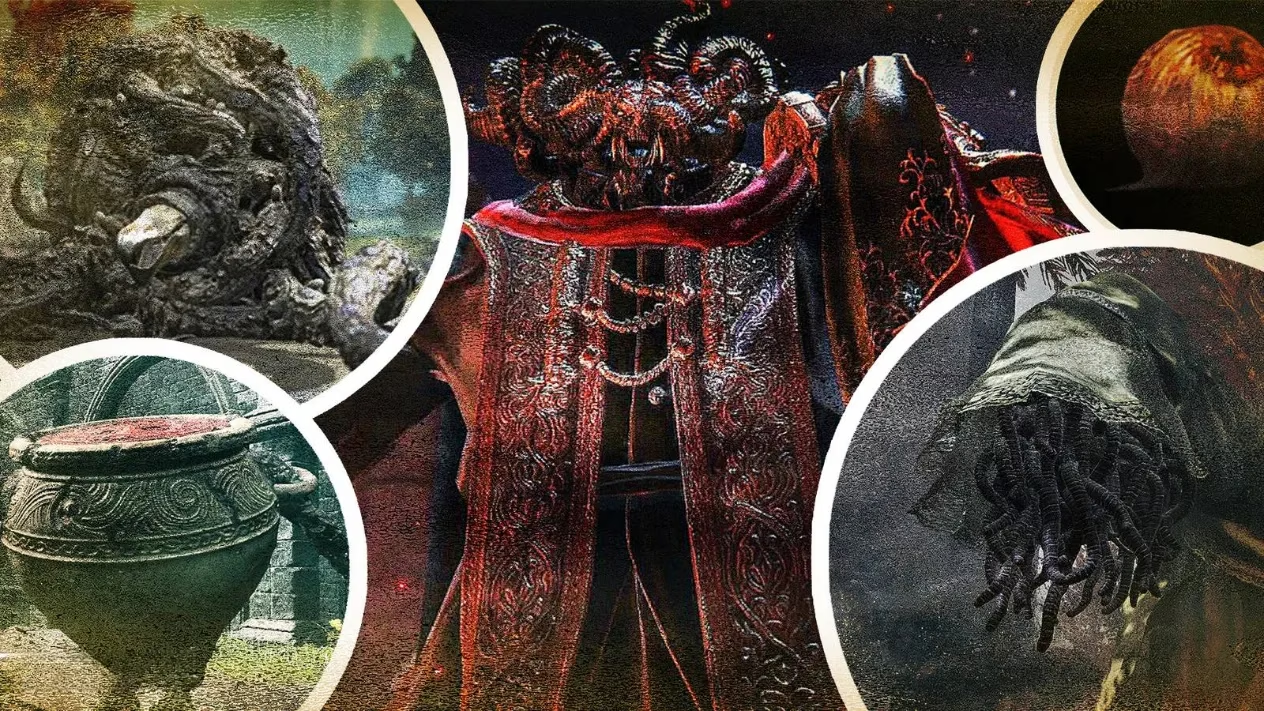
For many Tarnished, the most viscerally unsettling enemy isn't the shambling revenant or a towering dragon, but the Land Octopus. This creature's existence is a biological nightmare. Its method of reproduction is exclusively tied to the consumption of human flesh. Observant players note a specific grab attack where the octopus appears to decapitate its victim, a grimly efficient method to facilitate this gruesome process. When burdened with eggs, its hunger becomes an unquenchable, singular drive. This explains their chilling ambush tactics; Giant Land Octopi can be seen clinging to cavern ceilings like grotesque, pulsating chandeliers, waiting to drop on the unwary. Their existence is a dark echo of parasitic life cycles, turning the act of birth into a ritual of violent consumption.
Hyetta and the Feast of Eyes
The quest of Hyetta, the blind maiden, unfolds like a slow-burn psychological horror story. She wanders the lands, pleading for Shabriri Grapes to glimpse a distant, guiding light. The horrific revelation—that these "grapes" are actually human eyeballs—retrofits every interaction with a layer of profound sickness. The lore suggests a deeply personal tragedy: one of the key eyes she must consume is likely that of her own father, Edgar. Edgar is driven mad after finding his daughter, Irina, dead on the Weeping Peninsula. Hyetta shares Irina's face and clothes, implying her body is a possessed vessel. Thus, the Tarnished's "help" involves feeding a father's extracted eye to his daughter's reanimated corpse, a cycle of violation that is both macabre and deeply sad. It's a quest that functions like a corrupted fairy tale, where the promised reward is merely a deeper descent into madness.
A Gallery of Additional Grotesqueries
The community's discussions highlight several other contenders for the title of Elden Ring's most terrifying lore:
-
Godwyn the Golden's Corpse: His fate is a unique kind of horror. While his soul was destroyed in the Night of Black Knives, his body lived on, mutating into a massive, scaly aberration beneath the Erdtree's roots. He is a being trapped in a state of living death, his influence spreading the Death Blight like a spiritual cancer.
-
The Living Jars (Jar-Bairn): These seemingly quaint pottery creatures have a dark secret. They are not simply animated clay but are filled with the minced remains of warriors, a macabre recycling system for the dead. Their purpose is to eventually break and fertilize the earth with this "meat," making them walking, sentient coffins.
-
The Wormfaces: These emaciated humanoids are eternally vomiting a black, cursed substance known as Death Blight. Their existence seems to be one of perpetual, agonizing sickness, and their very presence corrupts the land around them.
The Apex of Horror: Mohgwyn Palace
While many locations are frightening, Mohgwyn Palace is often cited as the pinnacle of Elden Ring's designed horror. It is a realm that drowns in a singular, suffocating theme: blood. The environment itself is a character in the terror:
-
A vast, stagnant lake of blood forms the palace's foundation.
-
Enemies include exploding blood zombies that paint the walls crimson upon death.
-
Carrion birds are infested with the same cursed blood, turning scavengers into vectors of Mogh's influence.
At the heart of this nightmare is Mohg, the Lord of Blood, and his unspeakable project involving the eternally young Empyrean, Miquella. Miquella is found encased in a cocoon, a process horrifically interrupted. Mohg's actions—an attempt to raise Miquella to godhood through his own blood dynasty—are described by players with a palpable mix of revulsion and fascination. The palace is less a castle and more a living, breathing organ of a diseased god, where every droplet and scream feeds into a grand, blasphemous design. It stands as FromSoftware's masterclass in environmental storytelling through sheer, overwhelming dread.
In the end, Elden Ring's true horror lies not just in its monstrous enemies, but in the implications of its lore. It's a world where life, death, and rebirth are perverted into cruel cycles. The Land Octopus is a dark reflection of parasitic reproduction, Hyetta's quest is a ghoulish parody of spiritual pilgrimage, and Mohg's palace is a cathedral built not of stone, but of coagulated sin. These are the stories that linger in the mind long after the controller is set down, proving that the deepest fears in the Lands Between are often the ones you have to piece together yourself.