
How Elden Ring Stole the GOTY Crown from a Fumbling Ragnarök
God of War Ragnarök and Elden Ring vied for Game Awards glory, with eligibility rules shaping this epic gaming showdown.
I still remember late 2022 like it was yesterday, sitting in my gaming chair with a bowl of popcorn, watching the gaming world hold its breath. The Game Awards were approaching, and two titans were gearing up for a clash that felt less like a contest and more like a Norse saga colliding with a dark fantasy epic. Four years later, in 2026, the dust has long settled, but the absurdity of that race still makes me chuckle. It was like watching a cheetah and a peregrine falcon decide who is faster, only to realize one forgot to set its alarm clock.
The God of War franchise has always been the Overachiever of Olympus. Every main entry brews critical acclaim like a master barista pulling perfect espresso shots—94 on Metacritic for the 2018 soft reboot, a symphony of axe-throwing and father-son bonding. So when God of War Ragnarök was announced for November 9, 2022, we all assumed Kratos would simply march into the ceremony, plant the Leviathan Axe in the stage, and claim Game of the Year without breaking a sweat. But there was a catch, a tiny, bureaucratic gremlin hiding in the fine print: The Game Awards eligibility cutoff. In 2021, that invisible guillotine fell on November 19. Releasing only ten days earlier, Ragnarök wobbled onto the stage like a tightrope walker with a hangover—one slip and it would faceplant straight into disqualification. Sony Santa Monica was essentially sprinting through a minefield wearing clown shoes, praying the voting committee wouldn't notice the calendar.
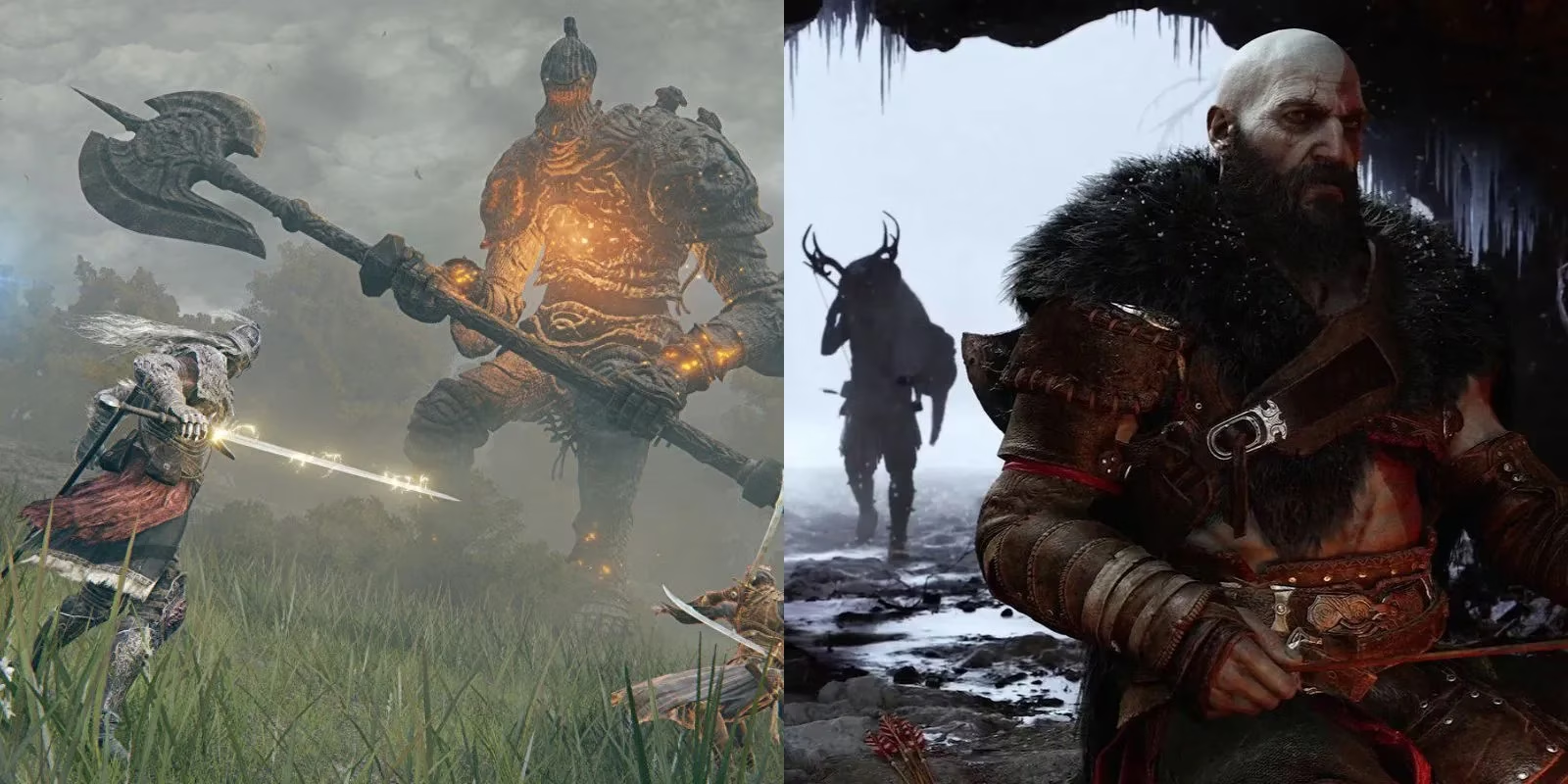
Meanwhile, Elden Ring had already been sunbathing in the Lands Between since February 2022. FromSoftware’s magnum opus was the early bird that not only got the worm but devoured the entire ecosystem—a grotesque, beautiful worm that kept killing you in seventeen different ways. With Hidetaka Miyazaki and George R.R. Martin weaving a world where every crab is a threat and every golden fog gate promises existential dread, the game had cemented its legacy months before the award season even started. If Ragnarök was a perfectly cooked steak arriving just as the kitchen was closing, Elden Ring was a slow-roasted feast that had been filling the dining hall with aroma for nine months. In typical FromSoft fashion, it was already victory-lapping while Kratos was still lacing his boots.
But the battlefield wasn’t just a duel. Early 2022 had unleashed a menagerie of heavy hitters. Pokémon Legends: Arceus reinvented catching critters with the grace of a ninja professor, while Horizon Forbidden West painted a post-apocalyptic canvas so lush you could almost lick the foliage. Both were critically adored and, in any other year, would have been frontrunners. Then there was the looming September release of The Last of Us Part I, a remake of a game whose sequel had already mugged the 2020 GOTY award with a golf club. The ceremony was shaping up to be a gladiator pit where only the most battle-hardened survivors would emerge clutching a trophy.
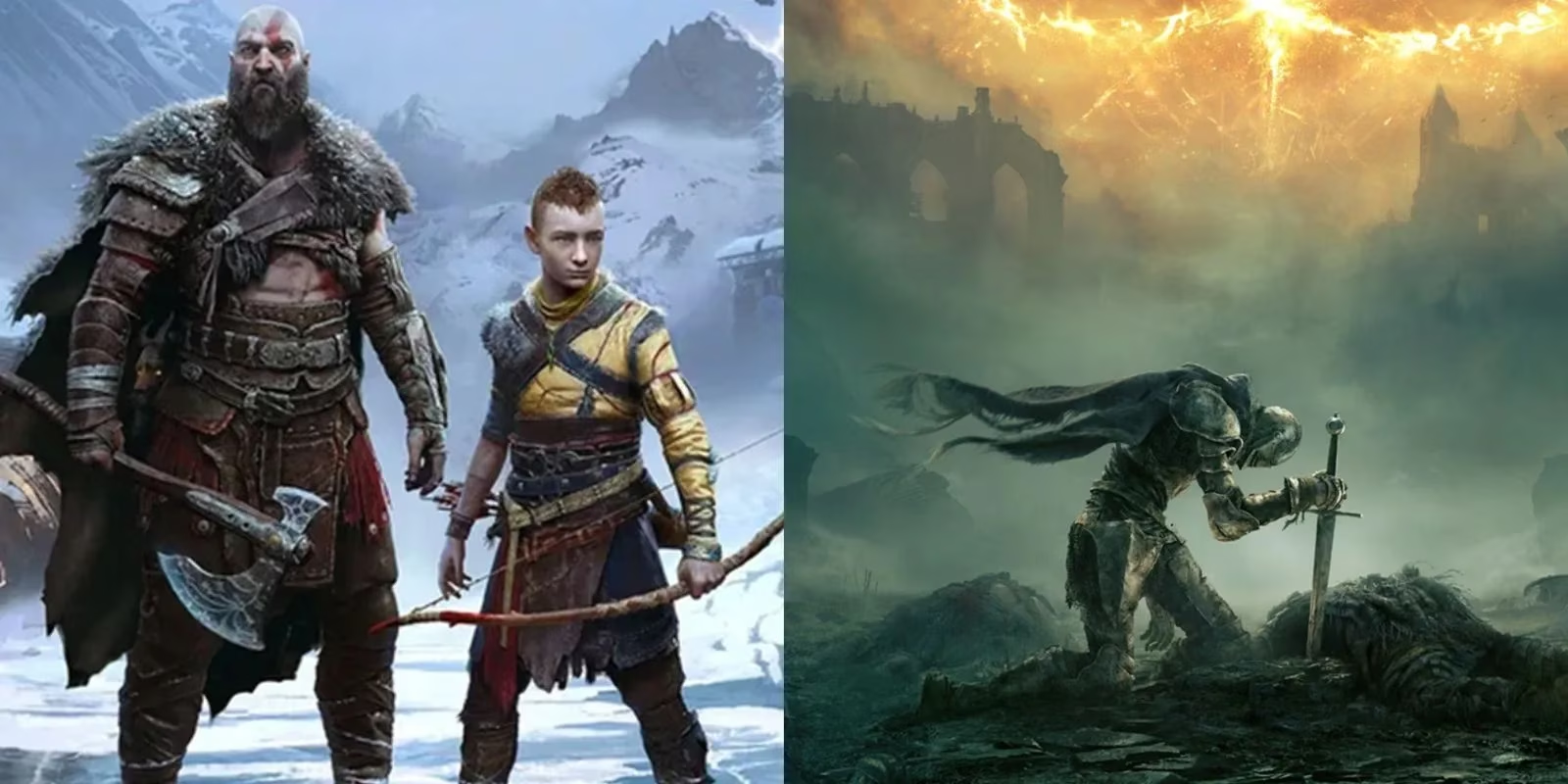
Looking back from 2026, I see the 2022 showdown as a majestic paradox. God of War Ragnarök was a breathtaking continuation, a seismic story that landed with the force of Mjölnir. It scooped up multiple awards, and many fans (myself included) wept during certain character moments. But the zeitgeist had already been colonized by Elden Ring. Miyazaki’s open-world experiment wasn’t just a game; it was a communal scar tissue we all shared—screaming at Radahn, despairing over Malenia, and leaving messages like “dog” next to every turtle. The voting jury, much like a tired parent refereeing two screaming toddlers, simply handed the GOTY crown to the one that had been screaming the longest and loudest. In the end, the cutoff drama became a footnote, because even though Ragnarök squeezed in, the Tarnished had already written its name on the throne. Four years later, I still get phantom pains in my fingers thinking about that final boss, and that, my friends, is the mark of a true Game of the Year.