
I Found a Wild Connection Between Elden Ring’s Godwyn and Dante’s Inferno’s Cerberus
Elden Ring and Dante’s Inferno share haunting visual echoes; Godwyn and Cerberus embody tragic corruption in dark medieval fantasy worlds.
I still remember the first time I stumbled upon Godwyn’s corpse in Elden Ring. Buried deep beneath the Lands Between, his body had become a grotesque monument to decay, his face stretched into something barely recognizable. It was in the roots of the Erdtree, that sorrowful, noseless visage staring at nothing. I couldn’t shake the feeling that I had seen that face somewhere before—somewhere older, from a game I had played years ago. Then it hit me: Cerberus from Dante’s Inferno, EA’s 2010 action-adventure adaptation of the classic poem. The resemblance was so striking that I had to dig deeper.
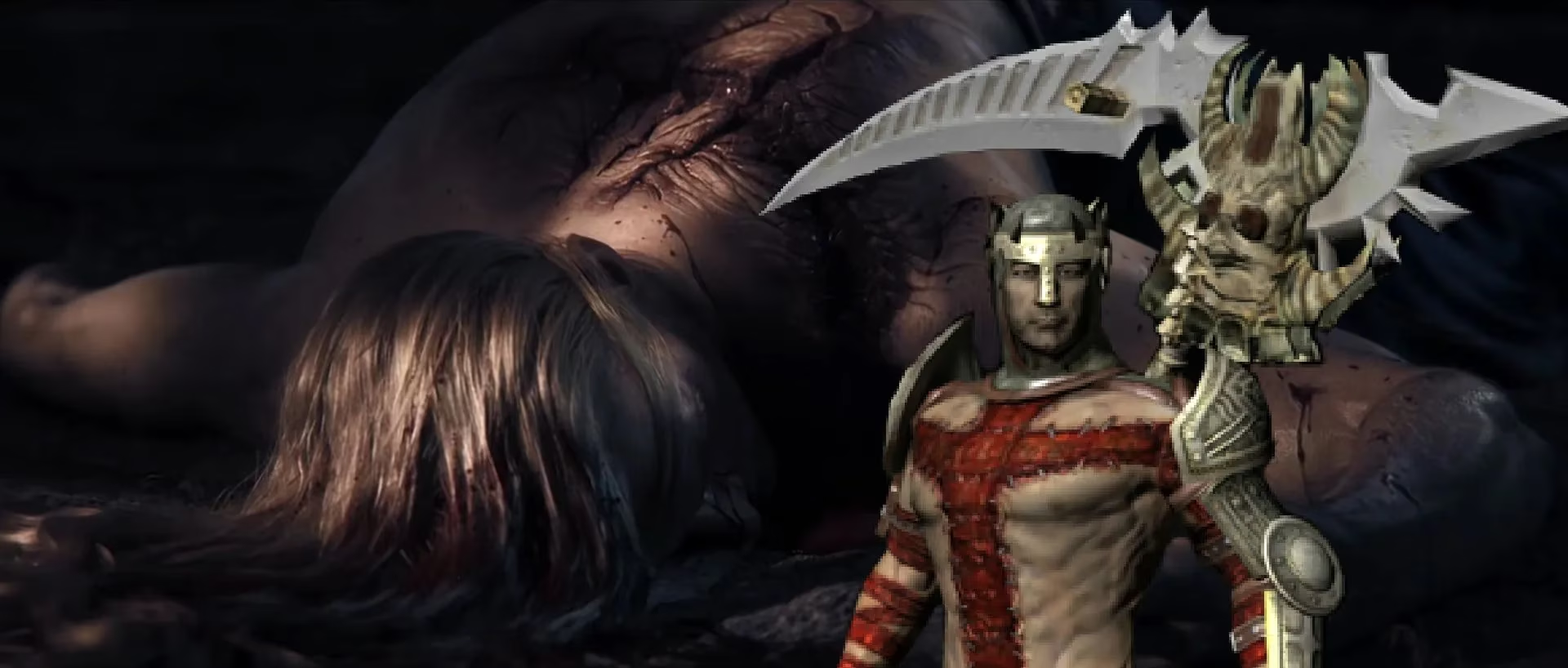
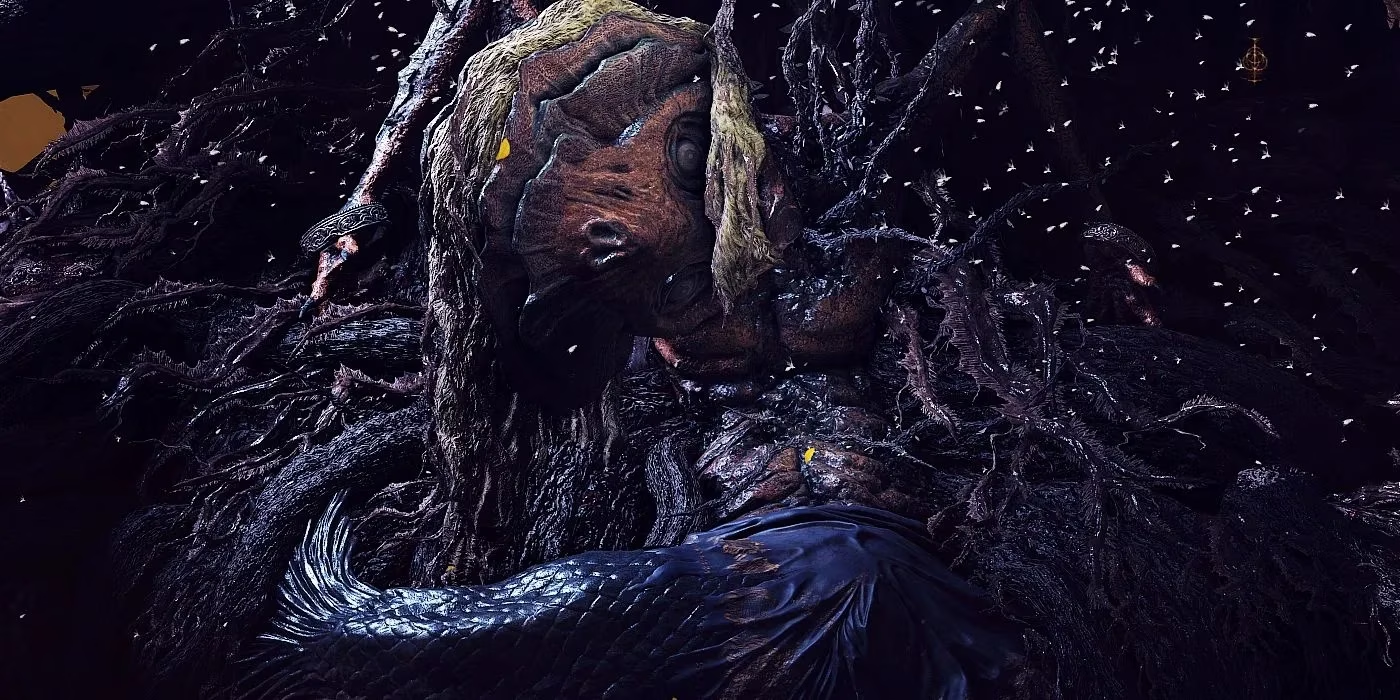
Both Elden Ring and Dante’s Inferno are dark medieval fantasy games, but beyond the superficial hellish settings, they share an unexpected visual echo. Godwyn the Golden, once the most beloved demigod in the Lands Between, was murdered during the Night of the Black Knives. His soul died, but his body lived on, trapped in a half-death that twisted his form into something monstrous. Meanwhile, Cerberus—the gluttonous guardian of the third circle of Hell—suffers a similar fate after Dante defeats him: his body collapses into a flattened, miserable husk. Both creatures end up as deflated, sorrowful faces with gaping nose sockets, as if death had vacuumed out all their essence.
I started to unpack the lore. Godwyn’s transformation was a tragedy. Before the events of Elden Ring, he was the golden child of Queen Marika and Godfrey, a hero loved by all. On the Night of the Black Knives, Numen assassins used stolen fragments of the Rune of Death to slay him—but only half of the rune’s power was used, and so only his soul perished. His living corpse became entwined with the Erdtree’s roots, spreading Deathroot across the land. His face, drained of life yet refusing to fully die, stretched into that iconic melted expression we find in Deeproot Depths. It’s a face that whispers of a glorious past and an unbearable present.
Contrast that with Cerberus in Dante’s Inferno. There, the giant humanoid worm-creature—an interpretation miles away from the classical three-headed dog—guards the circle of gluttony. This Cerberus is a disgusting mass of mouths and flesh, a fitting embodiment of uncontrolled appetite. When Dante defeats him, the creature literally deflates, his skin sagging until his face becomes a flat plane of misery. No soul-death, just a physical collapse that strips him of his overindulged form. The result, however, looks astonishingly similar to Godwyn’s eternal half-death. Two different mythologies, two different reasons, but the same visual language of corruption.
Let me paint the comparisons more clearly:
| Aspect | Godwyn (Elden Ring) | Cerberus (Dante’s Inferno) |
|---|---|---|
| Origin | Demigod, son of Marika | Mythological guardian, reinterpreted as a gluttonous giant |
| Cause of form | Half-death: soul slain, body living, corrupted by Deathroot | Defeat in combat, body deflates after gluttonous existence |
| Visual result | Flat, noseless, sorrowful face embedded in tree roots | Flat, stretched face after collapsing into a husk |
| Symbolism | Tragedy of a beloved figure, death’s refusal to grant full rest | Punishment for sin, emptiness after overindulgence |
I can’t say which design came first or if FromSoftware drew direct inspiration from Visceral Games’ work. What I do know is that playing both games across more than a decade gave me a real jolt of recognition. In 2026, looking back at Elden Ring’s massive legacy and Dante’s Inferno’s buried cult status, the connection feels even more potent. These faces aren’t just shock-value gore; they’re testaments to how death consumes identity. Godwyn’s demigod radiance is erased, replaced by a melancholy mask that mourns itself. Cerberus’s gluttony is literally emptied out, leaving only a hollow sketch of a face. Both are warnings about what happens when you lose what defines you.
I remember standing in Deeproot Depths for a long time, staring at Godwyn’s face. It’s massive yet intimate, and it tells the story of a world broken by Marika’s fear of death. In Dante’s Inferno, Cerberus’s deflated corpse lies in the muck of the gluttony circle, a more immediate but equally unsettling sight. The two gaming moments are separated by over a decade—Dante’s Inferno launched in 2010, and Elden Ring burst onto the scene in early 2022—but they both hit the same nerve. This is how a creature that loses its essence might look: flattened, featureless beyond the holes where a nose should be, unmistakably human yet thoroughly alien.
So next time you descend into the underworld of any game, pay attention to the faces of the dead. You might spot a lineage that stretches from Renaissance poetry to the Lands Between. For me, the Godwyn-Cerberus parallel is more than a visual coincidence; it’s a reminder that great design often transcends decades, borrowing from shared nightmares. Both games teach us that there are fates worse than death, and that the worst of them leave you with a face that can’t even scream.