
Soulslike Fatigue and Nightreign's 48-Minute Answer
Soulslike fatigue meets Elden Ring Nightreign, whose 48-minute runs turn build experimentation into low-stakes, fast-moving play.
By 2026, the conversation around soulslikes has acquired a familiar refrain: the genre is not short on craft, but it is short on time. FromSoftware's combat design still carries weight, deliberation, and a sense of consequence that few studios can match. Yet for a growing number of players, the question is no longer whether a boss can be beaten. The question is whether the act of beating it still delivers the same reward.
That tension sits at the center of a broader discussion about soulslike fatigue. The cracks first appeared in Sekiro: Shadows Die Twice, where the Guardian Ape standing back up after being decapitated became a memorable symbol of the genre's appetite for surprise and punishment. Elden Ring confirmed the pattern. A string of botched corpse runs and repeated attempts at the duo boss in the Auriza Hero's Grave led to a blunt internal question: what is the fun being extracted from a soulslike now? Is mastery still the reward, or has it become a toll?

The fatigue does not come from a lack of appreciation. The item descriptions, the boss designs, the equipment, the spells, the weapon arts, and the builds they enable remain compelling. The problem is exhaustion. After finishing three Dark Souls games and Bloodborne, the ability to beat a boss was no longer a particularly interesting question. Below Leyndell, the feeling after a successful kill shifted from satisfaction to relief. Relief meant no more time had to be spent proving, once again, that the dodge timing could be learned. It meant the player could return to what was actually interesting: the variety of viable playstyles.
That variety is the genre's quieter strength, but it is also the part most easily buried. A traditional soulslike gates experimentation behind repeated boss attempts, finite respec items, and grinding for upgrade materials. A cool new weapon may demand hours before it becomes usable. A strange spell may require a full build pivot. Players have only so much time on this earth, and many have already spent their share on getting good. What happens when the genre's biggest strength becomes its biggest barrier?
Enter Elden Ring Nightreign. In Elden Ring proper, a character's progression arc stretches across dozens of hours. In Nightreign, it contracts to roughly 48 minutes. A single play session can move between Wylder's tried-and-true greatsword swinging, Duchess's dexterity-flavored spellsword action, and Recluse's all-in sorcery. The run-based structure turns build experimentation into a lower-stakes ritual: open a chest, inspect a boss drop, and see what can be made from the pull.
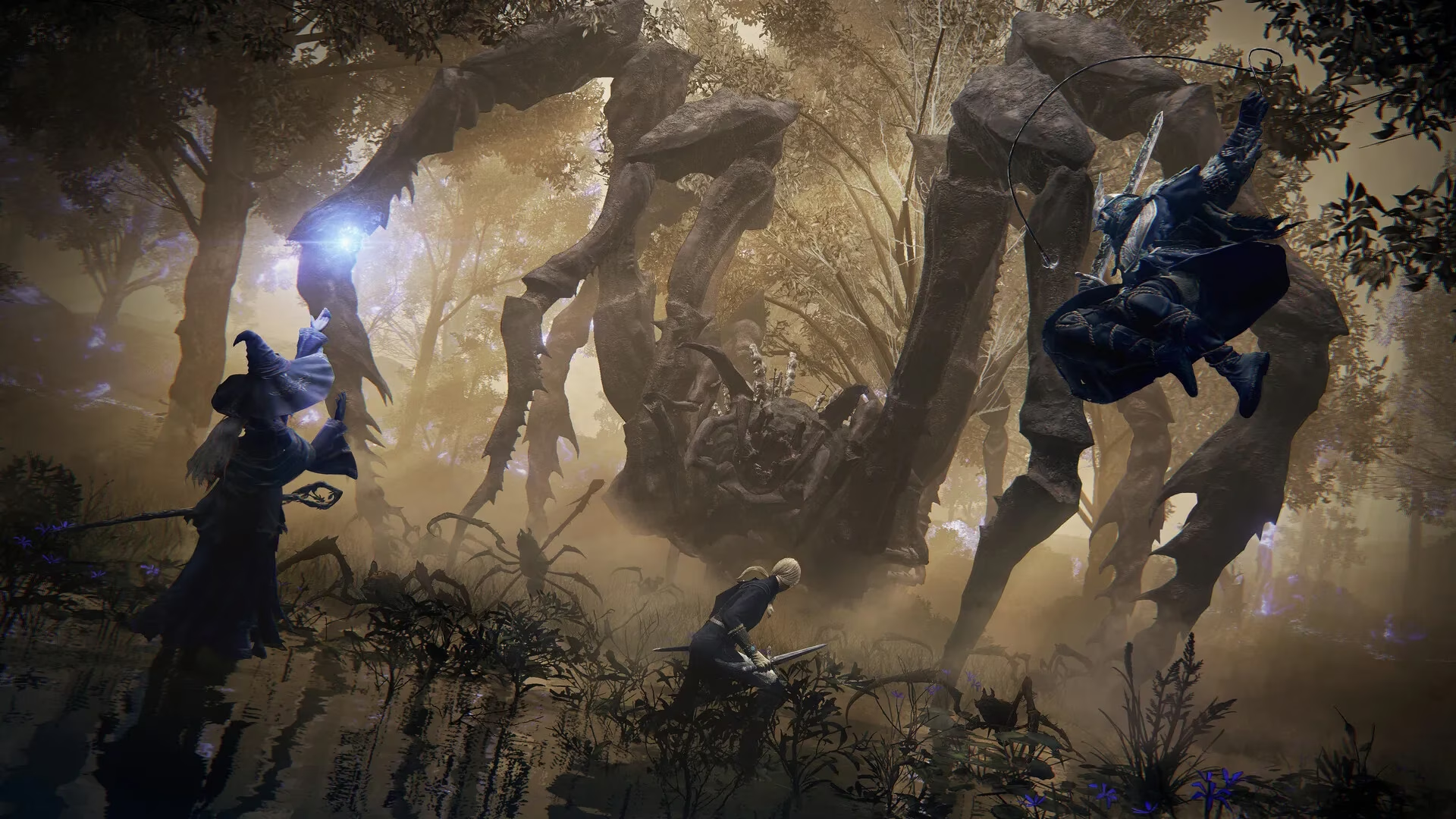
The randomness matters. It turns the Elden Ring toybox into a fast-moving playground. Back-to-back runs can transform Guardian from a pair of flaming halberds into a lightning-throwing warpriest. An auspicious set of weapon arts and incantation buffs can turn the dainty Revenant into a melee behemoth. One successful final Nightlord kill featured Raider firing greatbow arrows from a build stacked with ranged attack damage rather than swinging a colossal weapon. The appeal is not simply speed. It is improvisation.
Nightreign is not flawless. Even after post-launch rebalancing, solo play remains uneven. The battle-royale-style circle introduces time pressure that can end a run before a cobbled-together build has been properly admired. In a perfect world, a self-paced Elden Ring roguelike would offer a better rhythm. But the experiment still distills the Elden Ring experience into a single, swiggable shot. It does not replace the traditional soulslike, and it should not try. What it does is let players enjoy the FromSoft juice without bearing the full weight of soulslike fatigue.
| Traditional soulslike | Elden Ring Nightreign |
|---|---|
| Character arc measured in dozens of hours | Run arc measured in roughly 48 minutes |
| Build experimentation gated by respec items and upgrade materials | Randomised loot and chests lower the barrier to experimentation |
| Satisfaction often tied to mastery and repetition | Satisfaction often tied to improvisation and adaptation |
| Boss retries can dominate a session | Time pressure and the circle shape decisions |
As of 2026, Nightreign remains a useful case study for a genre at a crossroads. It shows that reverence for FromSoftware's combat does not have to mean endless repetition. Players can still love the weight and deliberate action of the design while wanting more time with the toybox and less time proving a point. The question is not whether soulslikes are still good. The question is whether they can make room for players who have already proved they can get good, and who now want to play.
Nightreign's answer is not universal, but it is revealing. A 48-minute run can deliver the thrill of discovery, the pleasure of a strange build, and the relief of a boss kill without demanding an entire evening of attrition. For a fatigued soulslike fan, that may be the most valuable drop of all.
This assessment draws from Game Developer, where industry-facing discussion often frames action design around player retention, friction, and the cost of repetition. In the context of soulslike fatigue, that perspective helps explain why a condensed format such as Nightreign can feel refreshing: it preserves the tension, readability, and build expression associated with FromSoftware's combat while reducing the long-form progression barriers that can make experimentation feel expensive rather than exciting.