
The Duel of DLCs: Elden Ring's Shadow and Horizon's Burning Shores
The 2026 gaming landscape teeters on a thrilling repeat of history, as the colossal DLC expansions for Elden Ring and Horizon Forbidden West threaten another epic clash. Will Shadow of the Erdtree's gravitational pull once again eclipse the vibrant, perilous journey of Burning Shores?
In the grand tapestry of 2026's gaming landscape, a familiar dance of fate seems poised to unfold once more. The impending expansions for two titans of the open-world RPG genre, Elden Ring and Horizon Forbidden West, threaten to converge in a temporal echo of their 2022 clash. As Aloy prepares to descend into the sunken, mechanical ruins of Los Angeles in Burning Shores, and the Tarnished await the mysteries of the Shadow of the Erdtree, the stage is set for a repeat of a history where one colossus often casts the other into its long, defining shadow.
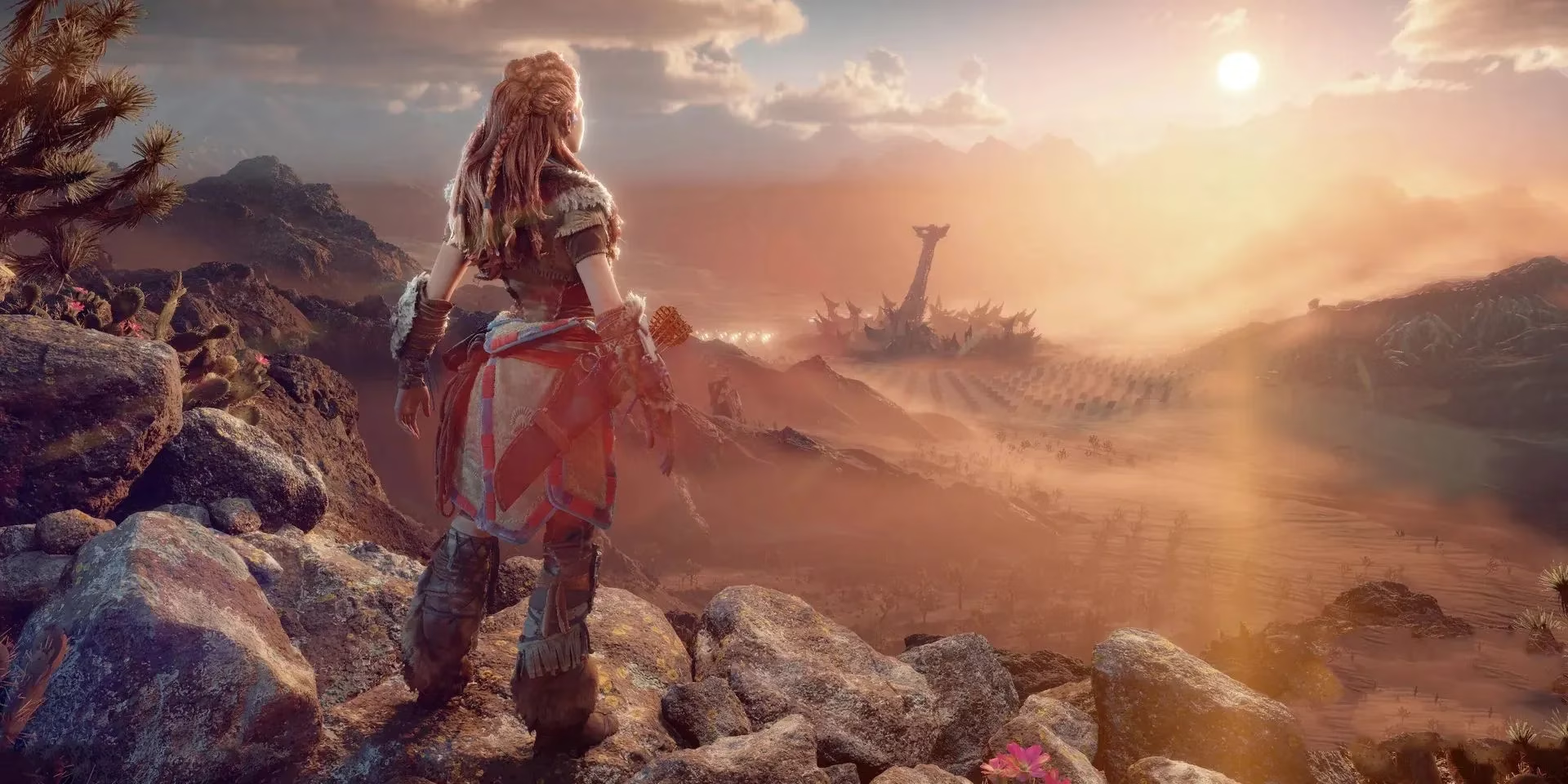
This potential April convergence is not merely a scheduling curiosity; it is a poignant reprise of a recent past. In February 2022, Horizon Forbidden West emerged onto the PlayStation stage, only to have its thunder stolen a mere week later by the cataclysmic arrival of Elden Ring. The latter, a collaboration between the myth-weaver George R.R. Martin and the architect of intricate suffering, Hidetaka Miyazaki, became a cultural monolith. Its success was like a gravitational anomaly, pulling all discourse, acclaim, and player attention into its orbit, leaving other stellar releases adrift in its wake. Horizon Forbidden West, despite its own critical and commercial triumphs, found itself in that familiar shade, its vibrant post-apocalyptic world momentarily dimmed by the Erdtree's golden, oppressive light.
Now, with both franchises nurturing new growth through DLC, the question hangs in the air: will history's script be followed? Horizon Forbidden West: Burning Shores promises a focused, perilous journey for Aloy, a symphony of rust and ruin set against the drowned skyline of Los Angeles, where new mechanized terrors await. Its release date is a fixed point on the calendar. Elden Ring: Shadow of the Erdtree, however, remains an enigma, its release window shrouded in the same mist that blankets the Lands Between. Known only by a single, haunting piece of concept art, its development could be anywhere from near completion to its earliest stages. An April release would be a direct confrontation; a delay would grant Horizon the breathing room its predecessor was denied.
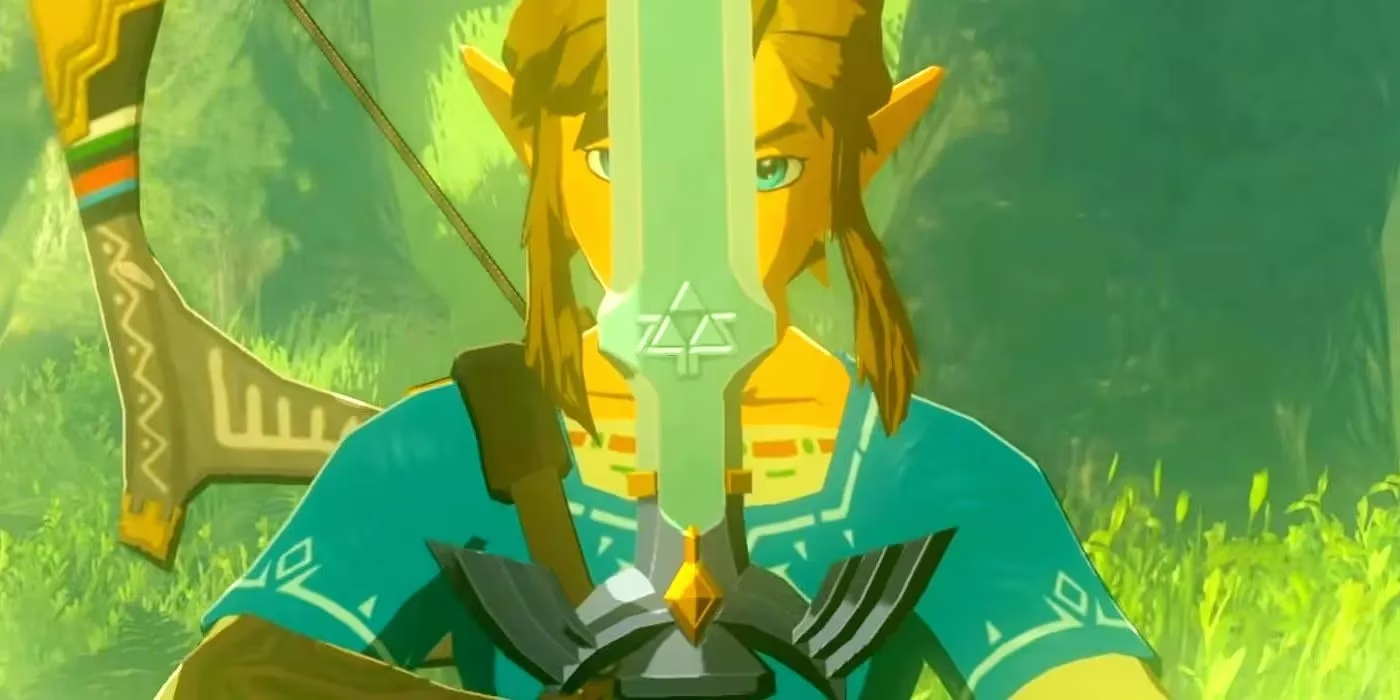
This rivalry, however, runs deeper than 2022. The Horizon series has long danced with giants. Its very debut in 2017 saw Horizon Zero Dawn launch into a world still reeling from the seismic impact of The Legend of Zelda: Breath of the Wild, which had arrived just three days prior. Both offered vast, beautiful worlds to explore, but Breath of the Wild's revolutionary design became a lodestone for an entire generation, defining the console it launched alongside. Horizon, magnificent in its own right, was once again part of a conversation dominated by another.
The dynamics for 2026's DLC duel present a fascinating tableau:
| Contender | DLC Title | Known Release Window | Known Content | Platform Availability |
|---|---|---|---|---|
| Horizon Forbidden West | Burning Shores | April 19, 2023 (Historical Date) | New Los Angeles map, story, machines | PlayStation 5 |
| Elden Ring | Shadow of the Erdtree | TBA (Potentially Spring 2026) | Unknown; teased via concept art | Multi-platform |
For Horizon, the challenge is multifaceted. It must:
-
🏹 Showcase a compelling, self-contained narrative that expands Aloy's journey.
-
⚙️ Introduce innovative gameplay mechanics or machine threats that feel fresh.
-
🌅 Leverage the visual power of the PS5 to make the Burning Shores an unforgettable locale.
For Elden Ring, the shadow it casts is its own legacy. The DLC must:
-
⚔️ Live up to the nearly impossible standards set by the base game's world and lore.
-
🗺️ Offer a new region that feels both seamlessly integrated and astonishingly new.
-
🧩 Provide the depth of challenge and mystery that fans now crave as a baseline.
The poetic tension lies in their contrasting natures. Horizon is a story of clarity in a world of chaos, a protagonist-driven narrative against a backdrop of ecological collapse and rebirth. Elden Ring is a pilgrimage into obscurity, a lore-rich puzzle where the player is an anonymous atom in a decaying, god-filled cosmos. One is a precision-engineered chronometer in a world of gears; the other is a weather-worn sundial telling time by the light of a dying star. Their simultaneous arrival would force players and the industry to choose which type of journey calls to them in the moment—a choice between brilliant, focused sunlight and the captivating, endless twilight.
As 2026 approaches, the community watches, waits, and speculates. Will Shadow of the Erdtree descend in April, ensuring another epoch-defining clash? Or will it linger in development, allowing Burning Shores its long-awaited moment in an unshadowed sun? Regardless of the outcome, this recurring narrative highlights a bittersweet truth in modern gaming: to exist in the era of such titans is to witness magnificent art, often in conversation, sometimes in competition, but forever shaping the horizons of what is possible.