
The Lonely Co-op: Navigating the Challenges of Elden Ring: Nightreign's Multiplayer Maze
Elden Ring: Nightreign co-op adventure promises thrilling camaraderie but faces restrictive 3-player and no crossplay hurdles, dimming seamless teamwork.
I remember the first time I stepped into the Lands Between, a solitary wanderer under a vast, golden sky. The silence was profound, broken only by the clash of steel and the whispers of lost grace. When FromSoftware announced Elden Ring: Nightreign, a co-op adventure set in that same haunting world, a different kind of anticipation stirred within me—a longing for shared struggle, for conquering nightmares not alone, but with companions at my side. Yet, as the details of its design have come to light, that initial excitement has been tempered by a sobering realization. Nightreign, for all its promise of fellowship, has woven a complex web of restrictions that may leave many of us wandering its darkened paths in solitude once more, our hopes for a seamless journey with friends fading like a phantom at dawn.
The Mandatory Trinity: A Hurdle of Numbers
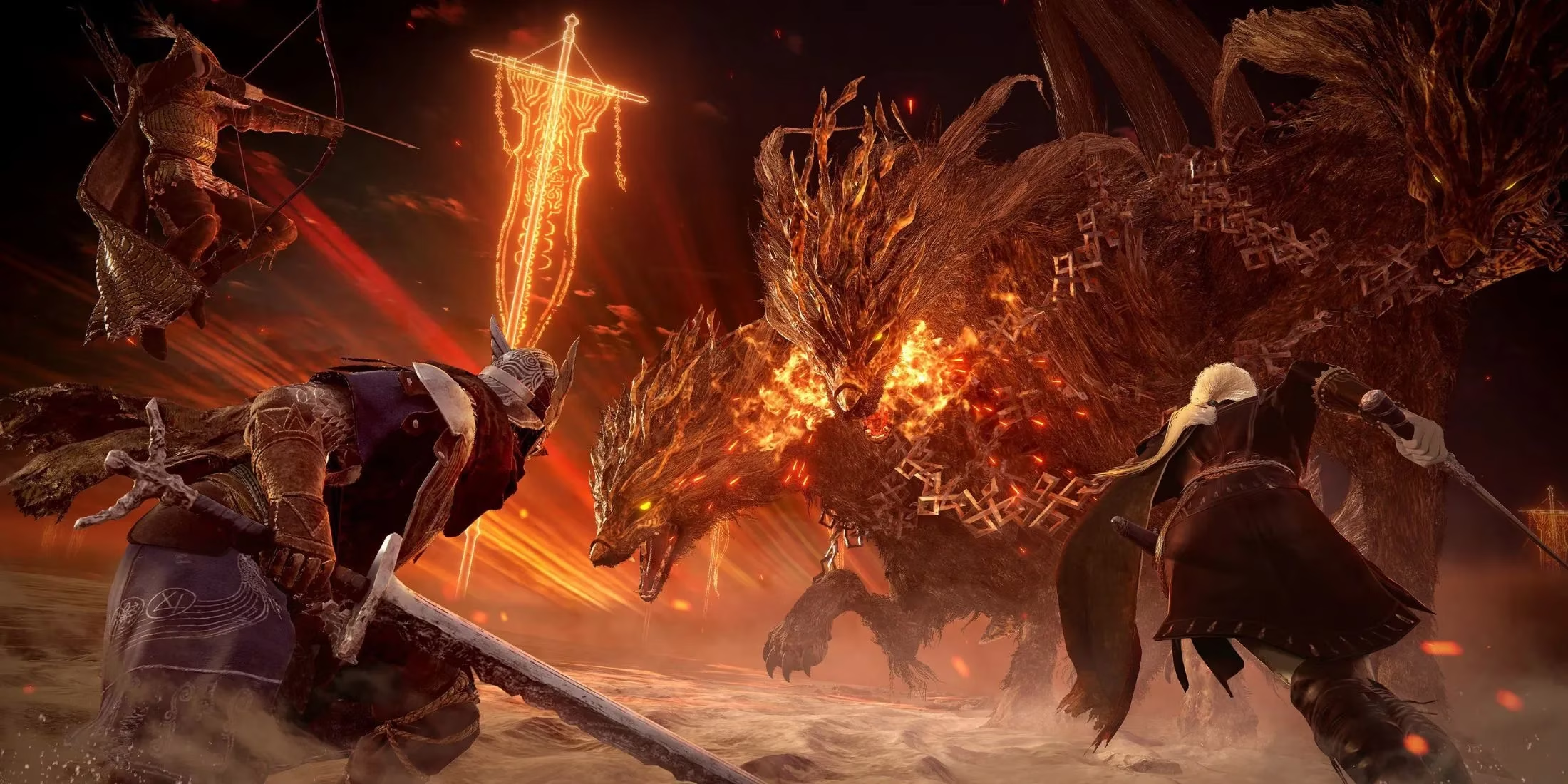
At its heart, Elden Ring: Nightreign is a chorus meant for three voices, not two. The game's core cooperative mode does not allow for a simple duo. If I wish to abandon the lonely road, I must find not one, but two fellow Tarnished to form a complete party. This three-player minimum is a stark design choice. 🎮 Imagine the planning: coordinating schedules across time zones, ensuring three lives align not just for a brief session, but for the epic campaign Nightreign promises to be. It transforms a spontaneous "let's play" into a logistical puzzle. For someone whose friend circle may be scattered or small, this requirement builds a wall before the first enemy is even struck. The alternative—the game's online matchmaking—feels like a surrender, pairing me with strangers whose playstyles and temperaments are unknown, stripping the experience of its intended personal camaraderie.
The Divided Realms: The Platform Barrier
Compounding the numerical challenge is the reality of our fragmented digital realms. Elden Ring: Nightreign, in 2026, continues the industry tradition of segregating players by their chosen platform. There is no crossplay. My journey is confined to the shores of my own console or PC. If my dearest ally wages war from a PlayStation while I hold the line on an Xbox, we are forever separated by an invisible, unbridgeable sea. Our tales cannot intertwine. The game does offer cross-generation play, a small mercy, allowing fellowship between, say, a PS5 and a PS4. But this is a narrow gate. It means my party of three must not only exist, but exist within the same ecosystem: all on PlayStation, all on Xbox, or all on PC. In an age where communities are built across platforms, this feels like an archaic chain.
The Soul of the Challenge: Finding the Right Companions
Beyond logistics lies a more profound filter: the very soul of the experience. Elden Ring: Nightreign is, unmistakably, a FromSoftware game. Its challenges will be brutal, its victories hard-won. To enjoy this with friends, I need more than just warm bodies; I need allies who share a taste for this specific flavor of despair and triumph. The Soulslike genre, while mainstream now thanks to Elden Ring's legacy, is not for everyone. 😨 I must find two friends who are not only available and on the correct platform but who also possess the patience and fortitude to face repeated defeat without frustration souring into anger. Asking a casual player to join this pilgrimage is to invite potential discord. The shared joy of overcoming a monstrous boss could easily be replaced by the silent strain of imbalanced enthusiasm and skill.
The Vision Versus The Reality
FromSoftware's vision for a dedicated co-op saga is bold. The idea of a trio navigating a bespoke, interconnected nightmare holds immense poetic potential. We could be a band of knights, our roles complementing each other, creating stories of rescue and last stands that would be told for years. Yet, the reality shaped by these restrictions tells a different story:
| The Dream | The Potential Reality |
|---|---|
| Seamless adventures with two close friends | Lengthy scheduling and platform audits |
| Shared, personalized legacy | Impersonal matchmaking with randoms |
| Triumph over challenge as a bonded unit | Frustration from differing skill levels and tolerance |
| A new, social chapter in the Elden Ring saga | A return to solitary play, by necessity |
This divergence risks making the co-op mode feel less like an open invitation and more like an exclusive club with a strict, three-part entry code. The very systems meant to foster togetherness may ironically push players towards the solo experience, which, while undoubtedly rich, was not the central promise of Nightreign.
A Whisper of Hope in the Shadows
Still, I cannot extinguish the flame of hope entirely. The success of Elden Ring has created a vast fellowship of seasoned Tarnished. Finding two kindred spirits, while a quest in itself, may not be impossible. Online communities, forums, and discords dedicated to the Soulslike genre thrive. Perhaps Nightreign's specific constraints will forge stronger, more dedicated in-game communities where three-player bands naturally coalesce. The challenge, then, becomes a meta-game: the journey to find your coven before you can begin the journey within the game.
As I look toward the release of Elden Ring: Nightreign, my feelings are a tapestry of excitement and melancholy. I yearn for the epic they promise—a symphony of coordinated combat against towering horrors. But I also see the walls they have built around that dream. The path to true cooperative glory in the world of Nightreign appears to be guarded by trials not of skill, but of circumstance: the trial of availability, the trial of platform unity, and the trial of shared masochistic passion. To overcome them will be the first, and perhaps greatest, boss fight of all. Whether we emerge victorious with our chosen comrades, or are forced to walk the lonely path once again, remains the game's most poignant, unanswered question.