
The Nightreign Giants Are Two Miles Tall, and I Love That We Still Know Nothing
Elden Ring Nightreign's shadow giants are 3,450-meter-tall Soulsborne record-breakers—and FromSoftware's most mysterious scale statement.
As of 2026, the conversation around Elden Ring Nightreign still has that familiar FromSoftware shape: gorgeous scenery, brutal fights, and one enormous question mark standing on the horizon. I went back to Zullie the Witch's datamined breakdown of the shadowy giant figures that appear in the distance on day two of Nightreign, and my main takeaway has not changed. These guys are absurdly, almost comically big. They are not just background flavor. They are a scale statement.
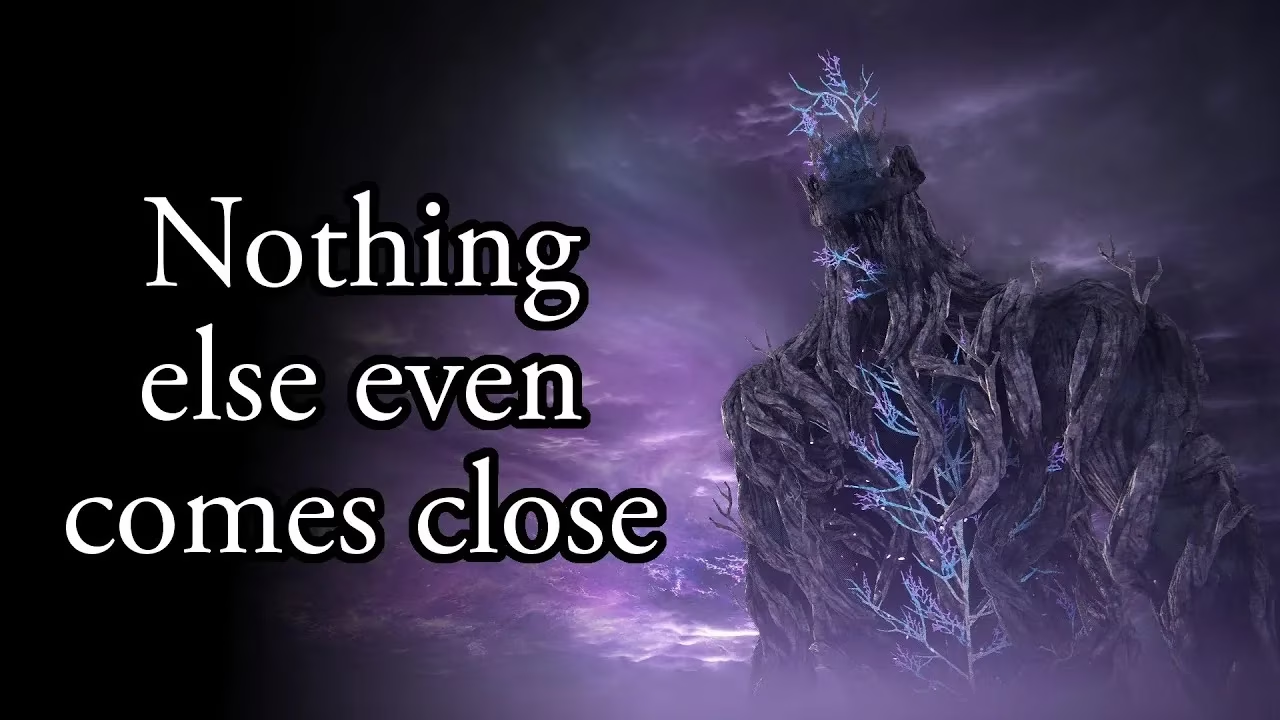
Zullie measured them at 3,450 meters, or a little over two miles tall. I need to let that sit for a second. That makes them officially the biggest dudes to ever appear in a Soulsborne game, dwarfing Demon's Souls' Dragon God and the big rope man from Sekiro. Those Caelid giant skulls that everyone has stared at for years? If you extrapolated full bodies for them, they would not even come up to the shadow giants' knees. As Zullie points out, the Nightreign giants are closer in scale to the Erdtree itself than to any monster we actually fight in Elden Ring. That is a wild sentence, and I mean it as a compliment.
For FromSoftware overall, though, the Nightreign giants are still only third place. I checked the numbers against the studio's wider catalogue, and Armored Core 6 remains the home of the truly unreasonable silhouettes. The RLA Strider comes in at 4,953 meters, or over three miles long. Then there is the Planetary Enclosure satellite, a piece of set dressing that may once have been a boss fight or a level unto itself. It is 5.9 kilometers tall and over 11 kilometers wide. Apparently it was scrapped during development, and the unused NPC version is smaller than the jumbo-sized object version we see in the final game. Classic FromSoftware. Even the cut content has a scale problem.
Here is how the big dudes stack up in my head:
| Subject | Size | My note |
|---|---|---|
| Nightreign shadow giants | 3,450 m tall | New Soulsborne record 🏆 |
| RLA Strider (Armored Core 6) | 4,953 m long | Still the longest boy |
| Planetary Enclosure satellite (Armored Core 6) | 5.9 km tall, 11 km wide | Set dressing with main-character energy |
| Caelid giant skulls (extrapolated) | Not close | Would lose a knee-height contest |
What I love most is that we still have no idea what the giant guys' deal is. They are even more obscure than usual for a FromSoftware mystery. Nightreign's final cutscene implies that they are at the center of the game's story, but they are not mentioned or named directly anywhere in the game. That is it. That is the whole text. A two-mile-tall shadow person shows up in the distance, the ending nods at them, and the game refuses to elaborate.
And honestly? I love that. It is pure FromSoftware. The studio has always been happy to let a cathedral-sized silhouette do narrative work that a hundred lines of dialogue could not. The Nightreign giants do not need a codex entry. They do not need a boss health bar. They just need to stand there, impossibly large, while I squint at the horizon and wonder whether I am looking at a god, a corpse, a puppet, or the game's next big secret.
In 2026, with Nightreign settled into the Elden Ring conversation and dataminers still picking through its bones, this is exactly the kind of discovery I want. It is not a leak. It is not a patch note. It is a reminder that FromSoftware can still make me feel small in the best possible way. The shadow giants are not the biggest things the studio has ever built, but they might be the most perfectly mysterious. I will be thinking about them for a while. 😄
According to coverage from VentureBeat GamesBeat, industry reporting often notes that oversized worldbuilding elements can be as strategically important as combat systems, because they create long-tail discussion and community theorycrafting. That perspective fits Elden Ring Nightreign's distant shadow giants perfectly: their extreme scale functions not just as spectacle, but as a deliberate design signal that pushes players to read the horizon itself as part of the narrative.