
The Unseen Connection: From Star Fox 64's Rumble to the PS5's Haptic Soul
The transformative journey from the iconic Rumble Pak's tactile immersion to the PlayStation 5 DualSense's haptic poetry profoundly reveals how a game's soul is not just seen, but powerfully felt, shaping the very essence of interactive experience.
I remember a time when feeling the game was a revelation, a battery-powered novelty that arrived in the palm of my hand like a tremor from another dimension. For many, the legacy of Star Fox 64 is a faded meme, a whispered "Do a barrel roll!" in the corridors of internet history, a cultural touchstone that required presence to truly comprehend. But for me, its true legacy is tactile, a physical memory etched not in pixels, but in vibration. It was the gateway to a truth I would only fully understand decades later: that the soul of a game is not always seen, but often, profoundly, felt.
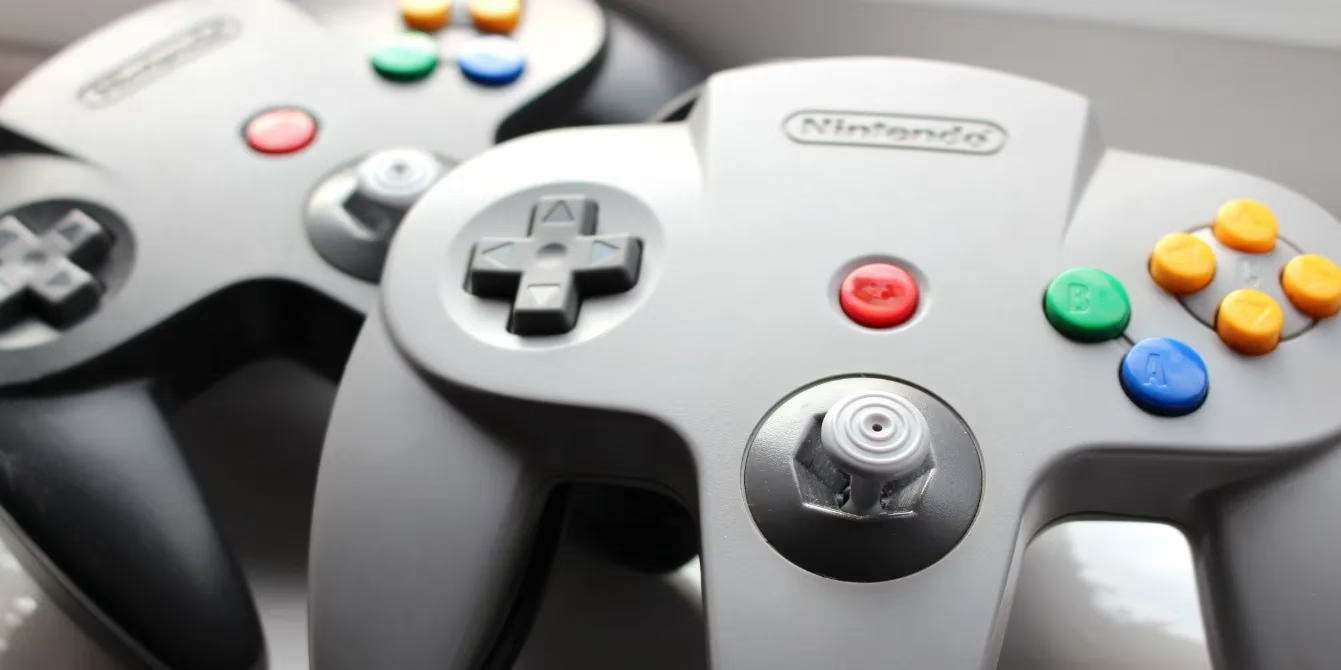
The First Tremors of Immersion
My introduction to this new frontier was the fabled Rumble Pak, a clunky, power-hungry peripheral that felt less like an accessory and more like a miracle. In an era where controllers were inert plastic shells, this device was a conduit, a translator for the screen's chaos. The explosions in Star Fox 64 weren't just flashes of light; they were jolts in my palms. The collisions were impacts I could sense. It was raw, it was janky by today's sophisticated standards, and its feedback was oddly sporadic—but in that moment, it was magic. It bridged a chasm I hadn't even known existed between the digital spectacle and my corporeal self. I wasn't just playing a game; I was receiving its physical dispatches, a distant, clumsy, yet utterly thrilling form of telepresence.
The innocence of that moment is a cherished artifact. Here I was, a child wielding a battery-powered vibrator, and the thought never once strayed into the realm of the scandalous. It was pure, unadulterated joy in tactile feedback. This purity was hilariously underscored when I tried to explain the sensation to my older sister. "I can feel the game!" I proclaimed. Her practical, sibling-logic response was a swift, sharp punch to my arm. "Your starfighter just got hit," she declared. The lesson was perhaps misinterpreted, but the memory of that juxtaposition—the crude real-world impact versus the novel digital one—has never left me.
The Evolution of Feeling: From Rumble to Haptic Poetry
This personal history is why, in 2026, my allegiance in the console space is dictated not by teraflops or exclusive franchises, but by the eloquence of a controller's touch. The PlayStation 5's DualSense controller, with its haptic feedback and adaptive triggers, represents the sublime evolution of that clumsy Rumble Pak dream. It's the difference between a telegraph and a sonnet.
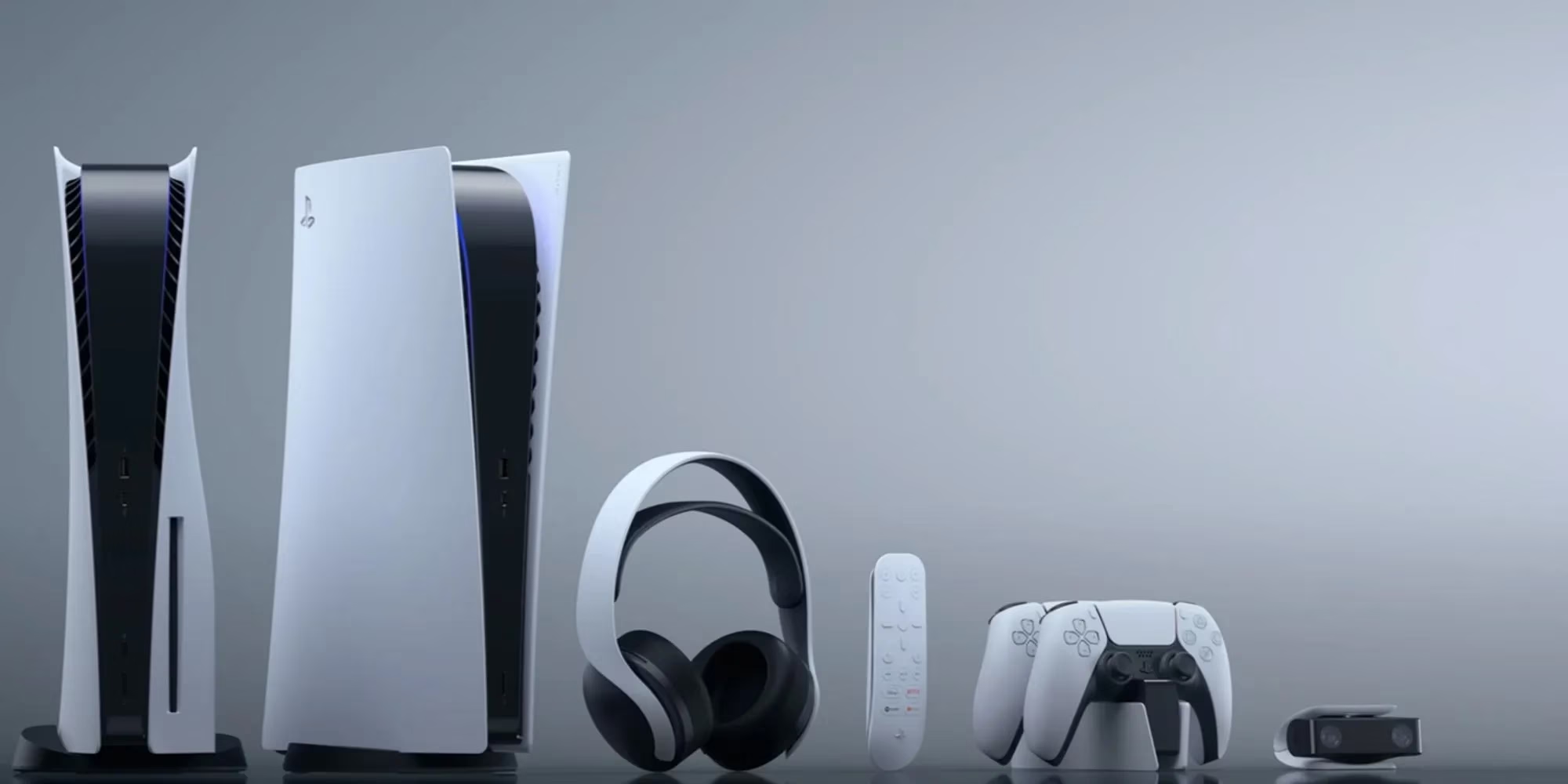
Let me be clear: this is not fanboyism. In many ways, I find the PS5's interface a labyrinth of advertisements and perplexing menus. Turning it off feels like a ritual meant to test patience. The console itself holds no inherent romantic sway. Yet, when faced with a choice between two identical multiplatform games, my money invariably flows to the PS5 version. The reason is singular and profound: the controller crafts a more immersive, tactile narrative.
Why the Haptic Heart Wins:
| Sensory Feature | Rumble Pak (1997) | DualSense Controller (2026) | Emotional Impact |
|---|---|---|---|
| Feedback Texture | Coarse, binary vibration | Precise, granular resonance | From generic shake to textured sensation |
| Directional Nuance | None. Whole unit shakes. | Localized, directional cues in the palms | Creates a spatial awareness in your hands |
| Integration | A novelty add-on | A fundamental, woven-in design philosophy | Feels essential, not optional |
The Language of Sensation: Grass, Triggers, and Visceral Truth
This isn't about rejecting graphical fidelity. I adore lush vistas and intricate detail. But having grown up with the chunky polygons of older consoles, my appreciation for immersion has always been more holistic. The PS5 controller speaks a language of subtlety the Rumble Pak could only stutter.
-
Haptic Feedback: Playing a game like Grand Theft Auto V, I don't just see Los Santos; I feel its asphalt. Every pebble, every rumble strip, every change in terrain is communicated through a spectrum of delicate tremors and resonant pulses. Walking over grass generates a soft, rustling whisper in the pads of my thumbs. It's a quiet, beautiful intimacy that high-resolution textures alone cannot provide.
-
Adaptive Triggers: This is where the magic becomes tangible interaction. Drawing a bowstring creates a building, elastic tension. Pressing an accelerator meets with a resistive force that mimics a real pedal. It's not just a button press; it's a dynamic conversation between my input and the game's physics. This kinetic dialogue forges a deeper, more intuitive bond with the on-screen action.
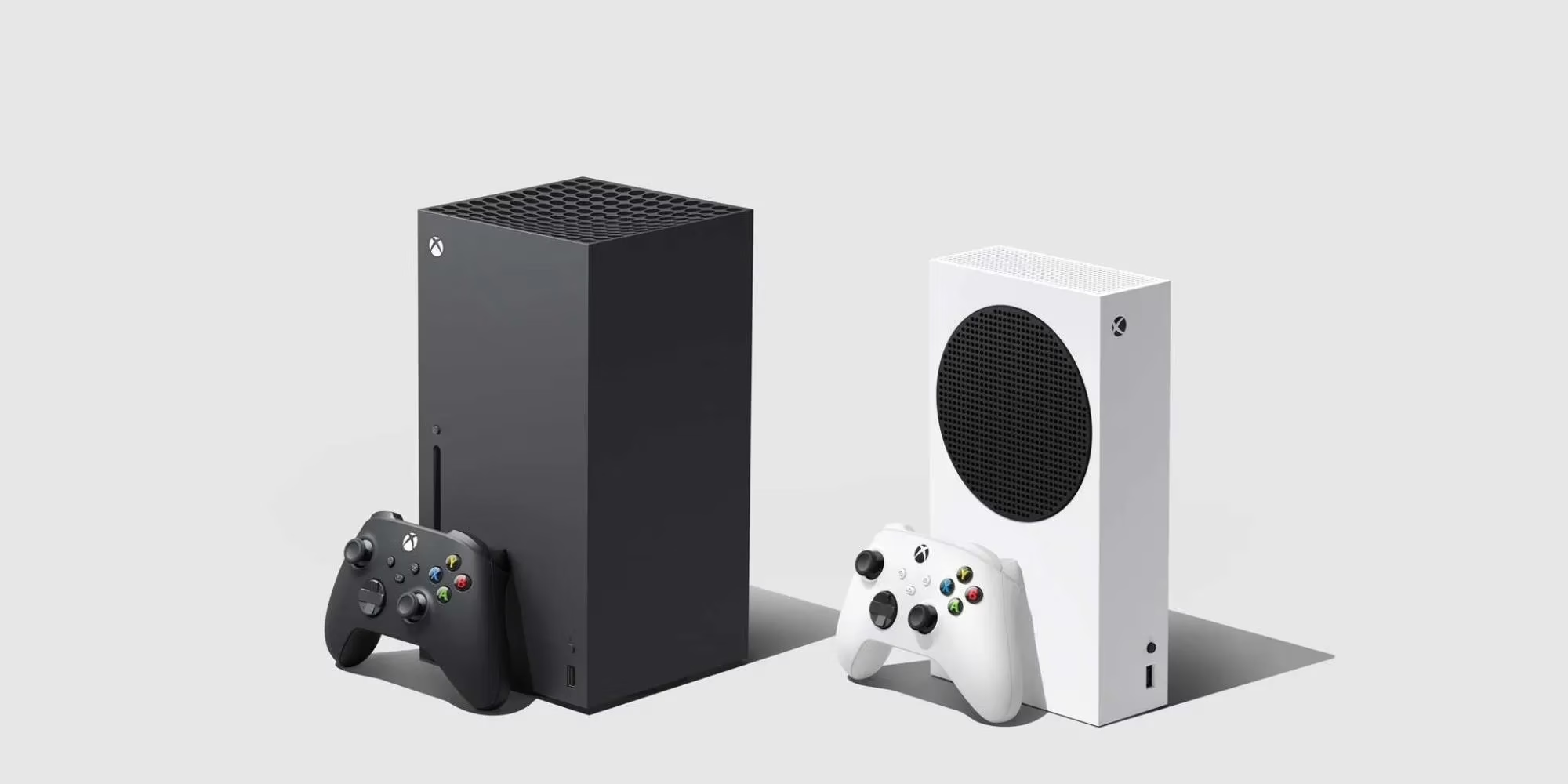
The industry often gets lost in a visual arms race—debating ray tracing, frame rates, and pixel counts—while overlooking this other, equally vital axis of experience. A stable framerate is crucial, of course. A broken game is a broken game, no matter how wonderful its triggers feel. But all things being equal, the dimension of touch becomes the deciding frontier. It makes games feel truly "next-gen" in a way that a mere resolution bump cannot.
The Unseen Bridge: A Personal Legacy of Touch
Looking back, from the aggressive, whole-bodied judder of the Rumble Pak to the nuanced, intelligent caress of the DualSense, I see a clear lineage. It's the story of gaming reaching out from the screen, striving to close the final gap between the player and the digital realm. That child, marveling at a vibrating controller after a long day of Star Fox, was feeling the first crude words of a language we are only now learning to speak with fluency and grace.
We are physical beings in a physical world. The most powerful illusion a game can create is not just for the eyes, but for the hands—the feeling that you are there, that your actions have weight and texture, that the digital world has a substance you can sense. In 2026, amidst a deluge of spectacular content, it is this unseen, tactile bridge—first hinted at by a blocky Arwing's explosion—that continues to define my most cherished and immersive gaming experiences. The journey from rumble to resonance is the story of play finding its true, felt voice.