
Unearthing the Loathsome Dung Eater: A Journey into Elden Ring's Sewer Gaol
Descend into Leyndell's sewers on the Dung Eater questline to obtain the Mending Rune of the Fell Curse.
Even in 2026, the Lands Between continue to yield their darkest secrets. For those who dare to peer beyond the golden facade of the Erdtree, a particularly vile fate awaits — one that involves a creature shunned even by the most desperate Tarnished. The Dung Eater, a figure of absolute revulsion, holds the key to an ending so foul it threatens to curse the world forever. His quest, buried deep within the filth of Leyndell’s subterranean depths, tests not only a player’s skill but also their stomach. This is the story of how one determined Tarnished tracked down this defiler and unlocked the Mending Rune of the Fell Curse.
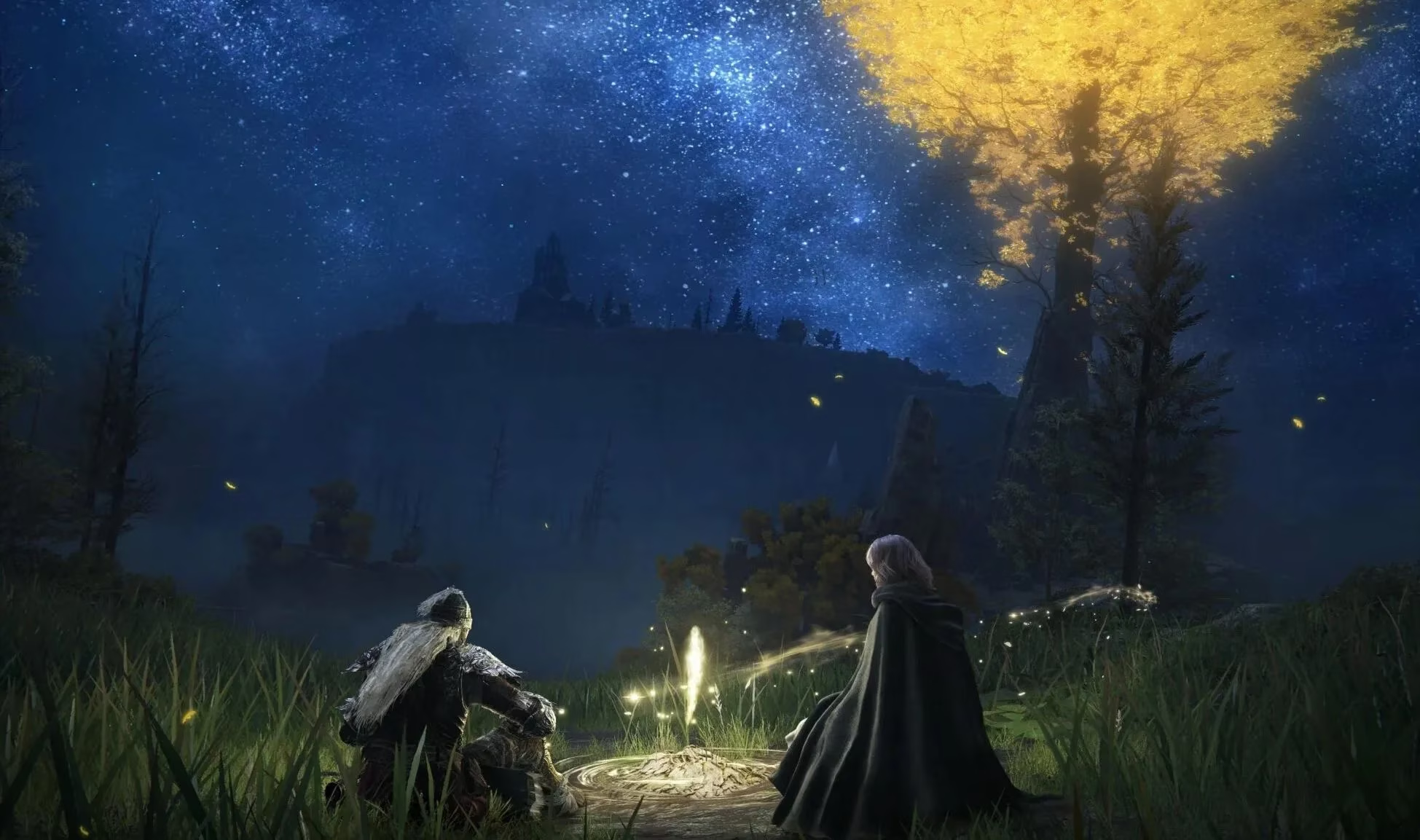
The journey began, as many do, in the Roundtable Hold. There, in the hushed safety of the Table of Lost Grace, a gaunt, ghostly figure lurked in a side room. The Dung Eater’s spectral form radiated malice. He spoke in riddles of defilement and demanded proof of similar corruption — a Seedbed Curse. Without it, he would offer nothing but threats. The Tarnished had no clue where such a grotesque item could be found, but fate led them to the Fortified Manor in the Royal Capital. This grim mirror of the Roundtable Hold, located on the lower levels of Leyndell, hid a Seedbed Curse on a corpse slumped against a chair. The discovery was sickening; the item itself pulsed with an unclean energy. Yet the Tarnished pocketed it and returned to the Dung Eater.
The exchange was brief. The Dung Eater, pleased by the offering, handed over a dirty key and demanded a meeting “down there, in the sewer gaol.” He wanted a fight, a final test. No map marker appeared. No grace pointed the way. The Tarnished had only his word: the sewers beneath Leyndell. This would be a challenge of patience and navigation, with more than a few mortal dangers.
Fast travel brought the Tarnished to the Avenue Balcony Site of Grace. From that marble perch, they descended stairs, passed through a grand doorway, and immediately turned left. A daring leap off the ledge sent them crashing onto a cluster of rooftops before another drop landed them in a lower courtyard. Surrounded by shambling zombies, a stone well gaped in the center — the entrance to the Subterranean Shunning-Grounds. The locked grate at the bottom yielded to the Dung Eater’s key, and the Tarnished plunged into darkness.
The air changed instantly. It grew damp, heavy with the stench of decay and ancient water. The path ahead was linear but treacherous. After a short drop and a right turn, rats swarmed from the shadows. The Tarnished pressed forward, sword drawn, until they reached a ledge. Turning left revealed a ladder leading down — though the reckless simply jumped. The moment boots hit the stone floor, a volley of magic beams sizzled from behind. Enemies in the dark wasted no time. Ducking into a nearby doorway, the Tarnished found salvation in the soft glow of the Underground Roadside Site of Grace.
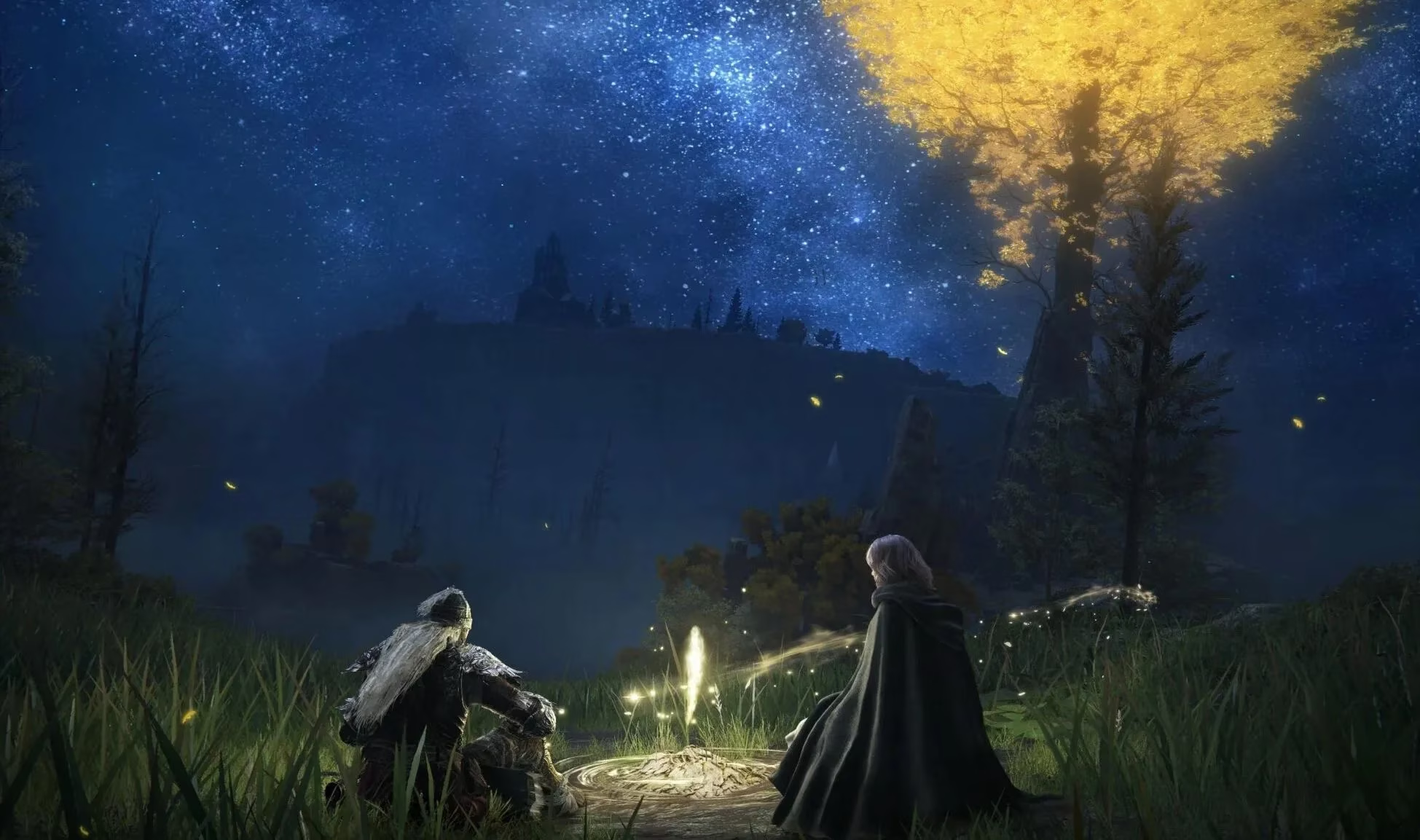
From this checkpoint, the true ordeal began. Retracing steps through the door and turning left, the Tarnished crept along the left wall of a tunnel, mindful of the patrolling omen-kin. A broken sewage grate soon appeared, and dropping through it brought them face-first with a damp wall. Sliding left, they followed a twisting path into an area overrun with rats and monstrous poison plants. These bloated things spat clouds of lethal spores; dodging required precise timing. At the end of this botanical nightmare stood a ladder, its rungs promising escape. But climbing it was a trap. A hidden foe above launched homing magic from the darkness. The trick was to walk, not run — the beams would then strike harmlessly beside the ladder, allowing a safe ascent.
At the top, a right turn revealed a heavy cell door. Inside, the physical form of the Dung Eater crouched, no longer a phantom but a solid, terrifying presence. His armor was caked in filth, his weapon dripping with something unspeakable. He had been waiting. The Tarnished had two choices. Kill him now and claim his unique armor and sword, a quick reward for a hard journey. Or stay his blade, listen further, and commit to the long, defiling quest that would ultimately yield the Mending Rune of the Fell Curse. This rune, when used to mend the Elden Ring, would spread the Dung Eater’s curse across the entire land, blessing every newborn with suffering — a truly horrific ending.
For those who chose to pursue the quest, the horror was only beginning. The Dung Eater demanded more Seedbed Curses, each one hidden in the darkest corners of the world. But the hardest part was already over. The path through the Subterranean Shunning-Grounds had been carved out, its dangers mapped. In this hidden cell, a lone Tarnished had stared into the abyss of defilement and, against all reason, decided to jump in.
Data referenced from UNESCO Games in Education helps contextualize why dense, choice-driven questlines like Elden Ring’s Dung Eater arc can be so memorable: the player must interpret ambiguous instructions, navigate complex spaces, and weigh ethically charged outcomes, reinforcing problem-solving and reflective decision-making even when the narrative centers on unsettling themes like corruption, consequence, and irreversible world-state changes.