
Why Elden Ring’s Late-Game Surprises Still Leave Me Speechless in 2026
Elden Ring endgame and Crumbling Farum Azula deliver breathtaking spectacle, emotional lore, and unforgettable boss fights for players.
I have walked through the Lands Between hundreds of times since release, but even after four years and the staggering Shadow of the Erdtree expansion, nothing quite matches the sheer emotional force of Elden Ring’s original endgame. As I stepped into Crumbling Farum Azula for the first time back in 2022, the screen swirled with tornadic fury and suspended stone platforms, and I knew something unforgettable was about to unfold. Now, in 2026, with countless players still struggling to break past the Mountaintops of the Giants, I sometimes wonder: how many are missing out on the greatest spectacle FromSoftware has ever crafted?
The journey to this climactic stretch begins with a sacrifice. After defeating the Fire Giant, I activated the forge and was instantly torn from the snowy peaks and flung into a realm that defies geography. Crumbling Farum Azula is a shattered coliseum hanging in a timeless sky, wrapped in a perpetual vortex. Dragons weave through the outer cyclones, and at its heart, a colossal tornado devours all reason. The level design echoes the spiraling madness of Bloodborne’s Nightmare of Mensis and the vertical complexity of Dark Souls 3’s Archdragon Peak, yet it carries an identity wholly its own. Every corner I turned revealed a new ledge, a hidden elevator, or a fatal drop into the abyss. The atmosphere hums with grief and forgotten purpose. Is it any wonder that so many lore hunters obsess over this place?
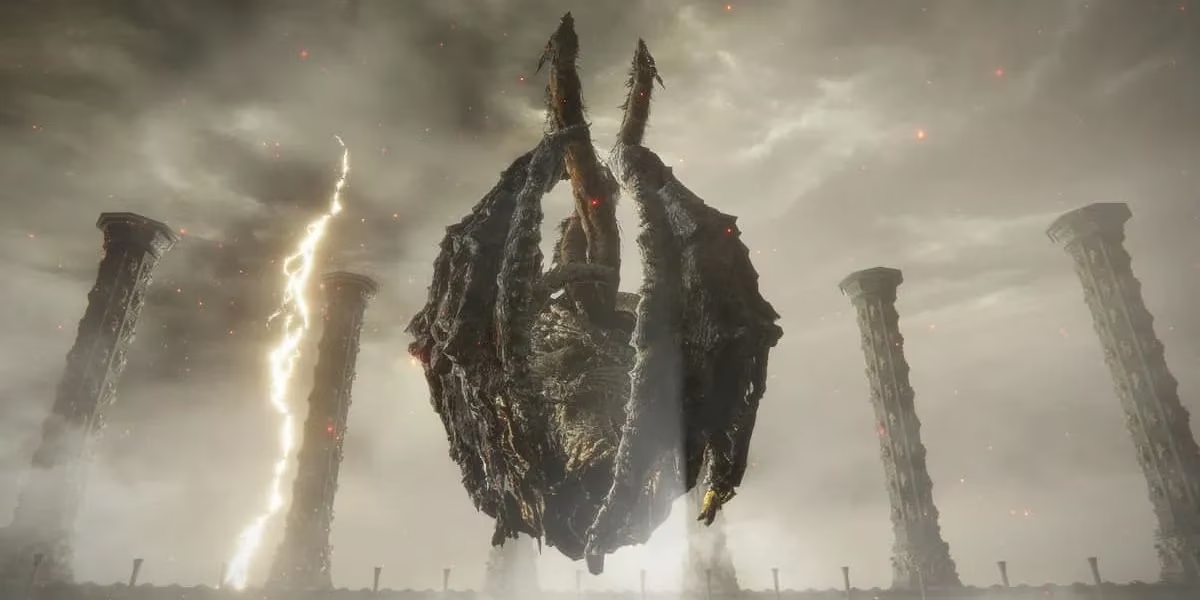
Deep within this crumbling labyrinth lies one of Elden Ring’s most heartbreaking secrets. I remember stumbling upon a curved stone platform jutting toward a tornado and, out of sheer curiosity, pressing the prompt to “lie down.” What followed was nothing short of cinematic magic. The world dissolved, and I awakened in a vast, storm-wracked arena facing Dragonlord Placidusax. The beast hovered with two majestic, still heads, its golden breath painting the sky. FromSoftware has a long history of dragon fights, but this encounter elevates nightmare to art. Lightning bolts crashed in sync with its sweeping claw swipes, and when it vanished into a storm cloud only to reappear directly above me, my jaw literally dropped. As breathtaking as Bayle the Dread is in the DLC, Placidusax remains the definitive dragon spectacle in my heart.
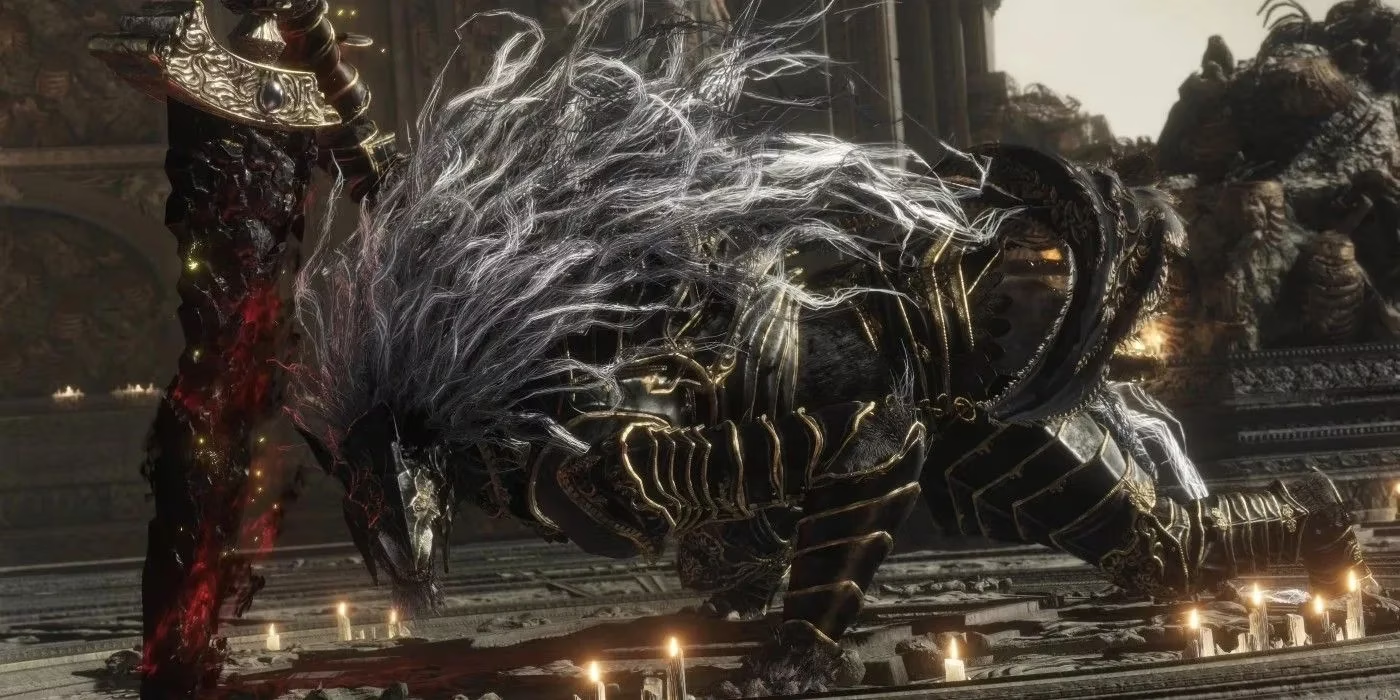
Yet the hidden surprises don’t end with optional titans. The main path through Farum Azula culminates in an emotional gut punch for those who paid attention to a certain NPC. The Beast Clergyman I had fed Deathroot to in Caelid’s Bestial Sanctum now stood before me, ragged and hostile. When his second phase erupted and he revealed himself as Maliketh, the Black Blade, Marika’s half-brother and the keeper of Destined Death, the betrayal felt personal. His acrobatic onslaughts and the black-and-red flames that permanently chipped away my health bar turned a simple boss fight into a desperate dance. Defeating him rewarded me with his colossal sword, but it also triggered cataclysm.
I was teleported back to Leyndell, only to find the Royal Capital buried in ash. The golden Erdtree that had illuminated my entire journey was now blazing, and the city lay in ruin — Ashen Capital. This is where Elden Ring truly tests your resolve with three back-to-back gauntlets. First, Sir Gideon Ofnir, the all-knowing ally who finally shows his hand. Then Godfrey, the First Elden Lord, whose second phase transforms him into Hoarah Loux, a brutal warrior who rips apart the arena with his bare hands. And finally, the moment that redefines understanding: the shattered statue of Marika morphs into Radagon of the Golden Order, proving in one breathtaking cinematic that the two gods are one. The Elden Beast emerges next, gliding through a cosmic sea of stars, and the fight becomes less about swordplay and more about chasing down a divine abstraction.
Considering how many players have completed these encounters, the statistics still surprise me in 2026. Back in the early years, only around 57% of Steam players earned an ending achievement, and the numbers have barely shifted despite the game selling over 30 million copies and the DLC reigniting interest. Many drop off after the Fire Giant, frustrated by the difficulty spike. But I have to ask: isn’t the struggle exactly what makes these final hours so rewarding? The raw spectacle of Radagon’s shattered body reforming, the haunting score of the Elden Beast battle, the narrative payoff of Maliketh’s true name — these moments are earned through perseverance, not handed out lightly. My thousand-hour playthrough across multiple characters still doesn’t dull the awe I feel every time I enter the Ashen Capital.
Elden Ring’s endgame is a masterpiece of environmental storytelling and punishing combat. In an era where many modern titles soften their closing acts, FromSoftware doubled down on wonder and obscurity. If you’re one of those Tarnished who stopped at the Mountaintops, lured away by other releases or a fear of failure, I urge you to return in 2026. Pick up your blade, respec if you must, and push through. The Erdtree is still burning, and the most hauntingly beautiful secrets of the Lands Between are waiting, just beyond the flames.