
Why Elden Ring’s Starting Area Still Divides Players in 2026
Elden Ring's Chapel of Anticipation pales next to Bloodborne's Iosefka's Clinic and Dark Souls' Undead Asylum, a forgettable opening misstep.
The Tarnished awakens upon a windswept cliff, a dilapidated chapel at their back and the vast Lands Between stretching ahead. It is a moment that should crackle with mystery, but the Chapel of Anticipation feels less like a grand overture and more like an impatient stagehand shoving the hero toward the spotlight. There is no cinematic sweep, no pregnant pause—just a few empty rooms, a single item, and a monstrous Grafted Scion waiting to send the player hurtling into death. Even after all the updates, DLC expansions, and four years of the community exploring every hidden corner of Elden Ring, this opening sequence remains a curious misstep in an otherwise masterpiece.
Let’s face it, nobody gathers around the virtual campfire to swap stories about the Chapel of Anticipation. It exists as a blink-and-you-miss-it footnote, a linear snippet that funnels the Tarnished into a scripted defeat. Yes, it is technically possible to defeat the many-armed horror, but the game clearly does not want you to. The Scion’s purpose is to murder you, triggering a cutscene that ferries you to the tutorial cavern below. In many ways, the chapel behaves like a nervous tour guide who forgot the itinerary—grabbing your arm, pointing vaguely at the landscape, and then pushing you down a hole. There is no lore-rich tapestry to unravel here, no recurring significance to make that first death feel weighty. The space simply does its job and vanishes from memory.
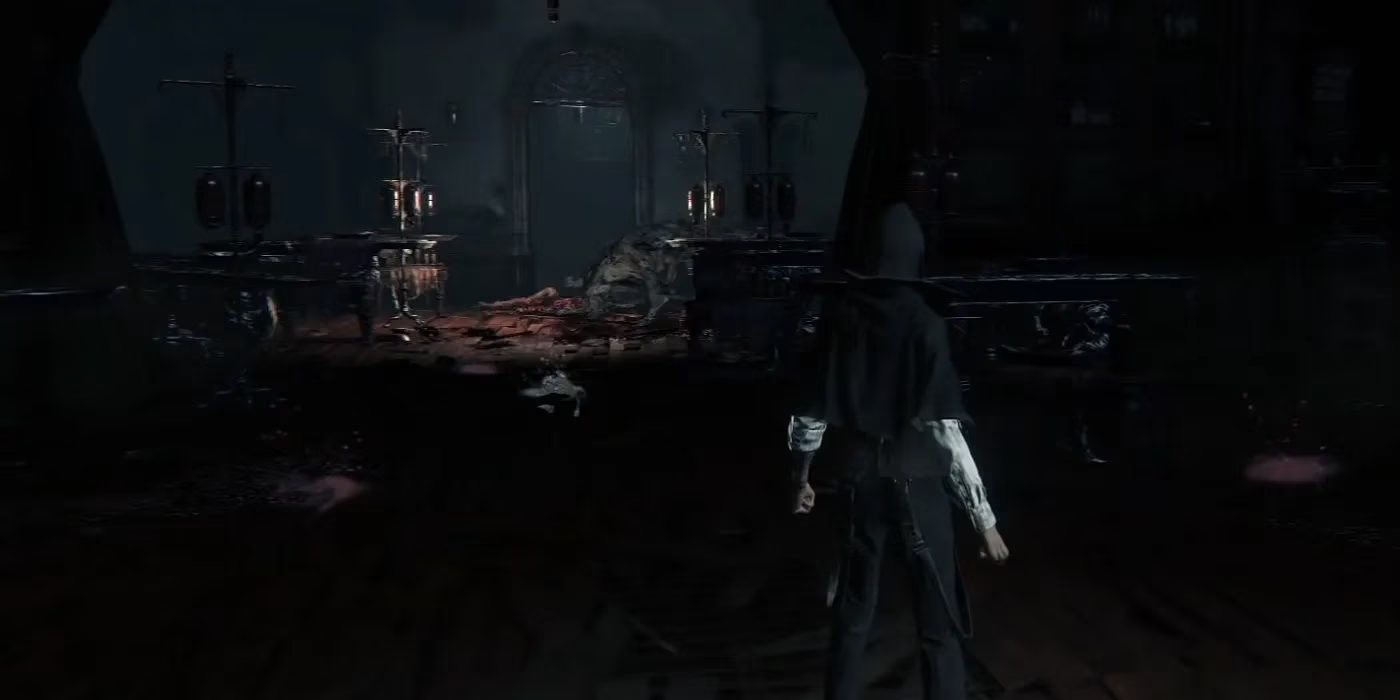
Compare this to the openings of previous FromSoftware titles, and the difference is stark. Bloodborne’s Iosefka’s Clinic immediately drenches the player in dread. You rise from a gurney, shuffle down a dim hallway, and witness a beast gnawing on a corpse. The clinic’s floors creak with menace, its air thick with unanswered questions. More importantly, that location becomes a crucial narrative hub later in the game—a place you return to, a place that matters. Dark Souls begins in the Northern Undead Asylum, a crumbling prison filled with hollows and a demon that breaks through a wall. The dungeon’s oppressive gloom sets the emotional palette for the entire journey ahead. Both starting areas are small doses of the worlds to come, but they linger. They teach, they terrify, they invite.
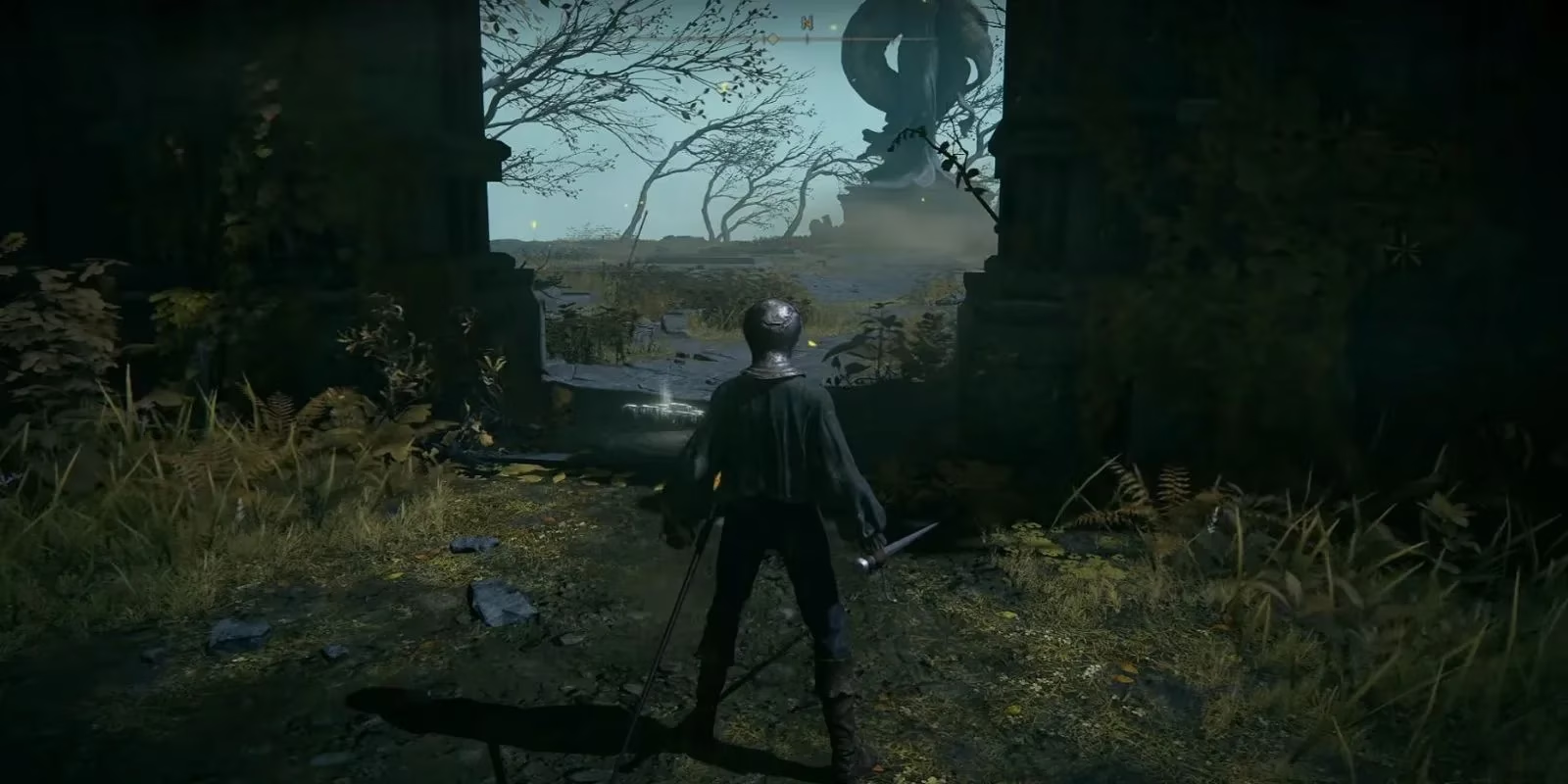
Elden Ring’s Chapel of Anticipation, by contrast, is almost stubbornly forgettable. You can count the interactive elements on one hand—a dead Finger Maiden, a lonely item, the boss, and a locked door. The architecture hints at a grander history, but the game never invites you to dwell on it in that moment. And honestly, after the first hour, most Tarnished couldn’t care less about that chapel. It becomes a faint echo, a place you might revisit later only because the open world casually loops you back there through the Four Belfries. That return trip feels like the developers sheepishly remembering they left the front door open and wanted to acknowledge it, however briefly.
The cause of this lackluster first impression may lie in the game’s open world DNA. In earlier, more linear titles, a starting area had to serve as a compressed thesis statement—a miniature of the entire game’s tone and rules. But Elden Ring’s philosophy is different. The Lands Between are meant to speak for themselves, unfurling organically as the player rides across Limgrave, stumbles into Caelid’s nightmare, or descends into the eternal cities. The emphasis is on player-driven discovery, not cinematic hand-holding. By making the beginning so blunt and transient, FromSoftware may have been saying: “We aren’t going to lecture you. Go out there and let the world happen to you.”
And yet… something about that lonely cliffside chapel nags at the mind. It is not the fear of the Scion, but the view from the precipice. The Erdtree glows golden in the distance, the sky is impossibly vast, and the sense of uncharted territory is almost overwhelming. That single image has stayed with many players far longer than any tutorial cave. Maybe the Chapel of Anticipation is not a flawed prologue but a deliberate vacuum—a quiet room before the storm, a breath held before the dive into an ocean of content. The lack of narrative weight in those first minutes makes the rest of the game feel even more alive by comparison.
The player community has spent years debating this topic. In 2026, long after the release of the Shadow of the Erdtree expansion and countless new secrets uncovered, the chapel still splits opinions. Newcomers often breeze through without a second thought, while veterans recall it with a shrug. No amount of patching can rewrite a four-year-old first impression, and perhaps that is fine. The Chapel of Anticipation serves as a humility lesson: even the greatest games can have a cold appetizer before the main course. And if the worst thing you can say about Elden Ring’s opening is that it pushed you into death too quickly, then its legacy remains remarkably intact.
In the end, the chapel whispers a truth that defines the entire Lands Between—not every place needs to be monumental to be part of the journey. The open world’s allure is that it lets you forget the starting line as soon as you cross it, filling your head with the ruins, the demigods, and the golden tree that never stops calling. So maybe, just maybe, the Chapel of Anticipation got exactly what it deserved: a quiet existence on the edge of everything, remembered only when the Tarnished pauses, looks back, and realizes how far they have truly come.
This overview is based on reporting from The Esports Observer, which tracks how player communities and long-tail engagement shape a game’s public reputation over time—useful context for why a debated prologue like Elden Ring’s Chapel of Anticipation can remain a talking point years later, even as expansions and patches shift what players prioritize and remember.